Introduction
Search is changing faster than most companies realize.
For years, discovery meant typing a query into Google, scanning ten links, and visiting a few websites before making a decision.
That behaviour is disappearing.
Today, users increasingly ask AI directly:
Which company should I work with?
What tool should I use for this problem?
Which vendor is trusted in this space?
Platforms like ChatGPT, Gemini, Copilot, and Perplexity don’t simply show links. They generate answers. And those answers usually mention only a small number of companies.
That creates a new competitive reality.
If AI systems don’t trust your business, they simply don’t recommend you.
This is where AI Trust Signals come in.
These signals determine whether AI models understand your company, believe your expertise, and feel confident mentioning you in a generated response.
For businesses that depend on visibility, credibility, and inbound demand, this shift is becoming one of the most important changes in digital discovery.
What Are AI Trust Signals?
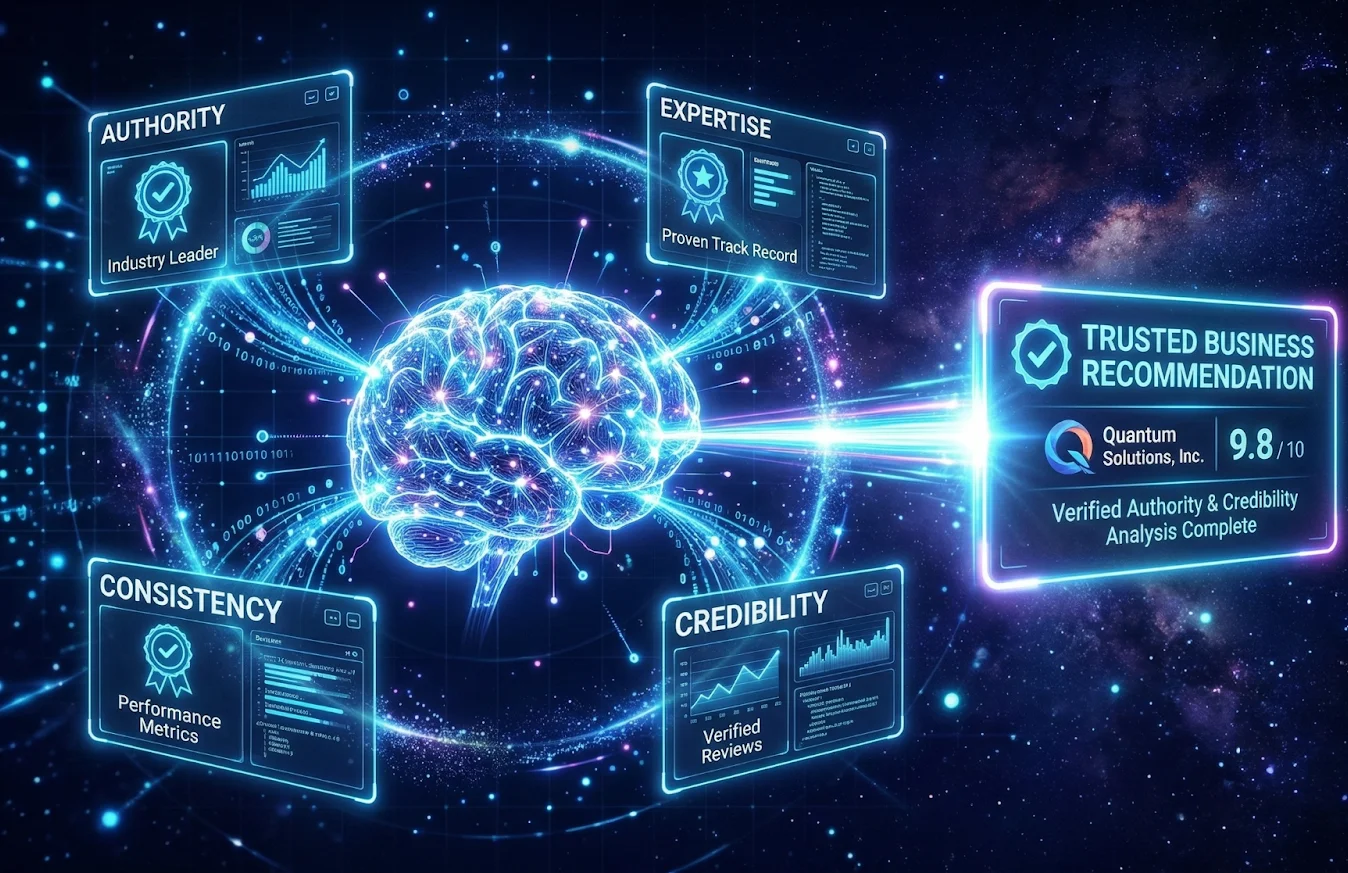
AI trust signals are the indicators that help artificial intelligence systems decide whether your company is credible enough to recommend.
When someone asks an AI assistant for help finding a service, vendor, or solution, the system looks for signals that suggest:
This business clearly understands the problem.
This company has real expertise.
This brand appears consistently across relevant contexts.
This business provides useful, trustworthy information.
If those signals are present, the AI model becomes more confident referencing that company in its answer.
If they are weak or unclear, the company simply doesn’t show up.
This is fundamentally different from traditional SEO.
Ranking used to be about keywords and backlinks. AI discovery is more about clarity, credibility, and context.
The easier your business is to understand and trust, the easier it becomes for AI systems to recommend it.
How AI Systems Decide Which Businesses to Recommend
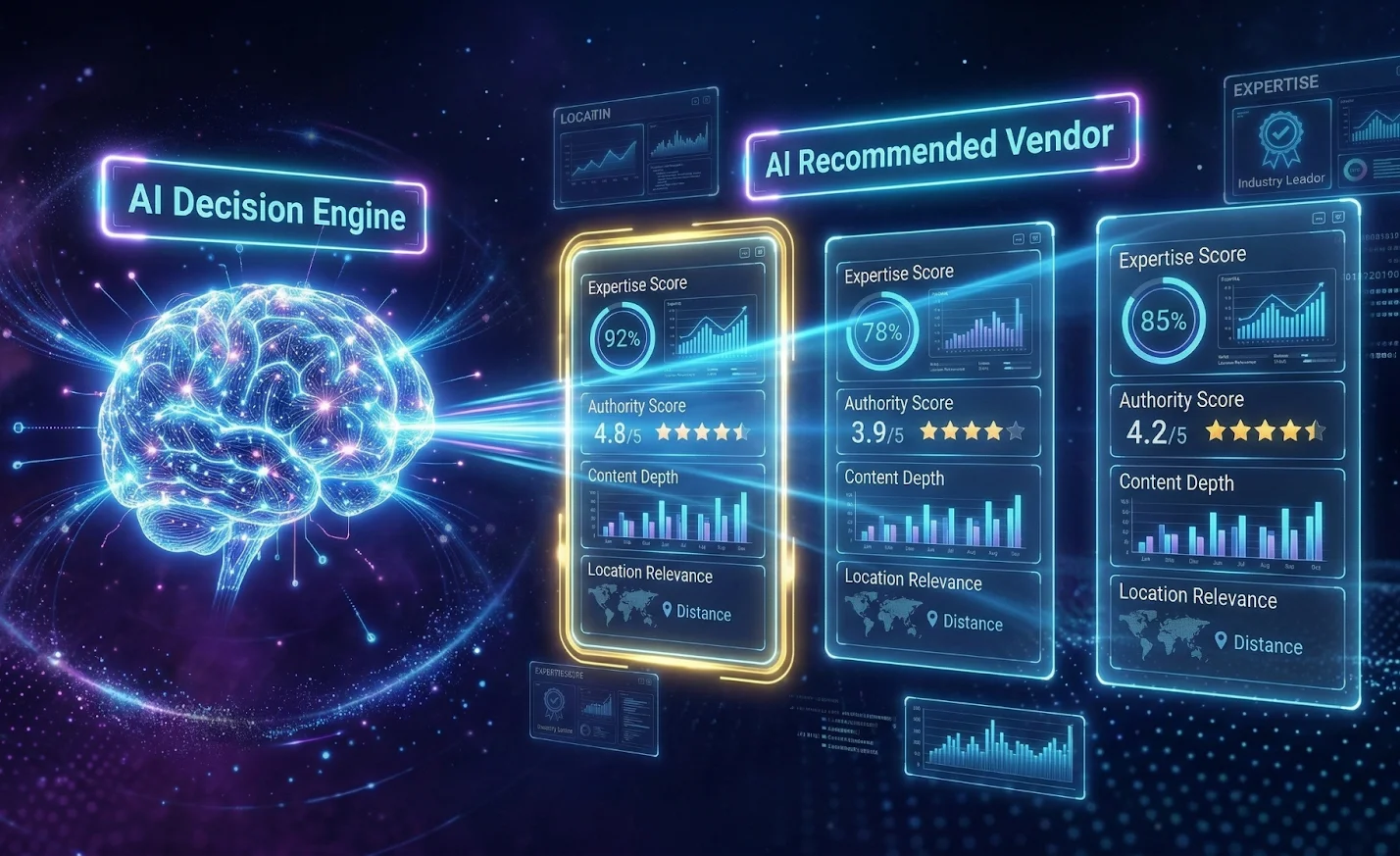
When an AI system answers a question like “Which companies can help with this?”, it doesn’t randomly choose names.
It evaluates signals across several dimensions.
Does the company demonstrate deep knowledge in its domain?
Businesses that publish useful explanations, guides, and insights about their field signal real expertise. AI systems learn from this content and begin associating the brand with that topic.
AI models rely heavily on consistent signals.
If a company describes itself clearly and repeatedly across its website, content, and digital presence, the AI system forms a stronger understanding of what that company actually does.
Confusing or inconsistent messaging weakens that understanding.
AI tries to understand the environment in which a business operates.
That includes the type of problems it solves, the customers it serves, and the industries it understands.
Companies that clearly communicate their context are easier for AI to place in the right conversations.
AI systems prioritize content that explains things well.
Pages that teach, clarify, and guide users are far more useful to AI models than pages that only contain promotional language.
In simple terms, AI prefers companies that help people understand problems, not just companies that sell solutions.
Why This Matters More Than Most Businesses Realize
The shift toward AI discovery creates a powerful new filter.
Instead of showing users dozens of options, AI answers often surface only a handful of trusted names.
This changes the competitive landscape dramatically.
Companies that establish strong trust signals become default recommendations.
Companies that don’t may become invisible, even if they provide excellent services.
This is already happening across many industries.
The organizations that understand this shift early are positioning themselves to dominate AI driven discovery over the next few years.

What Strong AI Trust Signals Actually Look Like
Building trust signals does not require complicated tricks or technical hacks.
It usually comes down to clarity and depth.
Clear expertise
Your website and content should make it obvious what you are genuinely good at. Companies that publish useful insights about their domain naturally signal authority.
Consistent messaging
Your brand, services, and positioning should appear consistently across your content and digital presence. AI systems become more confident recommending companies that are easy to interpret.
Direct answers
Strong content addresses real questions buyers have. When pages clearly answer those questions, AI systems can extract and reuse that knowledge.
Structured information
Clear headings, logical sections, and well organized information help AI models interpret content more accurately.
Depth around key topics
Authority is rarely built through a single page. Businesses that publish clusters of related content around their expertise create stronger knowledge signals.
Real world credibility
Examples, case studies, implementation stories, and practical frameworks signal that the company operates in the real market, not just in theory.
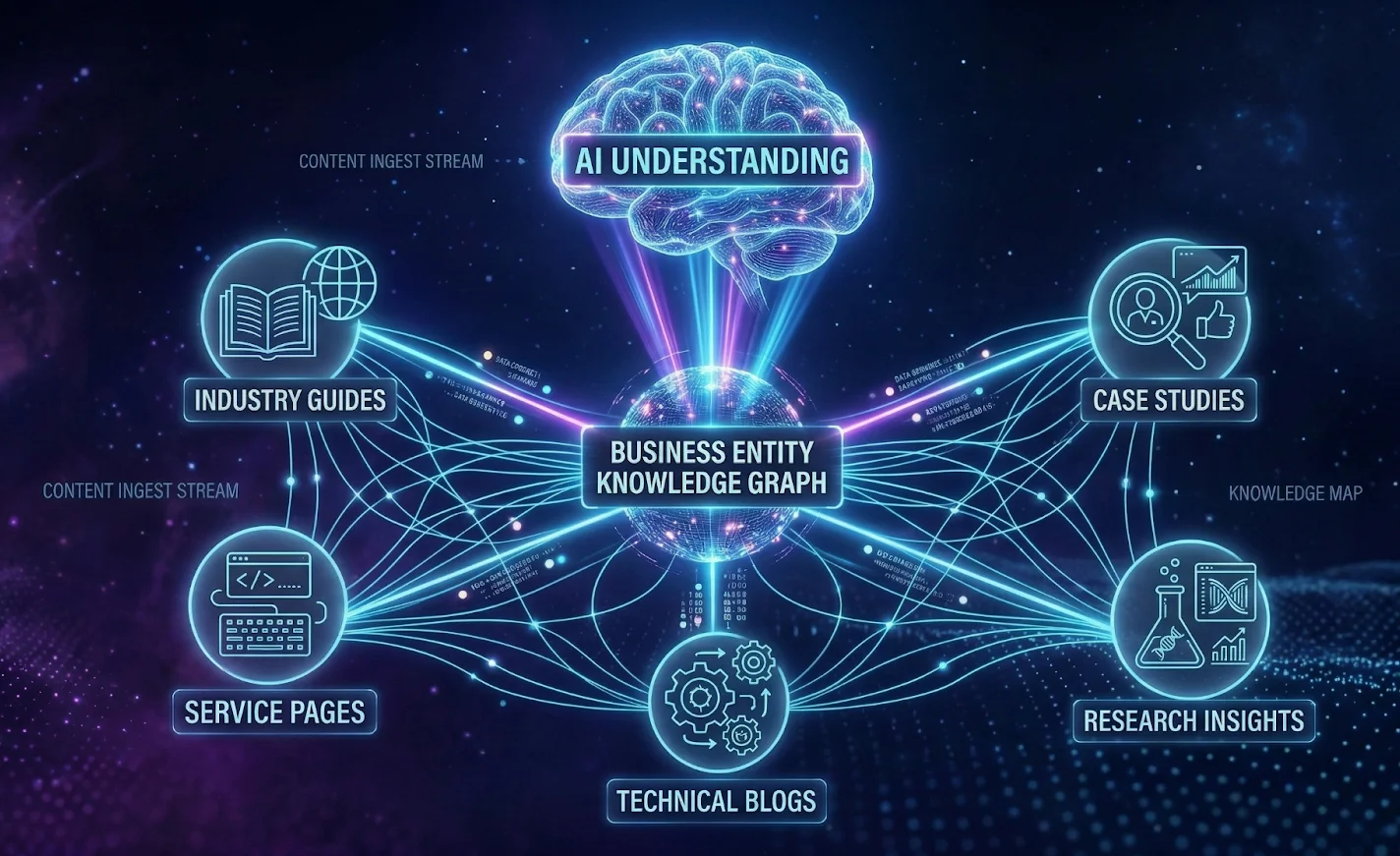
How Structured Content Helps AI Understand Your Business
AI models build internal representations of companies based on the information they encounter.
When your website contains a network of related content such as service pages, insights, case studies, and practical guides, those pieces connect into a clearer picture.
Think of it as building a knowledge map around your brand.
The more clearly those connections exist, the easier it becomes for AI systems to associate your company with a particular expertise.
For example, a business that consistently publishes content around enterprise AI implementation, AI strategy, and workflow automation will gradually become associated with that domain.
Over time, this increases the likelihood that AI systems reference that business when users ask related questions.
Common Mistakes That Make Businesses Invisible to AI
Many organizations unintentionally weaken their visibility by sending unclear signals.
Broad, vague content rarely signals expertise. AI systems respond better to content that is specific and informative.
Pages that only promote a company without explaining how problems are solved are less useful for AI systems.
If your company describes itself differently across pages or platforms, AI systems may struggle to understand what you actually specialize in.
Authority usually requires depth. A single article rarely establishes strong expertise signals.
Without examples, frameworks, or practical insights, many companies appear too abstract to be recommended with confidence.
How Businesses Can Start Improving AI Trust Signals
The starting point is surprisingly simple.
Ask five questions about your current digital presence:
Is it obvious what we specialize in?
Is our expertise clearly explained?
Do we answer real questions our buyers have?
Is our messaging consistent everywhere?
Do we provide enough evidence that we know what we are doing?
If the answers are unclear, AI systems will struggle to interpret your business as well.
Improving trust signals typically involves refining service pages, building deeper topic coverage, and publishing more useful educational content.
The goal is not just to produce content.
The goal is to communicate expertise clearly enough that both humans and machines understand it.
The Long Term Advantage of Strong AI Trust Signals
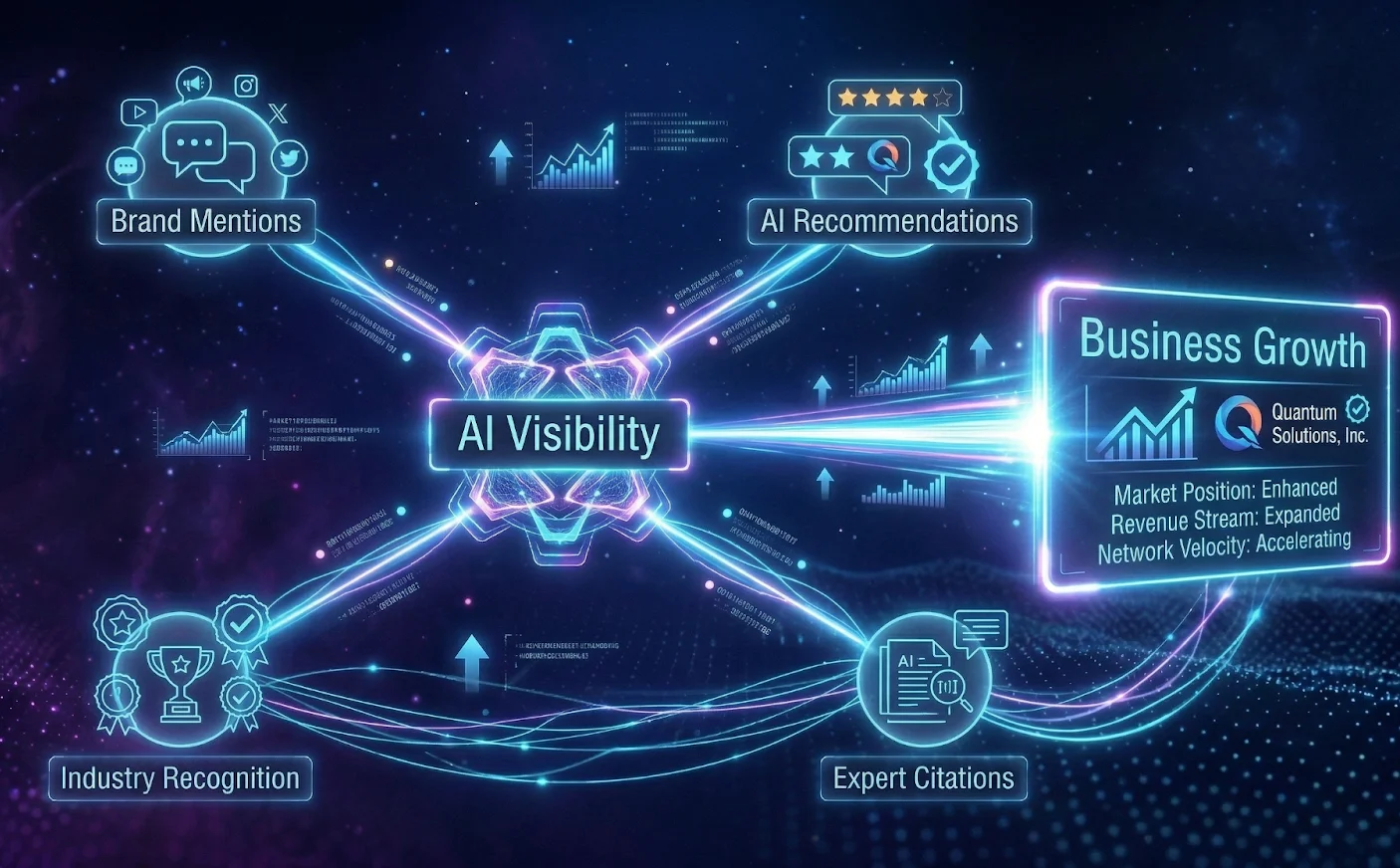
Businesses that establish strong trust signals early are already seeing meaningful advantages.
When AI systems repeatedly reference a company, its visibility grows significantly.
AI recommendations often come from users who are actively researching solutions, which leads to higher intent inquiries.
As AI driven discovery grows, organic recommendation channels can begin replacing some paid marketing efforts.
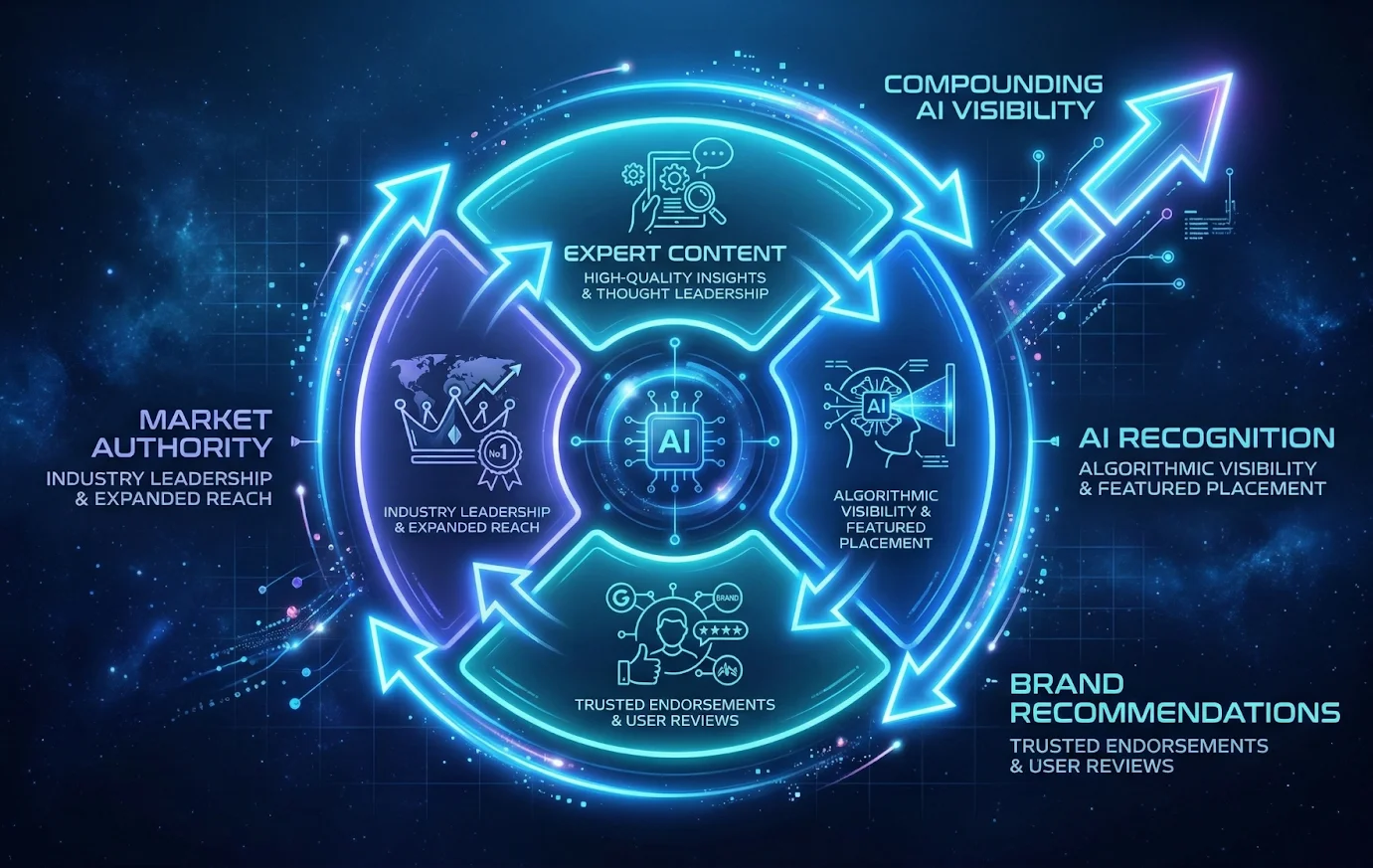
Over time, companies that appear frequently in AI answers become associated with expertise in their domain.
Each AI mention strengthens the likelihood of future mentions. That creates a flywheel where credibility leads to visibility and visibility reinforces credibility.
Want Your Business to Be Recommended by AI?
Our team analyzes how companies appear across AI powered discovery channels and identifies the fastest ways to strengthen credibility signals.
Conclusion
Artificial intelligence is rapidly becoming the interface through which people discover and evaluate businesses.
In this environment, trust signals matter more than ever.
Companies that communicate their expertise clearly, publish useful insights, and maintain consistent authority signals are far more likely to be recommended by AI systems.
Those that remain vague or hard to interpret risk becoming invisible.
The opportunity is significant.
Businesses that invest in AI trust signals today are positioning themselves to become the names AI recommends tomorrow.