The Gap No One Owns But Everyone Feels
Most companies believe their marketing and sales alignment is working.
- Leads are generated.
- Campaigns are running.
- Sales teams are following up.
On paper, everything looks fine.
But results tell a different story.
- Leads drop off.
- Follow ups are delayed.
- Context is missing.
- Opportunities go cold.
Not because of bad strategy.
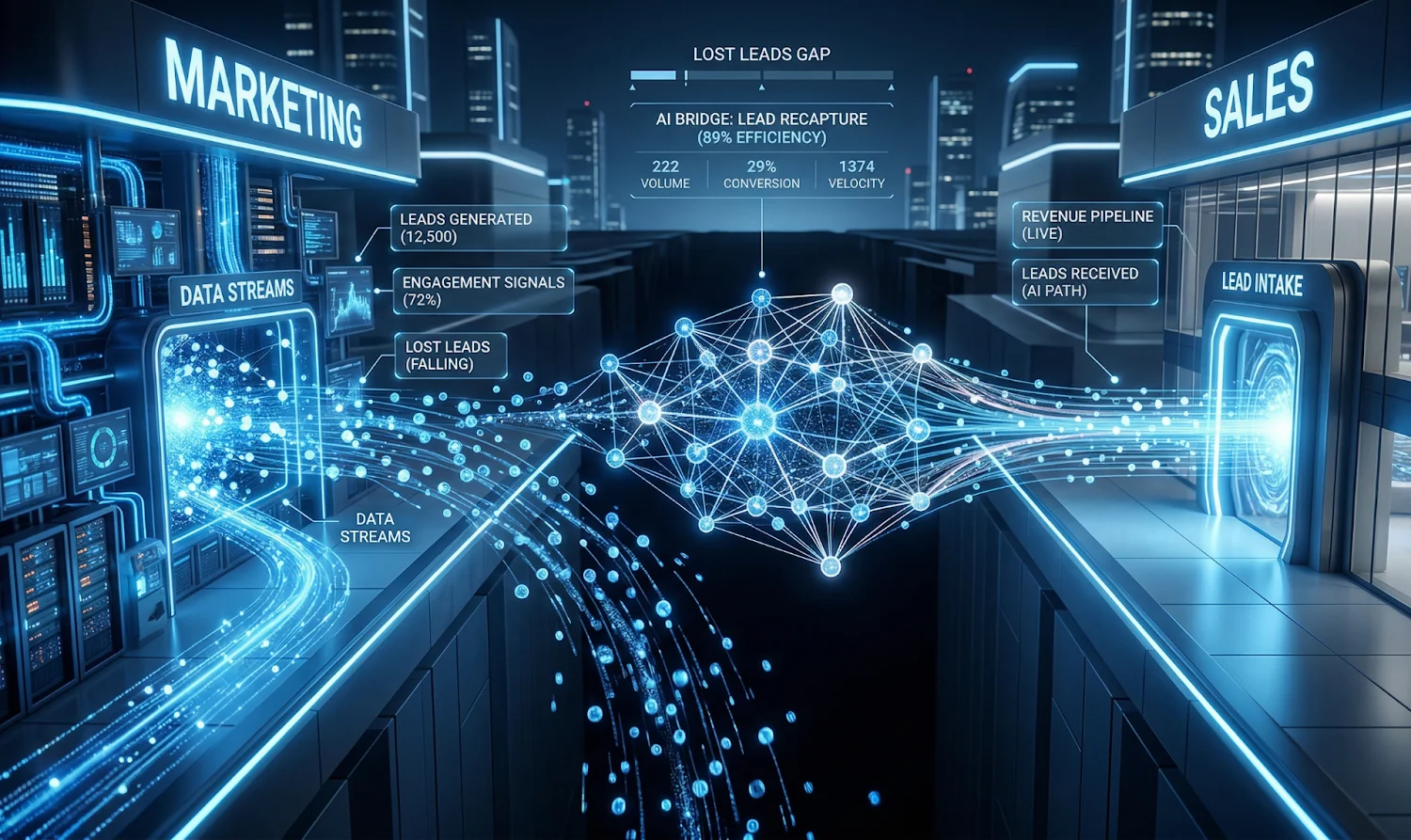
But because of a hidden layer between marketing and sales.
This layer is where intent gets lost.
- Where timing breaks.
- Where context disappears.
- Where ownership becomes unclear.
Marketing thinks leads are qualified.
Sales thinks leads are not ready.
And in between, high value prospects slip away.
Traditional systems do not capture what happens in this gap.
This is where AI systems are transforming revenue operations.
AI systems analyze engagement signals, behavioral data, and workflow transitions to identify and fix the disconnect between marketing and sales.
In this blog, we explore how AI is uncovering and optimizing this hidden layer.
What Is the Hidden Layer Between Marketing and Sales
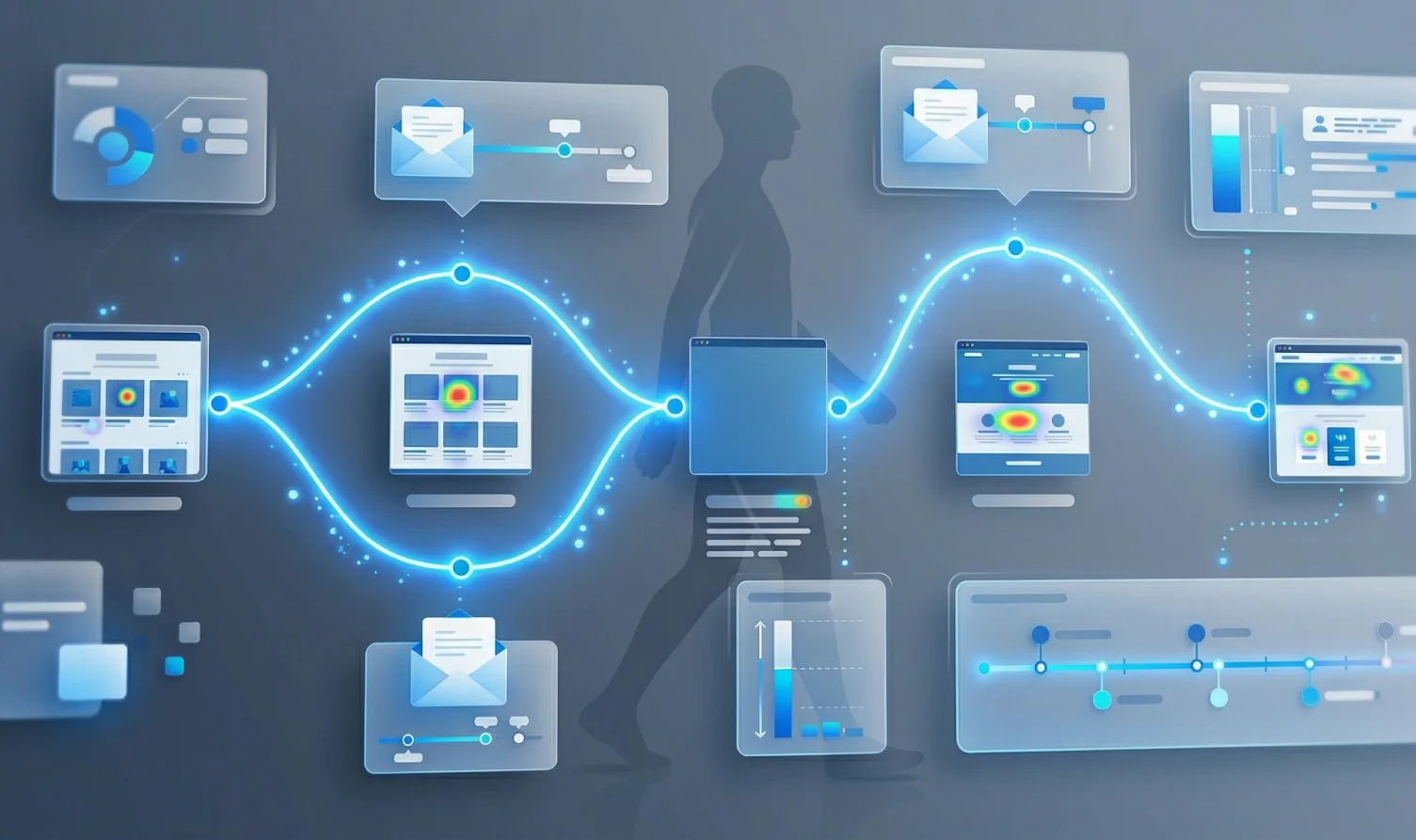
The hidden layer is the transition zone where leads move from marketing to sales.
It includes
- Lead qualification and scoring
- Handoff timing and process
- Context transfer between teams
- Follow up sequencing
- Engagement tracking across touchpoints
This layer is rarely structured properly.
It often depends on manual processes, assumptions, and disconnected systems.
AI systems bring visibility and intelligence into this layer.
Why This Gap Impacts Revenue
Organizations face several challenges due to this hidden disconnect.
Sales teams reach out too late after initial interest fades.
Important behavioral signals are not passed from marketing to sales.
Marketing and sales use different criteria to define a qualified lead.
High intent prospects are not prioritized and get lost in the pipeline
Sales teams spend time on low intent leads while missing high value ones.
AI systems address these issues by making the transition between marketing and sales intelligent and data driven.
AI Systems for Engagement Signal Analysis
AI systems track how prospects engage with content including
- Email opens and clicks
- Website visits and navigation patterns
- Content downloads
- Ad interactions
- Time spent on key pages
These signals provide deeper insight into buyer intent.
AI identifies patterns such as
- Repeated visits to product or pricing pages
- Interaction with high value content
- Increasing engagement over time
This helps distinguish serious buyers from casual visitors.

AI Systems for Marketing to Sales Handoff Optimization
AI determines the best moment to transfer a lead to sales based on intent signals.
Sales teams receive enriched lead profiles including
- Engagement history
- Content consumed
- Pain points inferred
- Preferred communication timing
AI routes leads to the right sales representatives based on priority and relevance.
This ensures faster and more effective engagement.
AI Systems for Cross Channel Journey Visibility
AI systems combine data from
- Marketing automation tools
- CRM platforms
- Website analytics
- Ad platforms
Email systems
AI reconstructs the complete buyer journey across touchpoints.
Sales and marketing teams can see where each prospect is in their journey.
This eliminates guesswork and improves coordination.


AI Systems for Predictive Lead Prioritization
AI continuously updates lead scores based on real time behavior.
Machine learning models identify which leads are most likely to convert.
Sales teams receive prioritized leads instead of static lists.
This improves efficiency and conversion outcomes.
Want to eliminate the gap between marketing and sales
Discover how AI systems can analyze engagement optimize lead handoffs and improve conversion rates. Book a demo to explore real world use cases.
Key Technologies Behind AI Driven Alignment
Machine Learning Models
AI learns from historical data to identify successful conversion patterns.
Behavioral Analytics
Advanced analytics interpret engagement signals and user behavior.
Data Integration Platforms
AI connects multiple systems to create unified lead profiles.
Real Time Processing
AI processes data instantly enabling immediate action.
These technologies enable seamless collaboration between marketing and sales.
Compliance Privacy and Responsible Data Usage
AI systems handling customer data must operate responsibly.
Enterprise AI systems include
- Consent based data collection
- Data anonymization techniques
- Secure storage and encryption
- Transparent data policies
- Compliance with global privacy standards
This ensures trust while leveraging AI insights.
Measuring ROI of AI Alignment Systems
Organizations adopting AI driven alignment measure improvements across key metrics.
Key metrics include
- Higher lead to opportunity conversion
- Reduced response time
- Improved sales productivity
- Better marketing ROI
- Shorter sales cycles
- Lower cost per acquisition
Many businesses see measurable impact within a few months.
Marketing and Sales Teams Working with AI
AI systems enhance collaboration between teams.
Marketing teams refine targeting using intent insights.
Sales teams engage leads with full context.
Both teams operate with shared visibility and data.
This alignment improves pipeline quality and revenue outcomes.

The Future of AI Driven Revenue Alignment
AI driven alignment is evolving rapidly.
AI will automatically manage lead transitions without manual intervention.
Sales outreach will be tailored based on complete journey data.
Decisions will be made instantly based on live signals.
Marketing sales and customer data will operate as a single system.
Businesses will move toward fully connected revenue operations.
Planning to align your marketing and sales with AI
Speak with our experts about building AI systems for intent detection lead routing and revenue optimization. Schedule a free consultation to evaluate your strategy.
Conclusion
The gap between marketing and sales is one of the biggest hidden challenges in business operations.
AI systems are bringing visibility, intelligence, and automation into this layer.
By analyzing engagement signals optimizing handoffs and prioritizing high intent leads, AI ensures that no valuable opportunity is lost in transition.
Organizations no longer need to rely on assumptions.
AI driven alignment creates a seamless flow from marketing to sales, improving efficiency and driving better results.