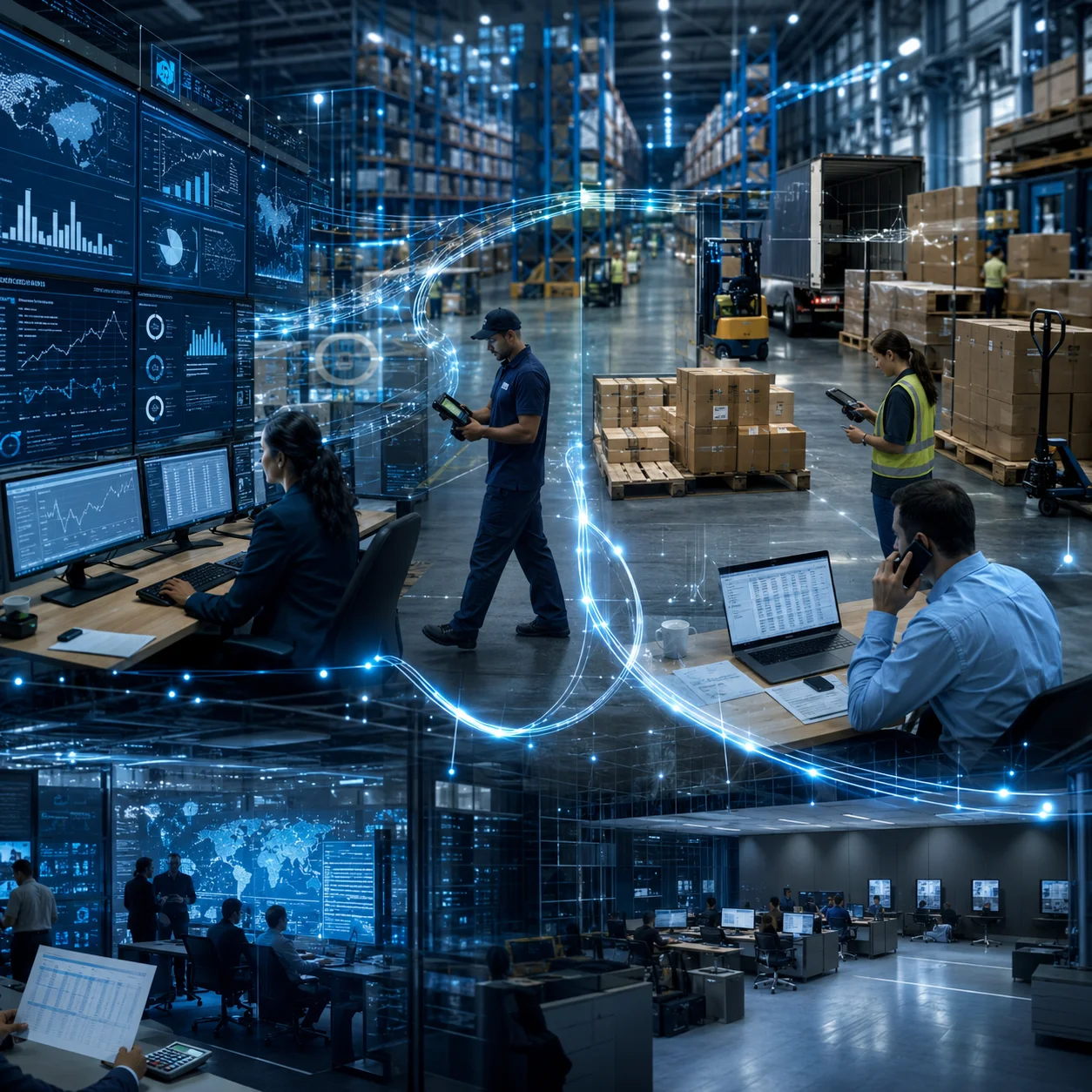
The Reality Most Logistics Companies Are Facing Today
Most logistics companies already invested heavily in digital transformation.
They already have:
WMS platforms
ERP systems
Barcode scanners
Tracking dashboards
Inventory software
Reporting tools
But operations are still struggling.
Dispatch delays still happen.
Inventory mismatches still happen.
Warehouse coordination still depends on calls and spreadsheets.
Approvals slow down operations.
Teams manually update systems.
Departments work in silos.
On the surface,
it looks digitised.
In reality,
many warehouse and logistics operations are still heavily manual behind the scenes.
Because software alone does not solve operational inefficiencies.
The real problem is workflow disconnect.
And as operations scale,
these operational gaps become more expensive.
This is exactly where Enterprise AI and intelligent workflow automation are beginning to create measurable business impact.
At Nyx Wolves,
we work closely with enterprise logistics and warehouse operations to build AI driven workflow automation systems, operational intelligence platforms, warehouse optimisation solutions, and scalable enterprise AI infrastructure.
Our experience includes operational transformation initiatives involving companies such as UPS, Bahri, and other enterprise environments where operational speed and visibility are critical.
The Biggest Operational Problem Most Companies Ignore
The biggest issue is not lack of visibility.
It is delayed operational execution.
Alt Text
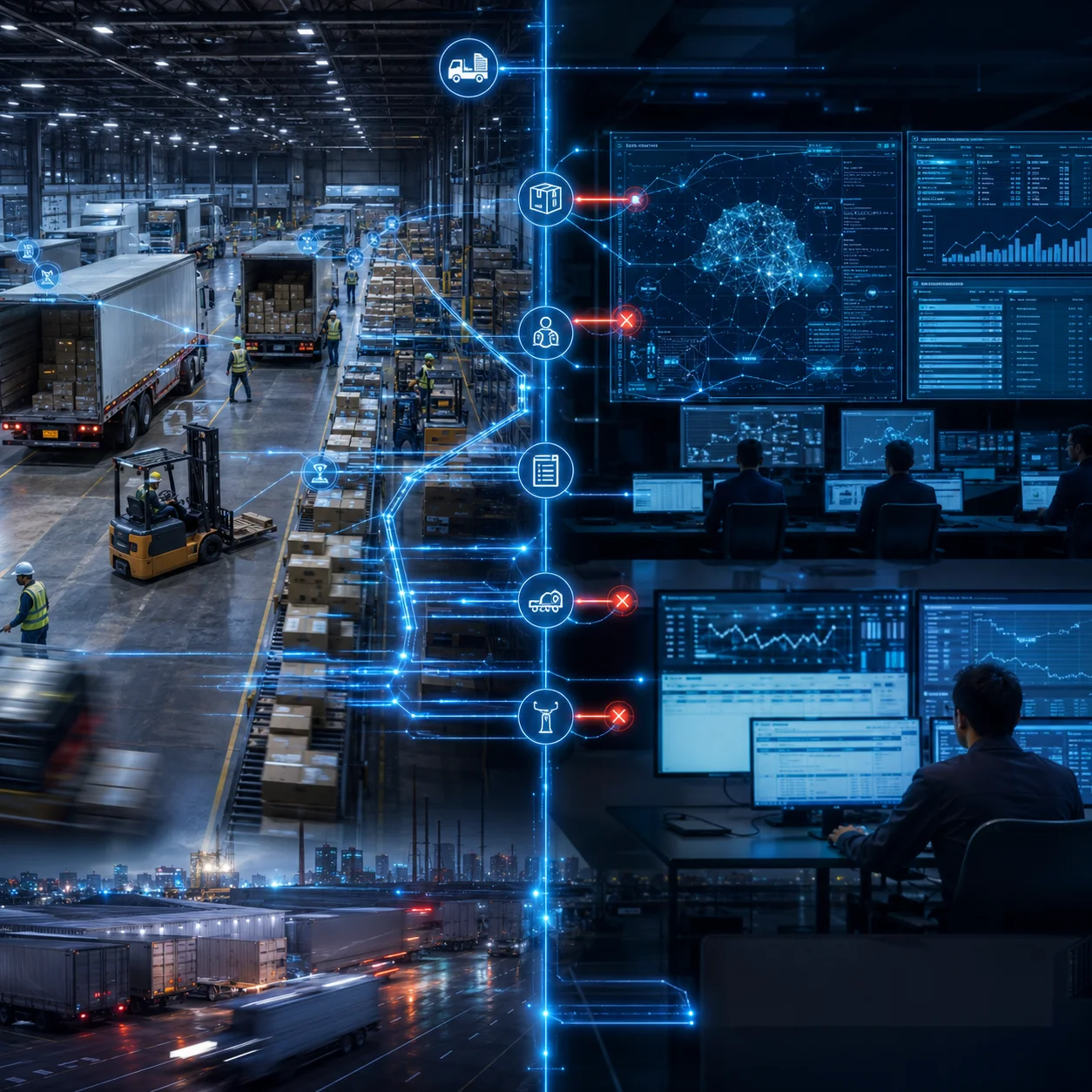
Real time warehouse operations moving faster than delayed system updates and manual approvals
For example:
A shipment physically arrives at the warehouse at 10:00 AM.
But:
inventory updates happen later
ERP systems sync slowly
dispatch teams receive delayed updates
manual approvals slow processing
warehouse managers rely on calls for coordination
That operational delay creates:
inventory inaccuracies
dispatch delays
customer communication issues
warehouse bottlenecks
manual operational dependency
This is called operational latency.
And it is one of the biggest hidden problems inside modern logistics operations.
Traditional dashboards only show what already happened.
AI powered operational systems help teams react before delays become expensive problems.
Why Traditional Digital Transformation Still Fails
Many companies believe adding more software will automatically improve operations.
But disconnected systems usually create more complexity.
Most enterprise logistics environments already use:
SAP
Oracle
WMS platforms
TMS systems
Barcode systems
ERP software
Operational dashboards
Yet operations still depend heavily on:
Excel sheets
manual updates
WhatsApp coordination
calls between departments
human approvals
repetitive reporting
Because most traditional systems were designed for visibility.
Not intelligent workflow orchestration.
This is where Enterprise AI changes the game.
Instead of simply displaying data,
AI systems continuously monitor operations, automate workflows, and reduce operational friction in real time.

What AI In Logistics Actually Means
Most people think AI in logistics means:
chatbots
analytics dashboards
predictive reports
AI generated insights
But the biggest operational ROI usually comes from workflow automation and execution intelligence.
Modern AI systems can:
detect operational bottlenecks automatically
trigger escalation alerts
automate warehouse workflows
improve dispatch coordination
reduce manual operational dependency
monitor inventory movement
predict operational delays
automate repetitive tasks
improve real time decision making
The goal is simple.
Reduce operational friction and improve execution speed.
Because faster execution creates better operational scalability.
How AI Is Transforming Warehouse And Logistics Operations
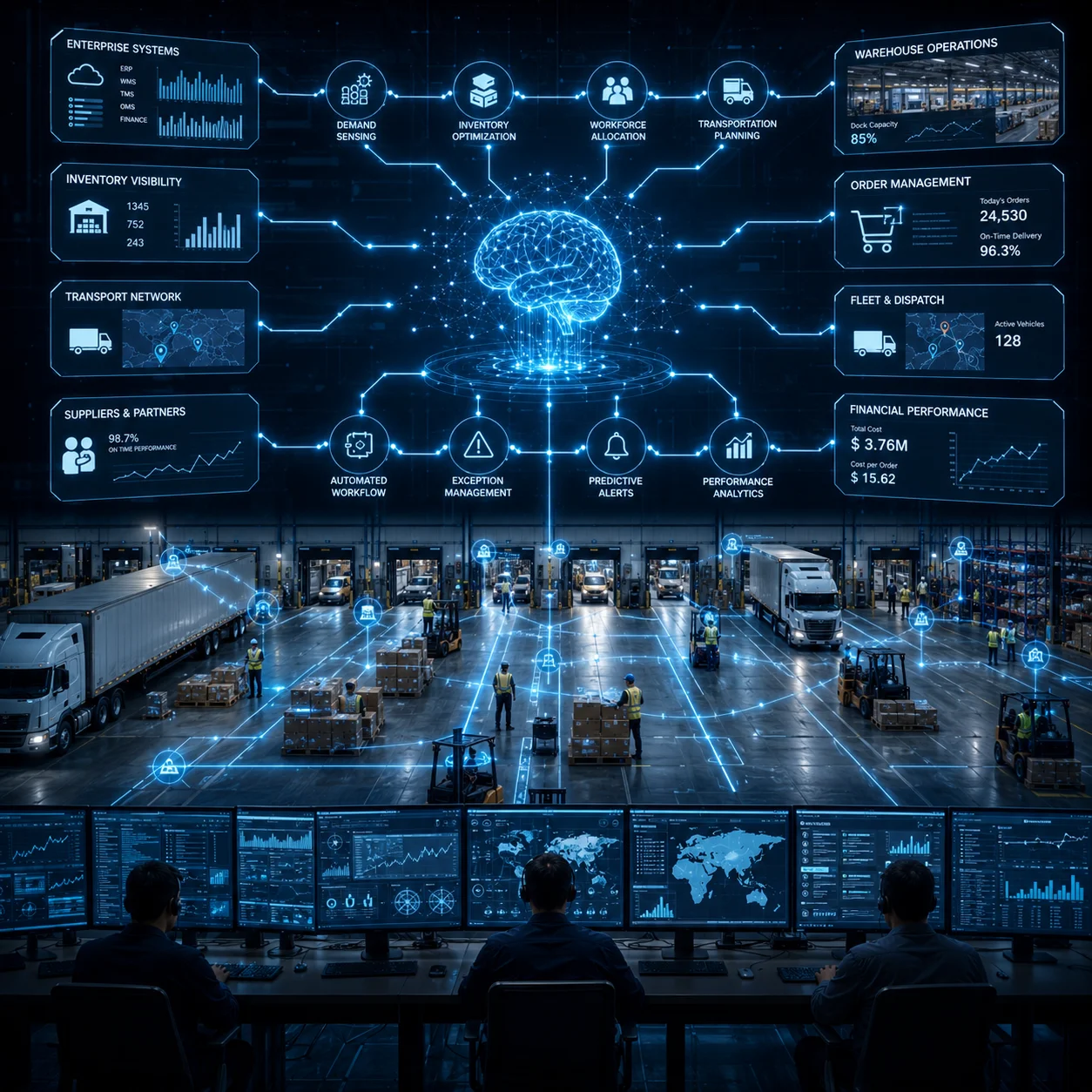
Intelligent Workflow Automation
One of the biggest improvements AI creates is reducing repetitive operational coordination.
AI powered workflow systems can:
automatically trigger operational updates
route approvals intelligently
send escalation alerts
manage workflow dependencies
reduce manual coordination
improve execution speed
This creates:
faster warehouse operations
lower operational delays
reduced manual workload
better warehouse efficiency
improved supply chain coordination
AI Powered Inventory Intelligence
Inventory management remains one of the biggest operational challenges in logistics.
Even companies with advanced WMS systems still face:
inventory mismatches
delayed stock updates
warehouse reconciliation issues
picking inefficiencies
incorrect inventory movement
AI systems help improve:
inventory tracking
real time reconciliation
smart replenishment planning
warehouse slot optimisation
inventory anomaly detection
predictive inventory movement
This improves operational accuracy while reducing inventory related losses.
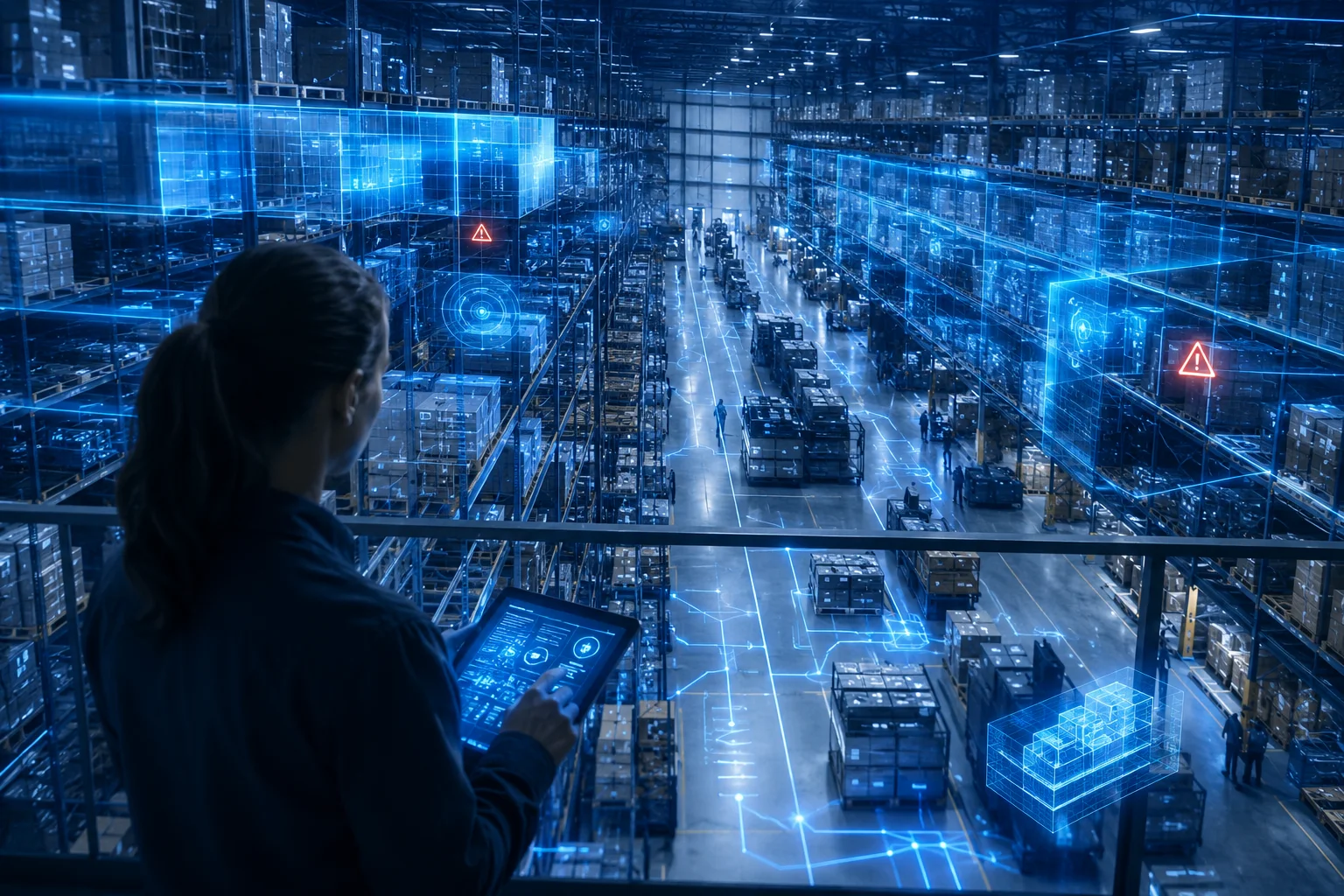
Still struggling with warehouse inefficiencies, delayed operational updates, or disconnected logistics workflows?
AI Driven Operational Visibility
Traditional dashboards are reactive.
AI operational intelligence systems are proactive.
Instead of simply showing reports,
AI continuously monitors workflows and identifies:
shipment delays
warehouse bottlenecks
dispatch risks
route inefficiencies
inventory anomalies
SLA risks
warehouse congestion
This allows operational teams to solve issues before they impact customers and operations.
OCR And Intelligent Document Automation
Logistics operations still involve large amounts of manual documentation.
Examples include:
shipment records
warehouse forms
delivery confirmations
customs documentation
invoices
POD documents
AI powered OCR systems can:
extract operational data automatically
reduce manual data entry
improve processing speed
reduce operational errors
integrate directly into ERP and warehouse systems
This creates faster operational workflows across the supply chain.
Why Most AI Projects Fail In Logistics
Most AI projects fail because companies focus on tools before understanding workflows.
Successful AI transformation requires:
workflow mapping
operational analysis
system integration planning
scalable infrastructure
process optimisation
operational visibility
At Nyx Wolves,
our approach focuses heavily on understanding operational bottlenecks before implementing AI systems.
We analyse:
warehouse workflows
inventory movement
dispatch operations
manual dependencies
approval chains
operational latency
communication gaps
Only after understanding operational realities do we design scalable AI systems aligned to real business workflows.
What Modern AI Enabled Logistics Infrastructure Looks Like
Modern enterprise logistics ecosystems are becoming operationally intelligent.
Modern AI enabled logistics environments now include:
AI powered workflow orchestration
warehouse intelligence systems
real time operational monitoring
AI powered OCR
predictive analytics
operational copilots
computer vision monitoring
automated reporting systems
real time anomaly detection
inventory intelligence systems
Instead of isolated software platforms,
companies are building connected operational intelligence ecosystems.
This creates:
better scalability
faster execution
lower operational cost
higher inventory accuracy
better customer experience
improved operational visibility

The Future Of Logistics Will Be Operationally Intelligent
The logistics industry is rapidly shifting from manual coordination toward intelligent operational ecosystems.
Before
Companies focused only on visibility dashboards
After
Companies focus on real time operational intelligence
Before
Operations depended heavily on manual coordination
After
AI automates workflow execution and operational orchestration
Before
Warehouse systems operated independently
After
Connected AI ecosystems coordinate operations continuously
Before
Operations reacted after problems occurred
After
AI predicts operational risks before escalation
This shift changes everything.
From:
manual workflows → intelligent automation
delayed updates → real time execution
reactive operations → predictive intelligence
fragmented systems → connected operational ecosystems
Looking to modernise your logistics or warehouse operations with Enterprise AI solutions?
Speak with our team to explore AI powered automation, operational intelligence systems, OCR workflows, and scalable logistics infrastructure.
Why Companies Partner With Nyx Wolves
Enterprise logistics transformation requires more than just software implementation.
Companies need partners who understand:
warehouse operations
enterprise workflows
AI infrastructure
system integrations
workflow orchestration
operational scalability
At Nyx Wolves,
we help enterprises build practical AI systems for:
warehouse automation
logistics workflow optimisation
AI powered operational intelligence
OCR and document automation
enterprise AI integrations
real time operational monitoring
workflow orchestration
operational analytics
Our focus is always on solving real operational bottlenecks that impact execution speed and scalability.
Conclusion
Most logistics and warehouse companies are not struggling because they lack software.
They are struggling because operations remain fragmented and heavily manual behind the scenes.
Enterprise AI changes this by:
automating workflows
improving operational visibility
reducing delays
optimising warehouse operations
improving execution speed
enabling operational intelligence
The future of logistics belongs to companies that can operate intelligently, automate efficiently, and scale without operational friction.
And that transformation has already started.