Introduction
Digital transformation has quickly shifted from a buzzword to a business necessity. However, many companies struggle to turn this concept into a concrete strategy. It’s no longer enough to simply adopt new technologies – businesses must rethink their operations, culture, and customer engagement strategies.
At Nyx Wolves, we understand that the path to digital transformation can be daunting, especially with the overwhelming amount of information out there. That’s why we’re here to break down the practical steps needed to implement digital transformation successfully and how our expertise can guide you every step of the way.
What is Digital Transformation?
Digital transformation is the process of using technology to fundamentally change how your organization operates, delivers value to customers, and adapts to market demands. This goes beyond just adopting new tools like cloud computing or AI – it requires reshaping internal processes, enhancing customer experiences, and developing new business models that are agile and scalable.
At Nyx Wolves, we believe in a holistic approach to digital transformation that focuses on people, AI & technology, and processes. It’s about evolving your organization into a digitally-empowered enterprise capable of thriving in a future-ready world.
Step 1: Assess Your Current State
Before diving into any transformation efforts, it’s crucial to evaluate where your business currently stands. Ask yourself:
- How are current processes affecting productivity?
- What pain points are employees and customers facing?
- Which areas of your business could benefit from digital enhancement?
Nyx Wolves specializes in conducting comprehensive digital audits. We examine your workflows, technologies, customer interactions, and data management to identify opportunities for improvement. By understanding your starting point, we can help prioritize the right initiatives for transformation.
Here is a more expanded and strategic version of that section, written in a professional tone and aligned with SEO around digital transformation strategy:

Step 2: Define Clear Goals and Objectives
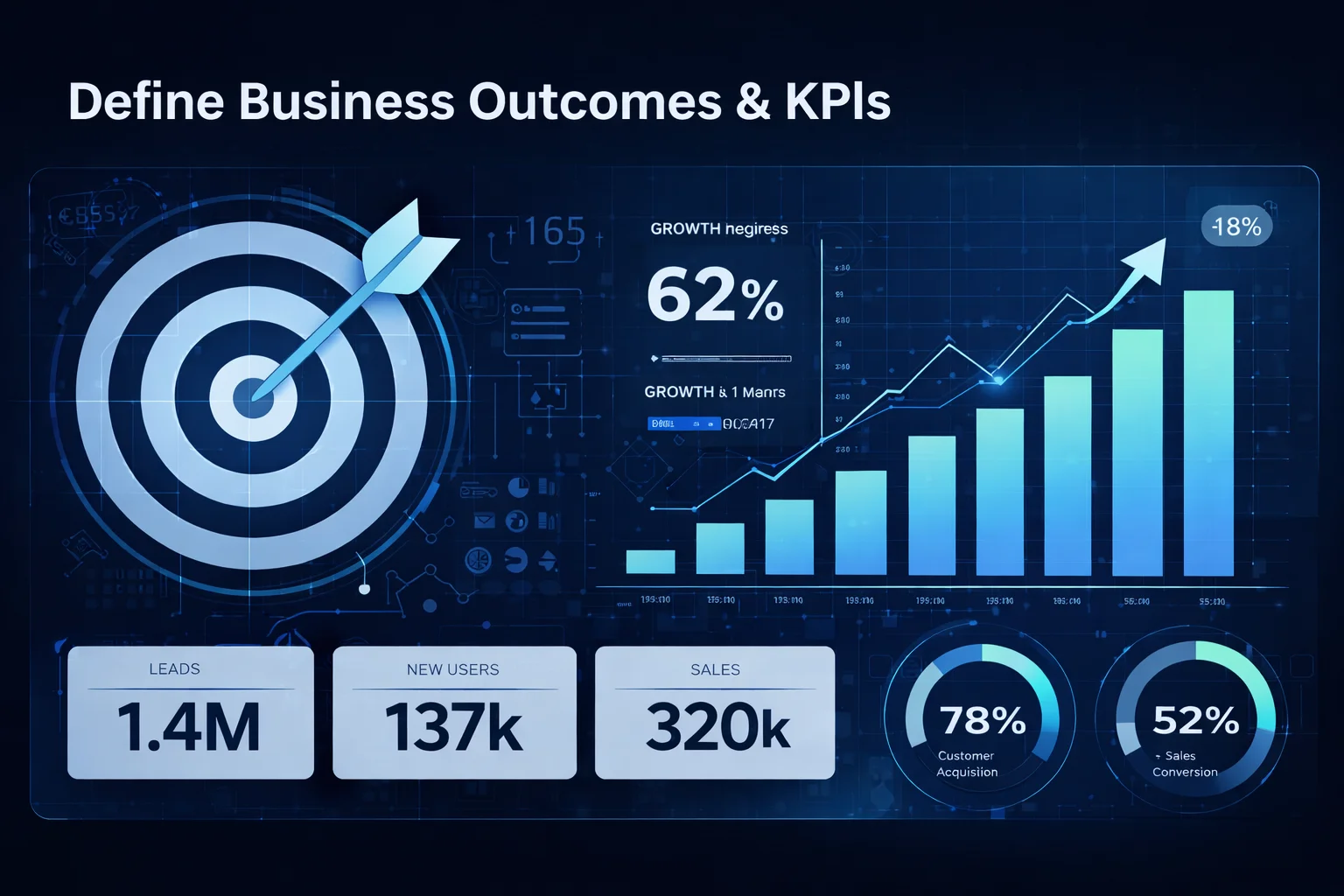
Digital transformation is not a plug and play solution. It is a strategic shift. Without clearly defined goals, organizations risk investing in technology without measurable impact. That is why defining what success looks like is the foundation of any effective digital transformation strategy.
Before implementing new platforms, automation tools, or AI systems, leadership must answer a critical question:
What business outcome are we trying to achieve?
Your digital transformation goals may include:
Identify bottlenecks in workflows, redundant manual approvals, disconnected systems, or slow reporting cycles. A clear objective could be reducing process turnaround time by 40 percent or increasing team productivity through workflow automation.
Digital transformation should improve how customers interact with your brand. This may include reducing response times, enabling omnichannel engagement, personalizing communication through data analytics, or launching self service portals.
Repetitive tasks in HR, finance, operations, or customer support can drain resources. Setting automation goals such as eliminating manual data entry or deploying AI powered chat support creates measurable operational gains.
Technology should optimize spend, not increase inefficiencies. Clear cost reduction targets such as lowering infrastructure expenses through cloud migration or reducing operational overhead via automation make digital investments accountable.
Digital transformation is also about growth. Objectives might include launching a new AI enabled product line, building digital revenue channels, or creating subscription based service models.
Step 3: Build a Digital-First Culture
A key element in the success of digital transformation is fostering a digital-first culture. Technology is only as effective as the people using it. Encourage collaboration, communication, and agility across your teams to ensure they embrace the changes.
Nyx Wolves can help implement a change management strategy that prepares your workforce for the transition. We offer workshops, training, and support to ensure your employees are equipped with the skills needed to succeed in a digitally transformed organization.
Step 4: Invest in the Right Technology
| Technology Area | What It Enables | Where It’s Used Most | Typical Business Impact | What Nyx Wolves Does |
|---|---|---|---|---|
| Cloud Platforms (AWS, Azure, GCP) | Elastic scaling, faster deployments, centralized infrastructure, improved uptime | Hosting apps, data storage, APIs, enterprise systems, DevOps | Faster go to market, reduced infra overhead, improved reliability and scalability | Cloud readiness assessment, migration planning, cloud architecture, cost optimization, security hardening, DevOps pipelines |
| AI and Automation (LLMs, RPA, AI Agents, Workflow Automation) | Automates repetitive work, reduces errors, improves response speed, enables intelligent decision support | Customer support, operations, HR, finance, sales, internal workflows | Lower operational costs, faster resolution, better accuracy, increased productivity | Identify automation opportunities, build AI agents, implement workflow automation, integrate with existing tools, ensure monitoring and governance |
| Data Analytics and BI (Dashboards, Reporting, Predictive Analytics) | Real time visibility, KPI tracking, forecasting, anomaly detection | Leadership reporting, operations monitoring, product analytics, finance insights | Better decisions, quicker course correction, measurable performance gains | Data strategy, KPI framework, data pipelines, dashboard design, advanced analytics and forecasting models |
| CRM Systems (Salesforce, HubSpot, Zoho, Dynamics) | Centralized customer data, pipeline tracking, personalization, campaign automation | Sales pipelines, lead nurturing, customer lifecycle, retention workflows | Higher conversion rates, better follow ups, improved customer experience | CRM setup and customization, integrations with website and comms channels, automation of sales workflows, lead scoring, analytics and reporting |
| Integration Layer (APIs, Middleware, iPaaS) | Connects systems to avoid data silos, improves interoperability | ERP to CRM, payments, logistics, HRMS, multi app environments | Fewer manual handoffs, reduced duplicate work, data consistency | Integration design, API development, iPaaS implementation, secure data flows, monitoring and error handling |
| Cybersecurity and Compliance (IAM, SOC monitoring, encryption) | Protects data, reduces risk, ensures regulatory compliance | Any system handling customer, financial, or health data | Lower breach risk, audit readiness, trust and reliability | Security assessment, IAM and access control, encryption and key management, compliance mapping, secure architecture implementation |
| Customer Experience Tech (Chat, Voice, Omnichannel, Personalization) | Faster customer service, personalized engagement, consistent experience across channels | Websites, apps, call centers, WhatsApp, email, support portals | Better satisfaction, higher retention, reduced support load | Build omnichannel experiences, deploy chat and voice agents, personalization models, customer journey optimization |
Step 5: Develop an Agile Roadmap
Capture current processes, systems, bottlenecks, customer pain points, data maturity, and delivery constraints.
Convert business goals into measurable targets (cost, speed, CX, revenue, risk, quality).
List potential initiatives across people, process, and technology (automation, AI, cloud, analytics, CX, integration).
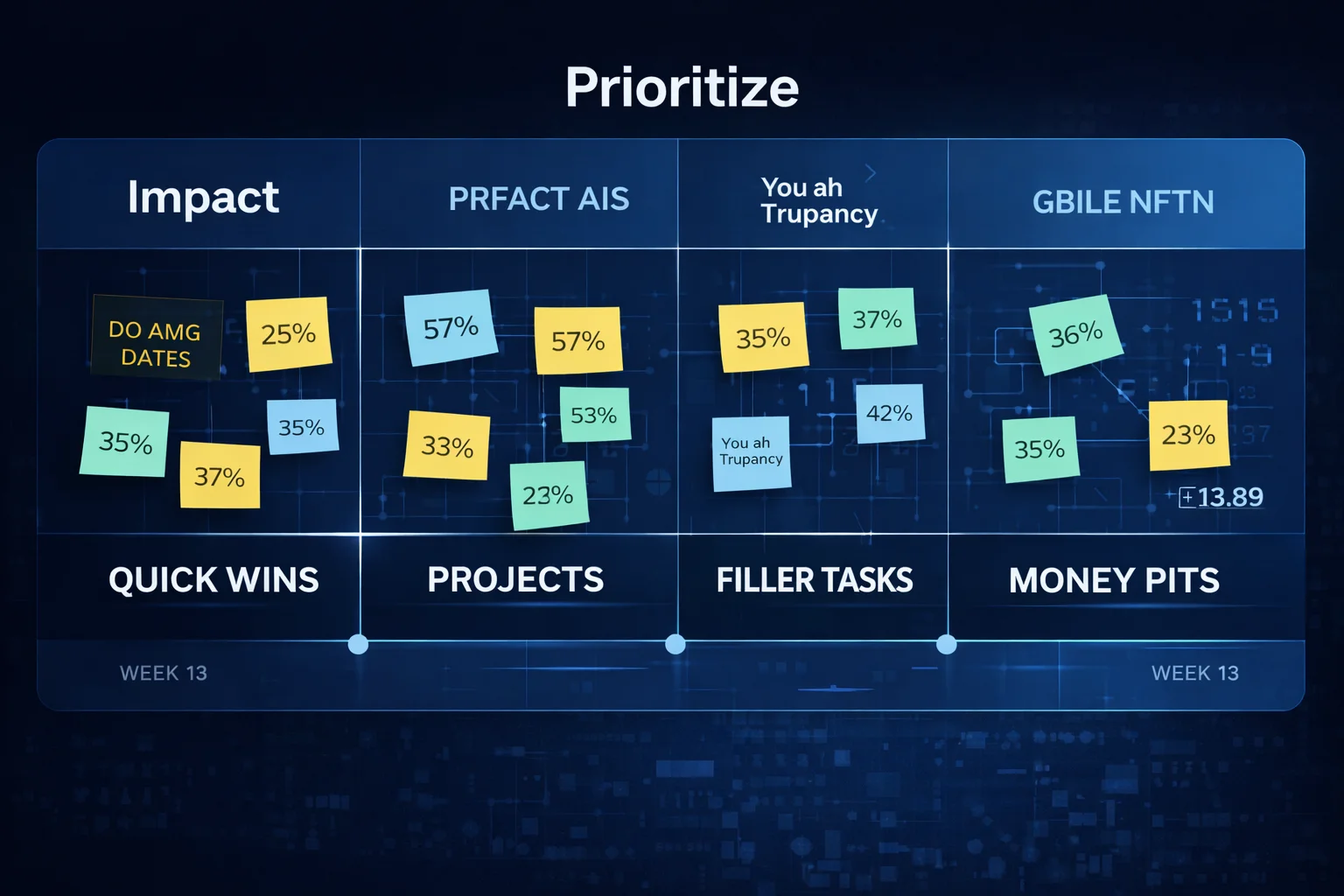
Score each initiative by business value, feasibility, dependencies, risk, and time to impact.
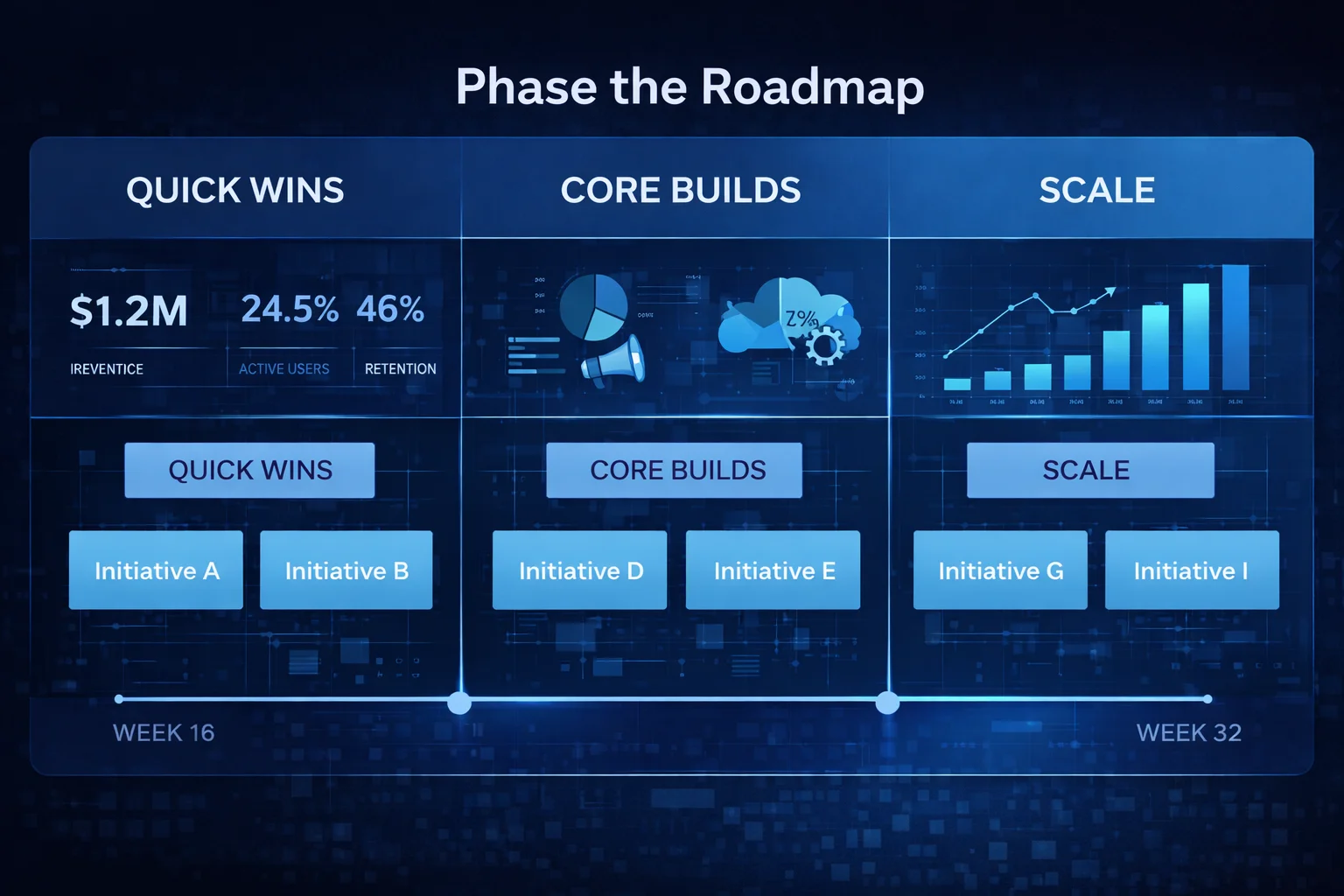
Phase 1: Quick wins (2 to 6 weeks)
Phase 2: Core transformation builds (6 to 16 weeks)
Phase 3: Scale and optimization (ongoing)
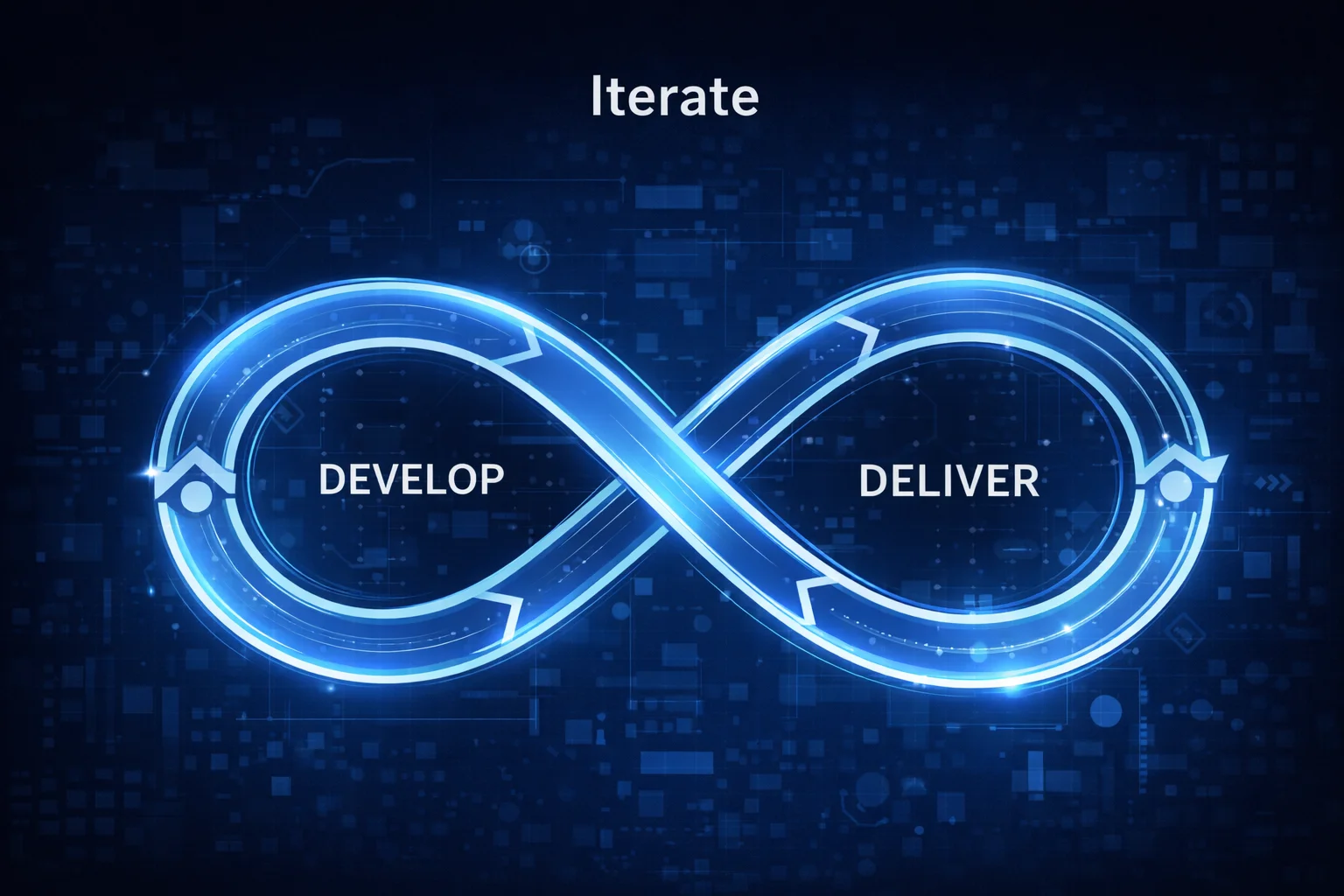
Break each initiative into sprint-ready epics, assign owners, define acceptance criteria, and align on delivery cadence.
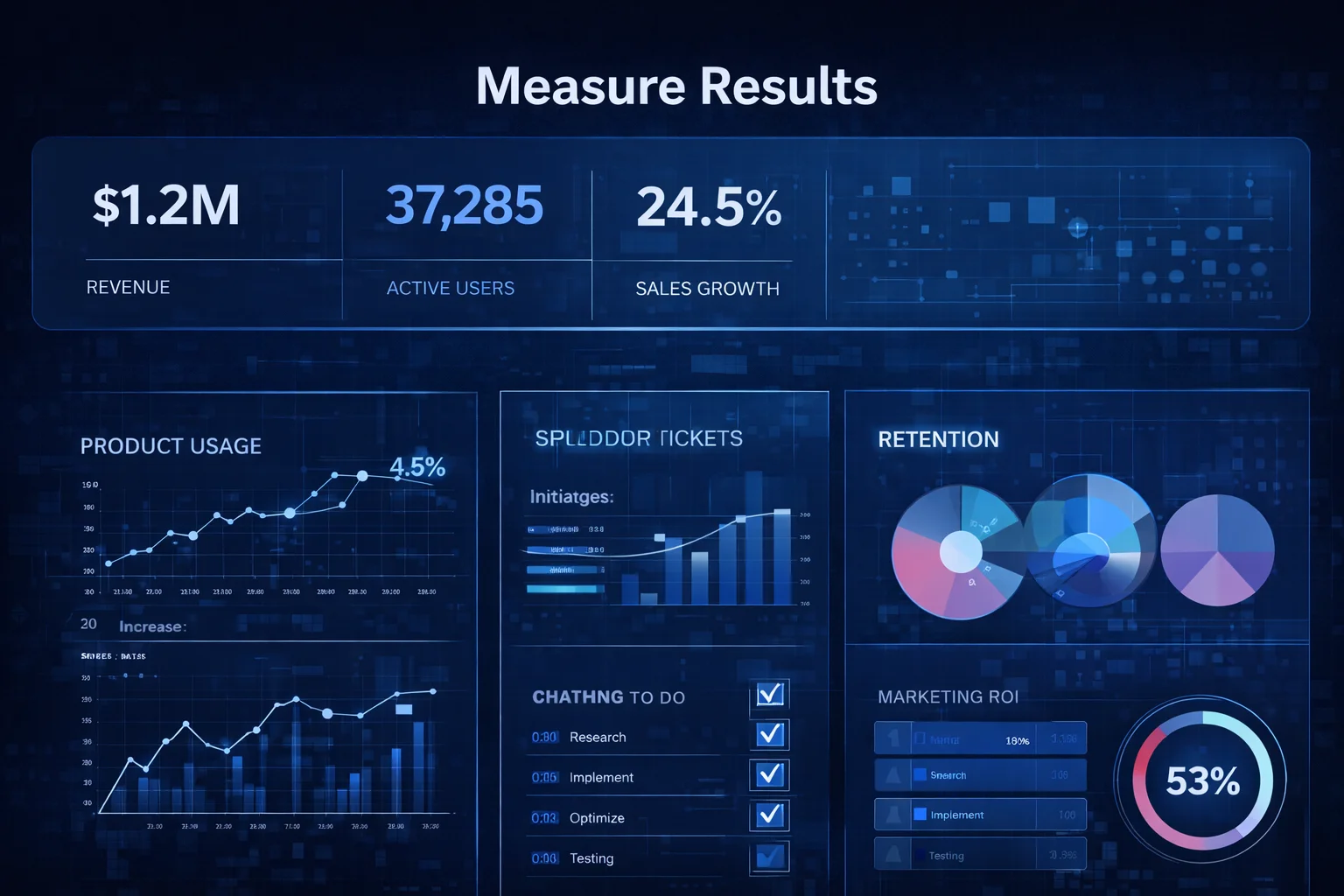
Deploy in increments, integrate with existing systems, track KPIs, monitor adoption and performance.
Use learnings from real usage to refine workflows, retrain models, improve automations, and reprioritize the roadmap.
Establish ongoing governance for security, compliance, change control, and scalable operating processes.
Step 6: Foster Data-Driven Decision Making
Data is at the heart of digital transformation. With the right tools in place, your business can leverage big data, machine learning, and real-time analytics to make more informed, accurate decisions.
Nyx Wolves assists businesses in data governance, ensuring your data is accurate, secure, and accessible. We also help you implement advanced analytics platforms that can deliver actionable insights for smarter decision-making.
Step 7: Focus on Customer Experience
Digital transformation ultimately aims to create a better experience for customers. With the rise of omnichannel experiences, customers now expect a seamless and personalized journey across multiple platforms.
At Nyx Wolves, we help businesses enhance their customer engagement strategies through AI-powered solutions, chatbots, and predictive analytics. We work with you to integrate digital channels that provide real-time support, personalized recommendations, and seamless interactions across touchpoints.
Step 8: Ensure Security and Compliance
As businesses become more digital, the importance of cybersecurity and compliance cannot be overstated. Protecting sensitive customer data, ensuring compliance with regulations, and maintaining business continuity are all critical elements of a successful digital transformation.
Nyx Wolves offers cybersecurity assessments and helps implement secure cloud architectures that ensure your systems are protected. We also assist in navigating compliance requirements such as GDPR and HIPAA, ensuring your digital transformation aligns with legal and regulatory standards.
Step 9: Measure and Optimize
Digital transformation is an ongoing process. It’s essential to continuously monitor performance, gather feedback, and optimize operations. Measuring the ROI of your digital initiatives ensures that your efforts are yielding the desired results.
At Nyx Wolves, we implement performance metrics and analytics that track the success of digital transformation efforts. We use this data to fine-tune processes, improve user experiences, and ensure that your organization remains competitive in a rapidly changing market.
Ready to Turn Your Digital Transformation Strategy Into Measurable Results?
Partner with Nyx Wolves to design, implement, and scale a future ready digital transformation roadmap powered by AI, automation, and data driven decision making.
Conclusion: Transforming with Nyx Wolves
Digital transformation is a journey that requires careful planning, execution, and continuous improvement. By following these practical steps and working with a trusted partner like Nyx Wolves, businesses can successfully navigate the complexities of digital change and emerge stronger and more agile.
Whether you’re just beginning your transformation journey or looking to refine your existing strategy, Nyx Wolves is here to guide you every step of the way. From technology integration to change management and continuous optimization, we’re your partner in achieving a digitally empowered future.