Introduction
Software development has entered a new era. Across startups, enterprises, governments and regulated industries organizations are under pressure to build digital products faster, reduce costs and respond to change without increasing engineering complexity.
Low code and no code development platforms have emerged as a structural solution to this challenge.
What started as a niche approach for simple internal tools has evolved into a mature production ready ecosystem powering enterprise applications, mission critical workflows, customer platforms and AI driven systems. Today low code and no code platforms are used across North America Europe the Middle East Asia Pacific and Latin America to accelerate digital transformation at scale.
This guide provides a complete practical and strategic understanding of low code and no code development platforms including how they work where they are used, benefits limitations and how organizations can adopt them successfully.
What Are Low Code and No Code Development Platforms
Low code development platforms allow applications to be built using visual modeling drag and drop components prebuilt logic and minimal hand coding. No code platforms go a step further by enabling non technical users to create applications without writing code at all.
Both approaches reduce reliance on traditional software development workflows while maintaining flexibility, scalability and security when implemented correctly.
The difference between low code and no code is not capability but who builds the application.
Low code platforms are typically used by developers, architects and technical teams to accelerate delivery.
No code platforms are often used by business users, operations teams and product owners to build internal tools, automate workflows and launch MVPs.
Together they form a continuum rather than two separate categories.
Why Low Code and No Code Adoption Is Accelerating Globally
Speed to Market
Traditional software development cycles often take months or years from idea to production. Low code platforms reduce development time dramatically by eliminating repetitive boilerplate coding and providing reusable components. Applications that once required multiple sprints can now be delivered in weeks or even days.
This speed advantage is a primary driver for startups, enterprises and governments alike.
Cost Optimization
Software development costs continue to rise globally due to talent shortages, infrastructure expenses and maintenance overhead.
Low code reduces these costs by:
• Lowering engineering hours
• Reducing rework
• Minimizing long term maintenance
• Enabling reuse across applications
Organizations can allocate engineering resources to complex high value problems while using low code for the majority of business workflows.
Addressing the Global Developer Shortage
There is a persistent global shortage of experienced software engineers. Low code and no code platforms allow organizations to expand their development capacity by enabling non technical teams to participate in application creation under proper governance.
This democratization of development reduces bottlenecks and increases organizational agility.
Enterprise Grade Security and Compliance
Modern low code platforms are no longer lightweight tools.
They support
• Role based access control
• Audit logs
• Encryption at rest and in transit
• Compliance with industry regulations
• Secure integration with existing systems
This makes them suitable for regulated industries such as finance, healthcare, logistics, energy and government.
Core Use Cases for Low Code and No Code Platforms
Enterprise Internal Applications
Workflow automation
Automates repetitive business processes such as approvals, task routing and notifications to reduce manual effort and errors.
Approval systems
Enables configurable approval flows for finance HR procurement and compliance without building custom logic from scratch.
Reporting dashboards
Provides real time operational and management dashboards by connecting multiple data sources into a single visual layer.
CRM and ERP extensions
Extends existing enterprise systems with custom workflows interfaces and integrations without modifying core platforms.
Data integration tools
Connects APIs databases and third party systems to synchronize data and eliminate manual data handling.
These applications increase operational efficiency while avoiding long development cycles and heavy maintenance costs.
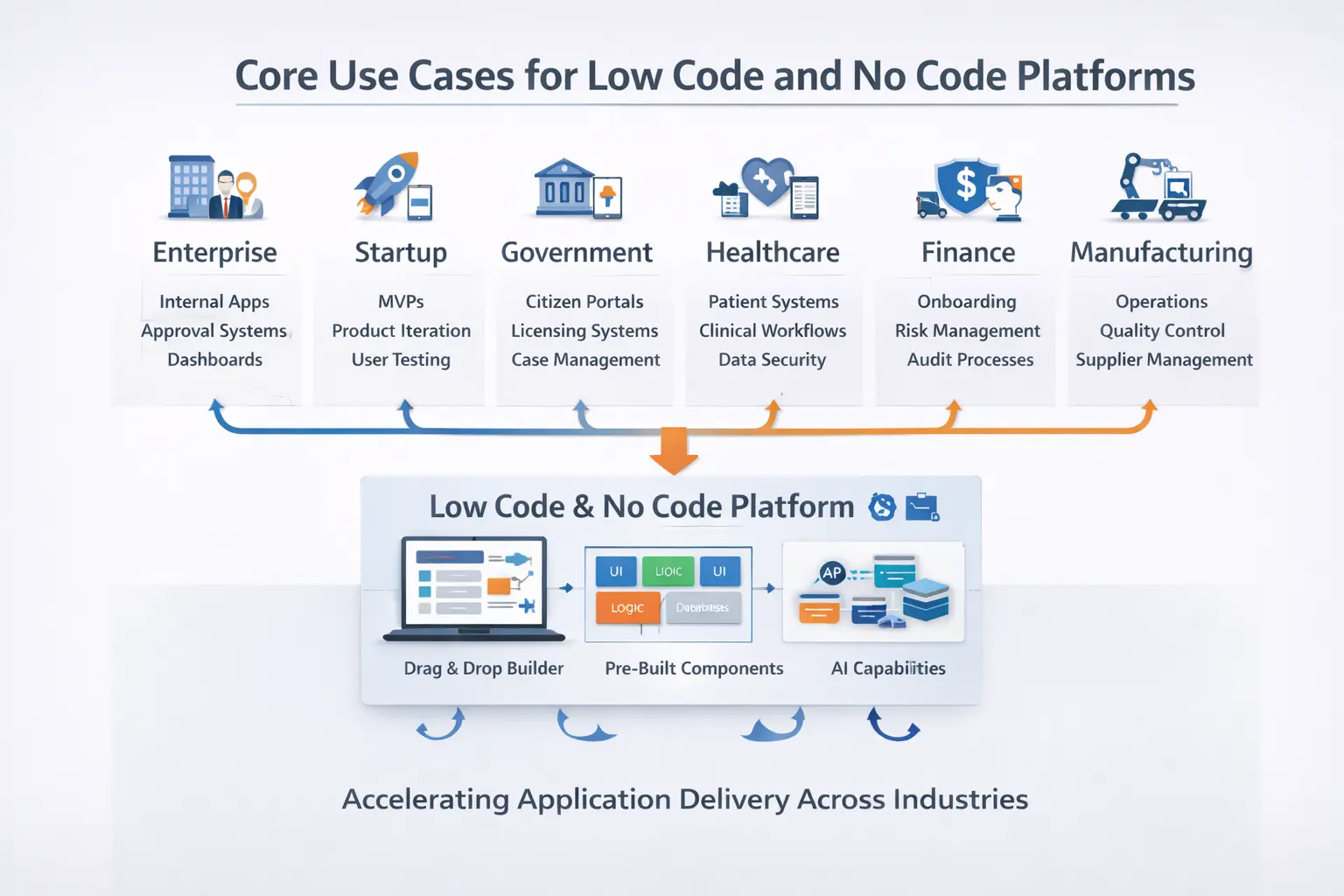
Startup MVP and Product Development
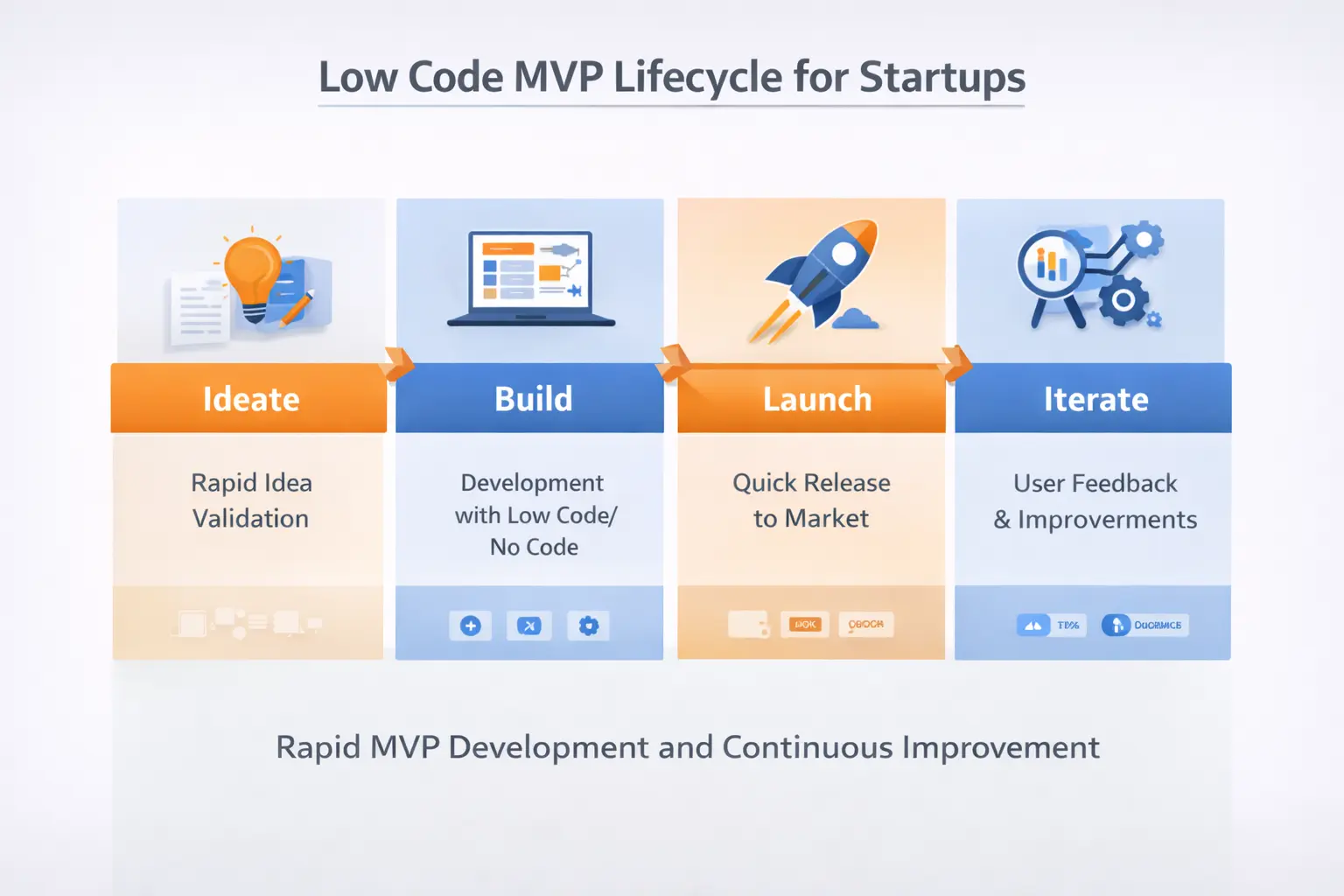
Launch MVPs faster
Allows startups to move from idea to functional product in weeks instead of months.
Validate product market fit
Enables rapid testing of features and user flows before committing to full scale engineering.
Iterate rapidly based on feedback
Supports quick changes and feature updates without reworking large codebases.
Reduce early stage development costs
Minimizes upfront engineering spend while preserving the ability to scale later.
Low code helps founders focus on differentiation user experience and growth instead of infrastructure complexity.
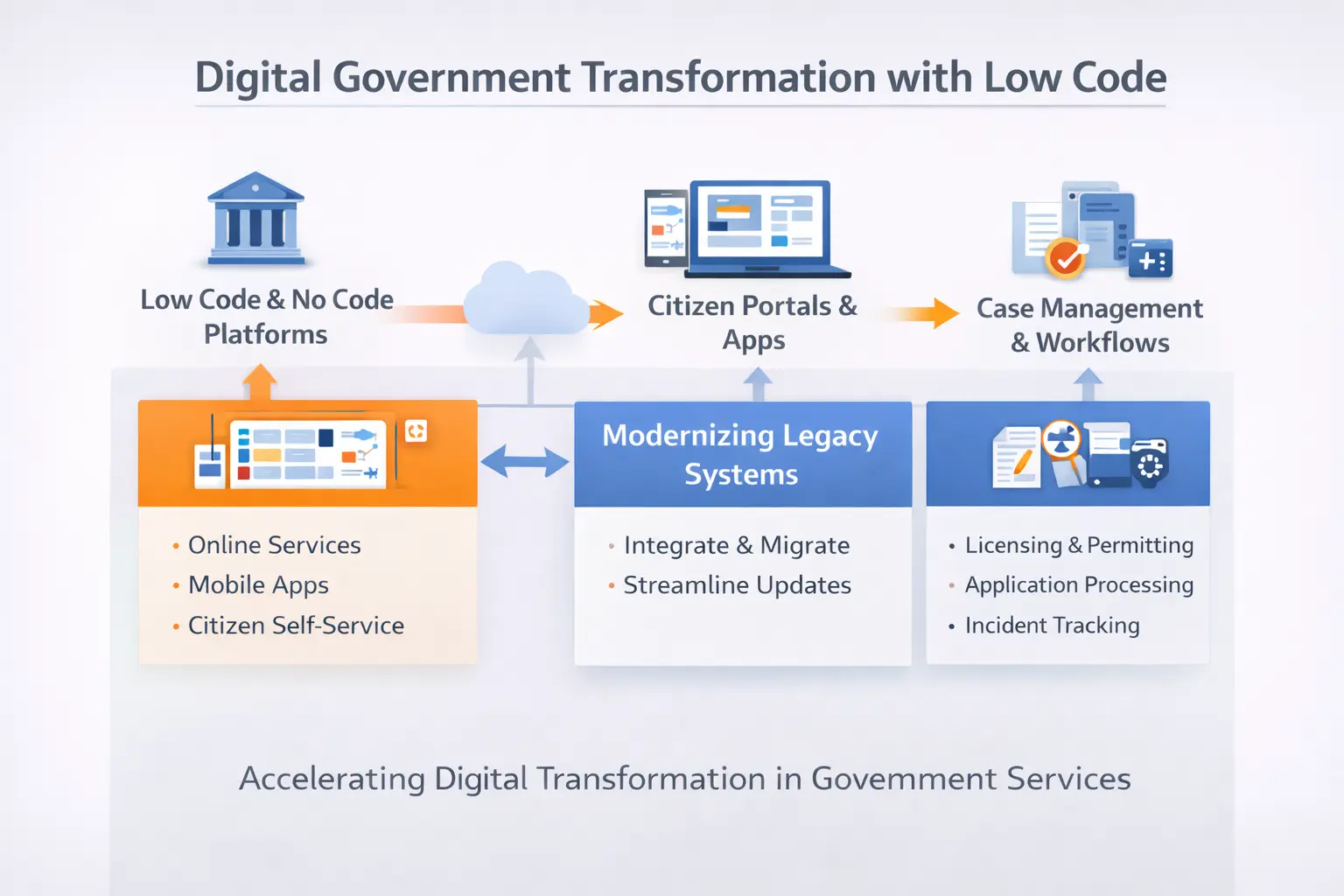
Government and Public Sector Applications
Citizen portals
Creates digital platforms for public services requests and communication with improved accessibility.
Licensing systems
Automates license application review approval and renewal workflows with auditability.
Case management tools
Supports tracking and resolution of cases across departments with standardized processes.
Compliance workflows
Ensures regulatory adherence through controlled workflows role based access and audit logs.
Low code enables governments to modernize services faster while maintaining security governance and compliance.
Industry Specific Applications
Healthcare
Builds patient intake scheduling and clinical workflow systems with secure handling of sensitive data.
Finance
Creates onboarding approval and risk management tools aligned with regulatory requirements.
Logistics
Develops tracking automation and operational dashboards integrated with ERP IoT and supply chain systems.
Manufacturing
Supports operations monitoring quality control and supplier management through real time dashboards and workflows.
Industry specific low code applications deliver speed while adapting to sector specific regulations and processes.
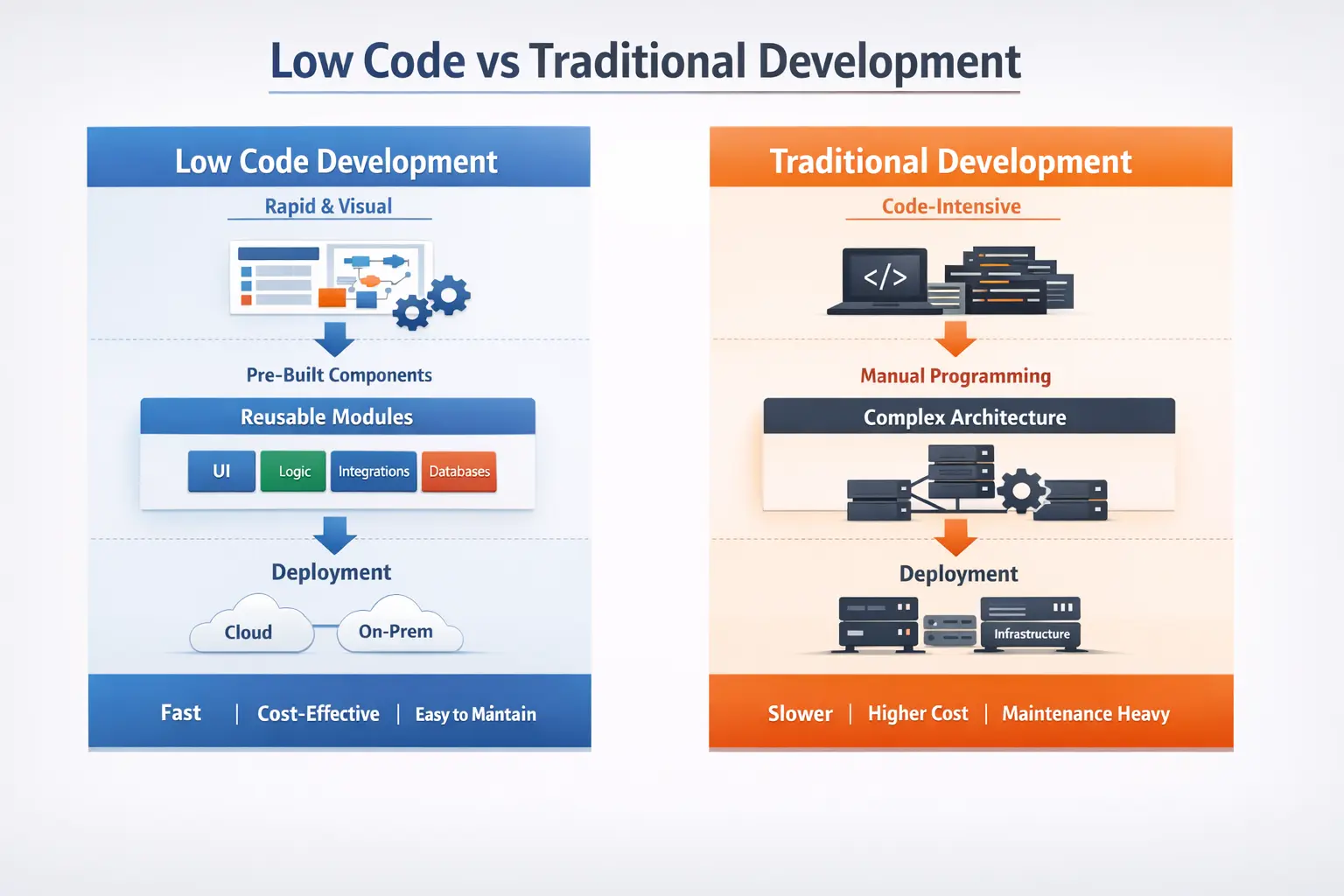
Low Code vs Traditional Software Development
| Aspect | Low Code | Traditional Development |
|---|---|---|
| Development Speed | Very High | Low |
| Cost | Lower | Higher |
| Time to Market | Weeks | Months |
| Flexibility | High | Very High |
| Maintenance | Simplified | Complex |
| Scalability | Enterprise Ready | Enterprise Ready |
Low code does not replace traditional development entirely.
Instead it complements it by handling approximately 70 to 80 percent of common application needs while reserving traditional development for highly specialized or performance critical systems.
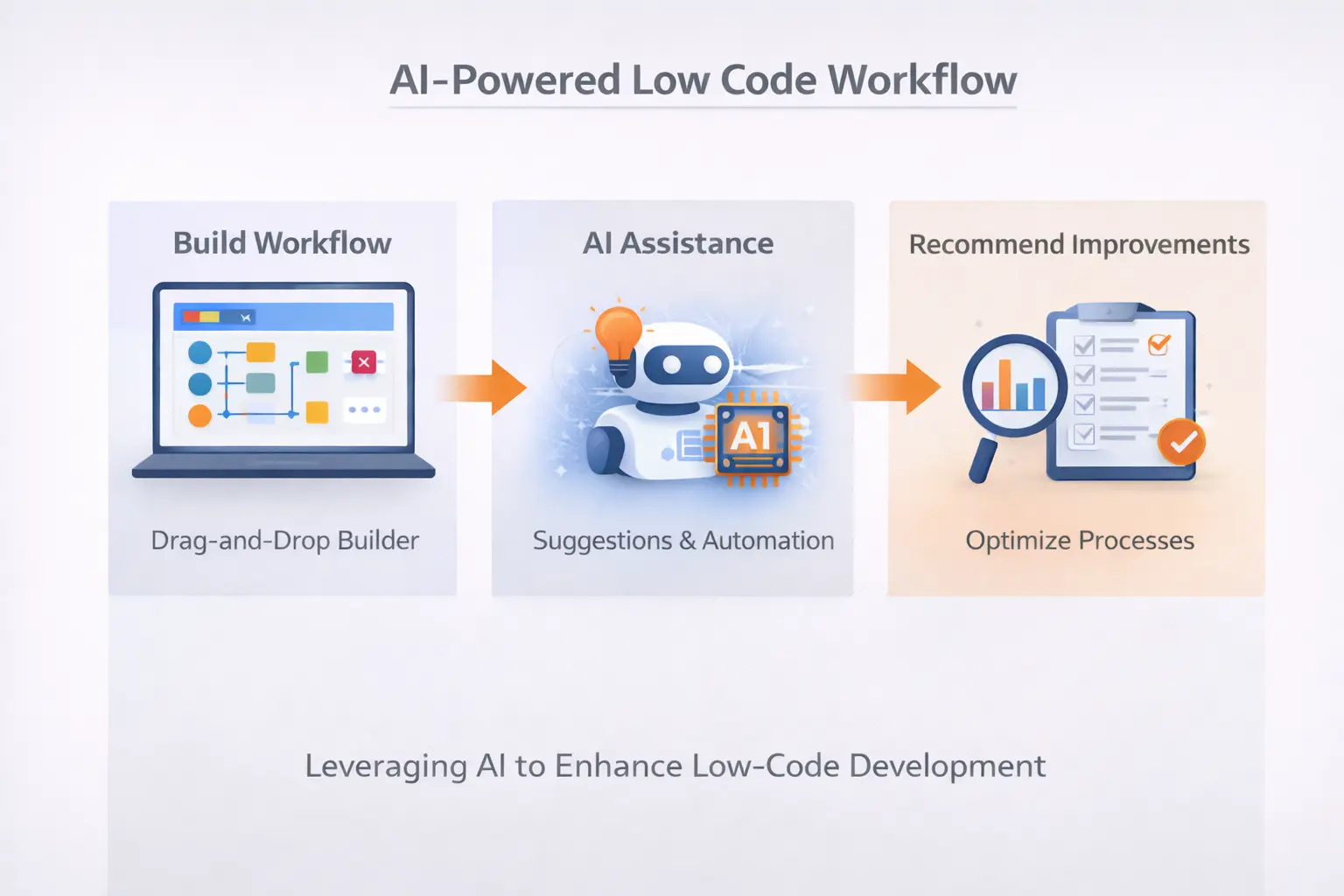
The Role of AI in Modern Low Code Platforms
Artificial intelligence has significantly enhanced low code capabilities.
Modern platforms now include
• Natural language to application generation
• AI assisted workflow creation
• Automated validation and testing
• Predictive recommendations
• Intelligent integrations
This allows users to describe what they want and have the platform generate functional application logic automatically.
AI powered low code platforms reduce the learning curve and increase productivity across technical and non technical users.
Scalability and Performance Considerations
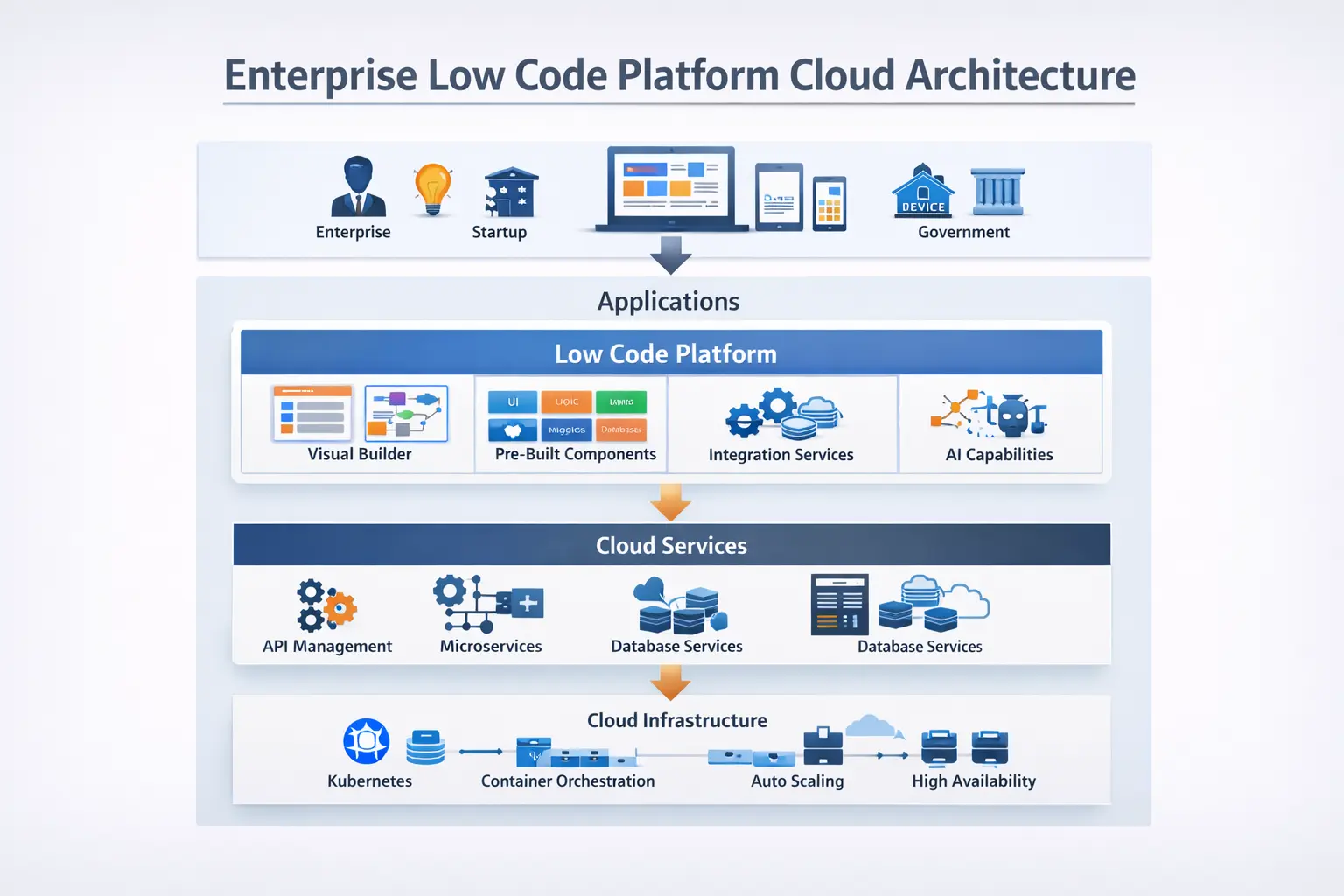
A common concern with low code and no code platforms is whether applications built on them can scale to enterprise levels. Modern enterprise grade platforms are designed on cloud native architectures that support horizontal scaling, microservices based integrations, API first design principles, and high availability configurations.
When implemented with the right architectural practices, low code applications can reliably support large user bases, high transaction volumes, and complex workloads across multiple regions. Scalability is less about the low code approach itself and more about choosing a platform that is built for production use and designing applications with performance in mind from the outset.
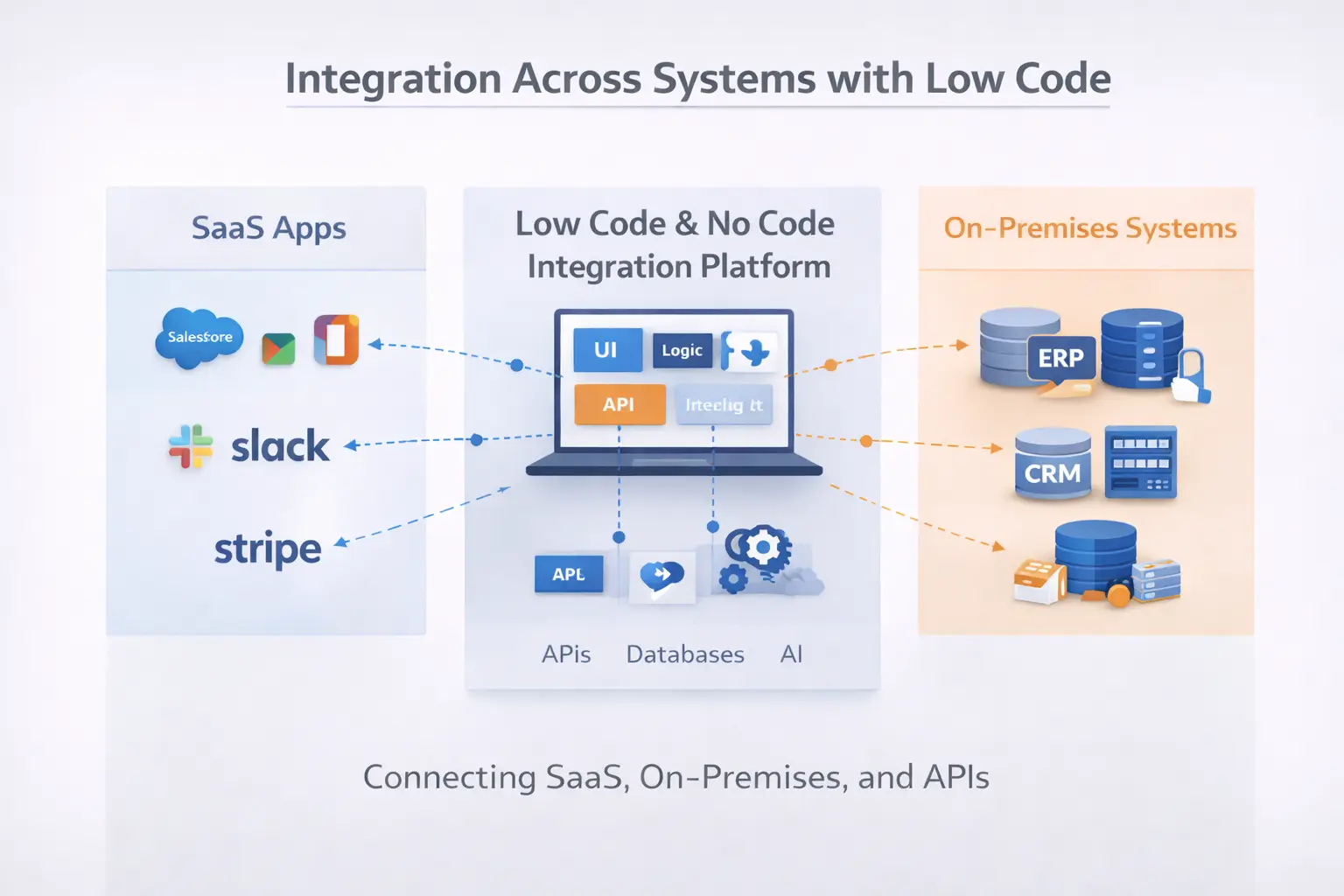
Integration Capabilities
Integration capability is one of the most critical factors in enterprise adoption of low code platforms. Modern low code solutions integrate seamlessly with existing systems using REST APIs, webhooks, direct database connections, enterprise software connectors, and cloud services.
This flexibility allows organizations to operate in hybrid environments where legacy systems coexist with modern applications. Strong integration support ensures that low code applications are not isolated tools but become part of the broader digital ecosystem, enabling data consistency, automation, and real time insights across the organization.
Governance and Control in Low Code Development
Successful adoption requires governance.
Organizations should implement
• Development standards
• Access controls
• Approval workflows
• Versioning and rollback mechanisms
• Centralized monitoring
This ensures that speed does not come at the expense of security or maintainability.
Choosing the Right Low Code Platform
Key evaluation criteria include
Security and Compliance
Ensure the platform meets industry and regional regulatory requirements.
Customization Depth
Assess how much custom logic and extensibility is supported.
Vendor Lock In Risk
Understand data portability and long term dependency implications.
Deployment Flexibility
Cloud on prem or hybrid options depending on requirements.
Ecosystem and Support
Availability of integration documentation and long term roadmap.
The best platform depends on business size, industry and digital maturity.
Not sure if low code can scale for your requirements?
Get a practical evaluation covering security, scalability, integrations, and long term ROI before you commit.
Common Myths About Low Code and No Code
Low code is only for simple apps
Modern platforms support complex enterprise workflows.
Low code replaces developers
It augments developers rather than replacing them.
Low code is not secure
Enterprise grade platforms meet strict security standards.
Low code applications do not scale
Properly designed low code applications scale effectively.
Low Code as a Competitive Advantage
Organizations that adopt low code strategically gain a sustained competitive advantage. Faster innovation cycles allow teams to respond quickly to market changes and customer needs. Reduced operational friction improves efficiency across departments by eliminating manual processes and bottlenecks.
Improved collaboration between business and IT teams aligns technology development with business objectives. Over time, these advantages compound as internal capabilities mature, enabling organizations to deliver more value with fewer resources while maintaining agility.
Future Outlook for Low Code and No Code
The adoption of low code and no code platforms is expected to accelerate globally in the coming years. Key trends include deeper integration of artificial intelligence, the rise of industry specific platforms tailored to regulated sectors, stronger governance frameworks for enterprise scale deployment, increased adoption by large organizations, and expansion into core business systems.
As these platforms mature, they will play an increasingly central role in enterprise architecture. Organizations that delay adoption risk falling behind competitors who are able to build, adapt, and scale digital solutions more rapidly.
Final Thoughts
Low code and no code development platforms represent a fundamental shift in how software is built, delivered and maintained. They are no longer optional tools but strategic enablers of digital transformation.
Businesses that adopt them thoughtfully gain speed efficiency and long term scalability. Those that resist risk increased costs, slower innovation and reduced competitiveness.
Ready to explore low code or no code for your business?
Talk to our experts to assess the right platform, architecture, and use cases for your industry and growth stage.
Partner with Nyx Wolves
As an experienced provider of AI and IoT software solutions, Nyx Wolves is committed to driving your digital transformation journey.
Your benefits:
- Client-oriented
- Independent
- Competent
- Results-driven
- Problem-solving
- Transparent
What happens next?
We Schedule a call at your convenience
We do a discovery and consulting meting
We prepare a proposal
Schedule a Free Consultation
See Our Case Studies
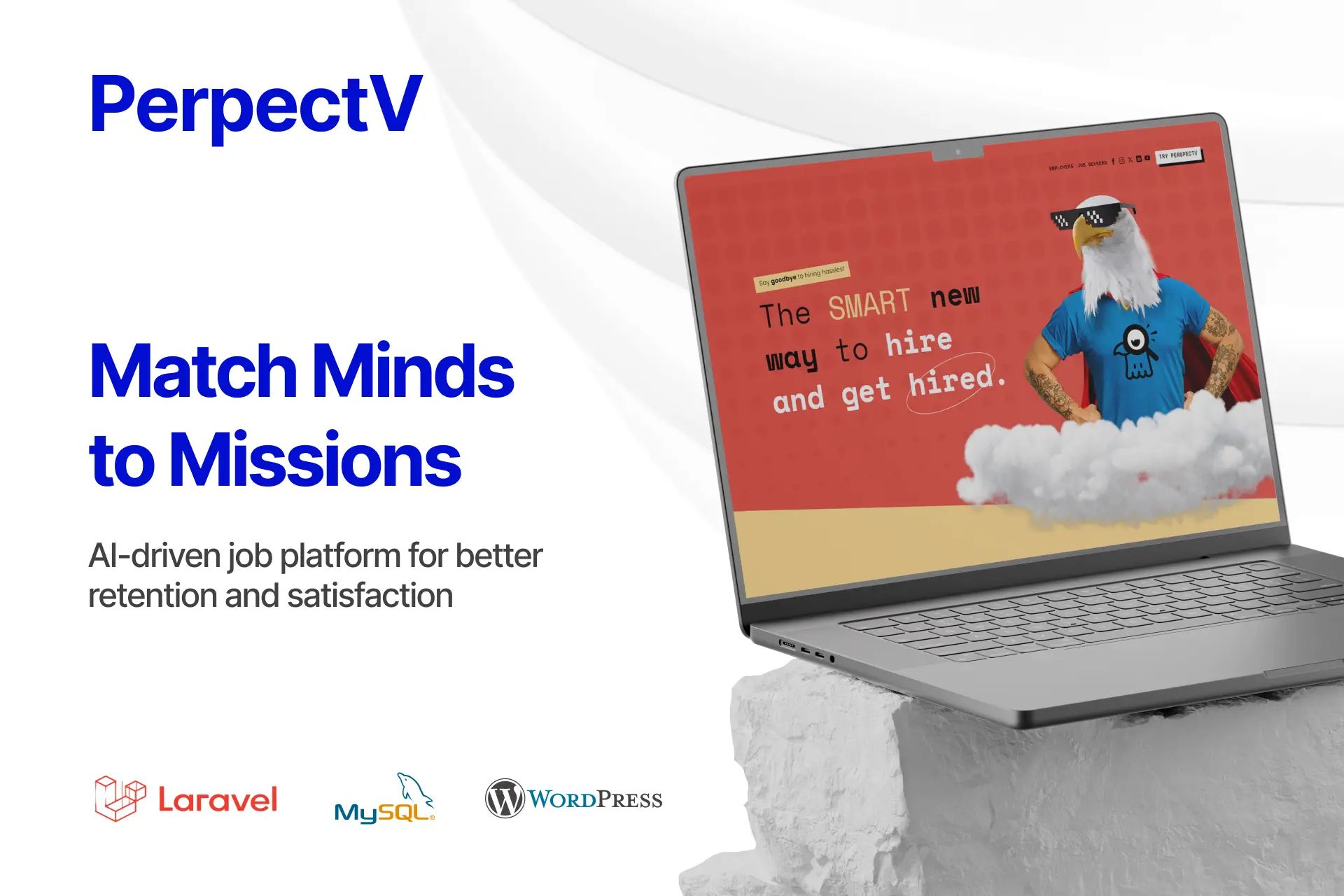
AI-powered job matching platform
PerpectV AI-Powered Job Matching Platform for Leading South African
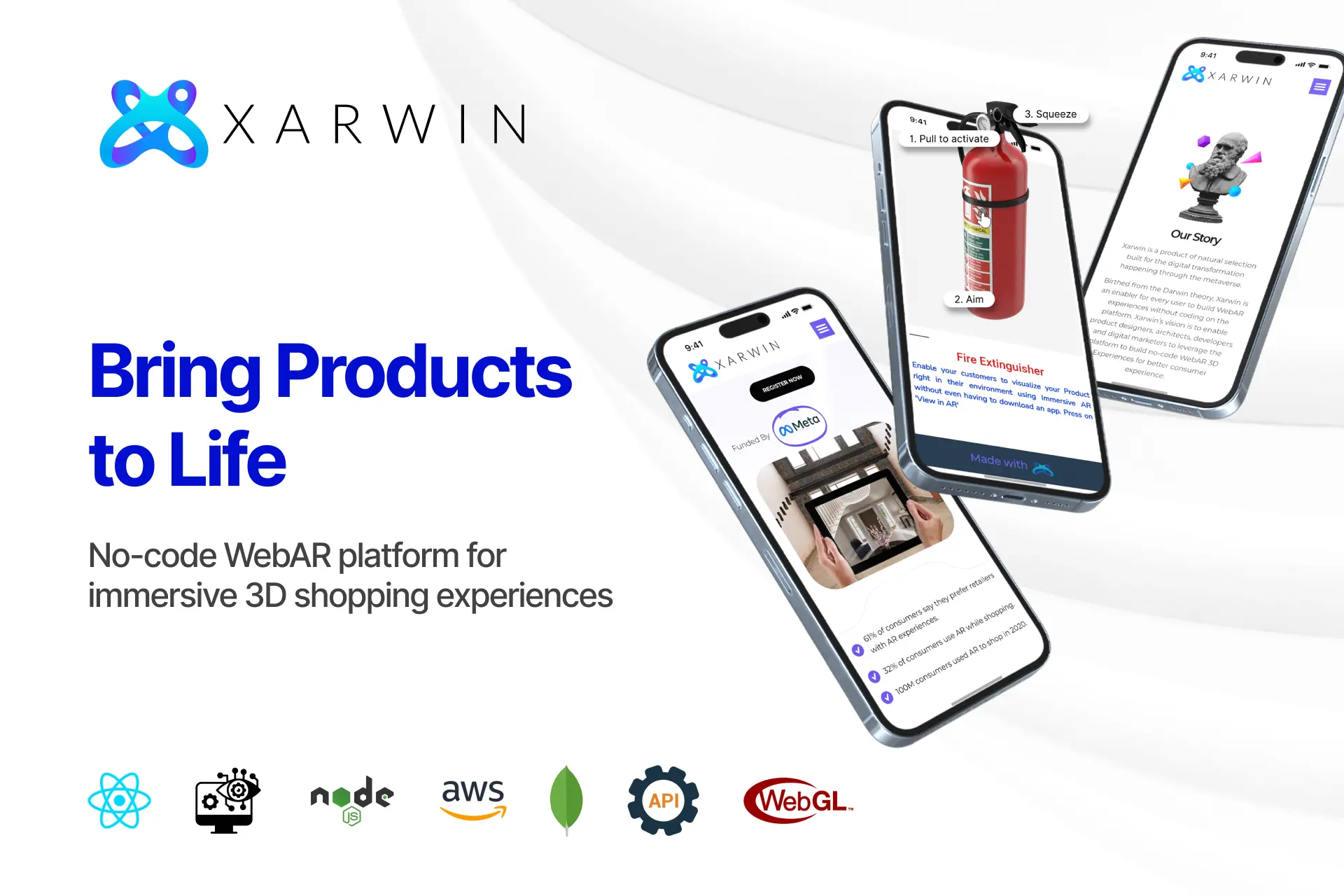
No-code web based AR Platform
Revolutionizing Online Product Showcase with No-Code WebAR Xarwin is


Case Study – Ecostay
Srivalli Ecostays offers a unique hospitality experience, allowing guests