Table of Contents
How Much Does It Cost to Build an AI Workflow Automation Engine for Sales?
Building an AI workflow automation engine for sales is a game-changing investment for businesses looking to scale their sales operations. From automating lead generation to streamlining sales pipelines and improving customer engagement, AI sales tools help sales teams work smarter, not harder. In this comprehensive guide, we break down the cost of developing an AI sales automation tool, key features, and real-world use cases that demonstrate the value of AI in sales automation.
The Sales Automation Problem No One Talks About
Sales teams today face a significant challenge: the increasing pressure to scale while maintaining personalization and conversion quality. In a world where every lead matters, traditional manual sales processes are inefficient, time-consuming, and often result in missed opportunities. Tasks such as prospecting, lead qualification, follow-ups, and pipeline management become overwhelming as sales teams grow.
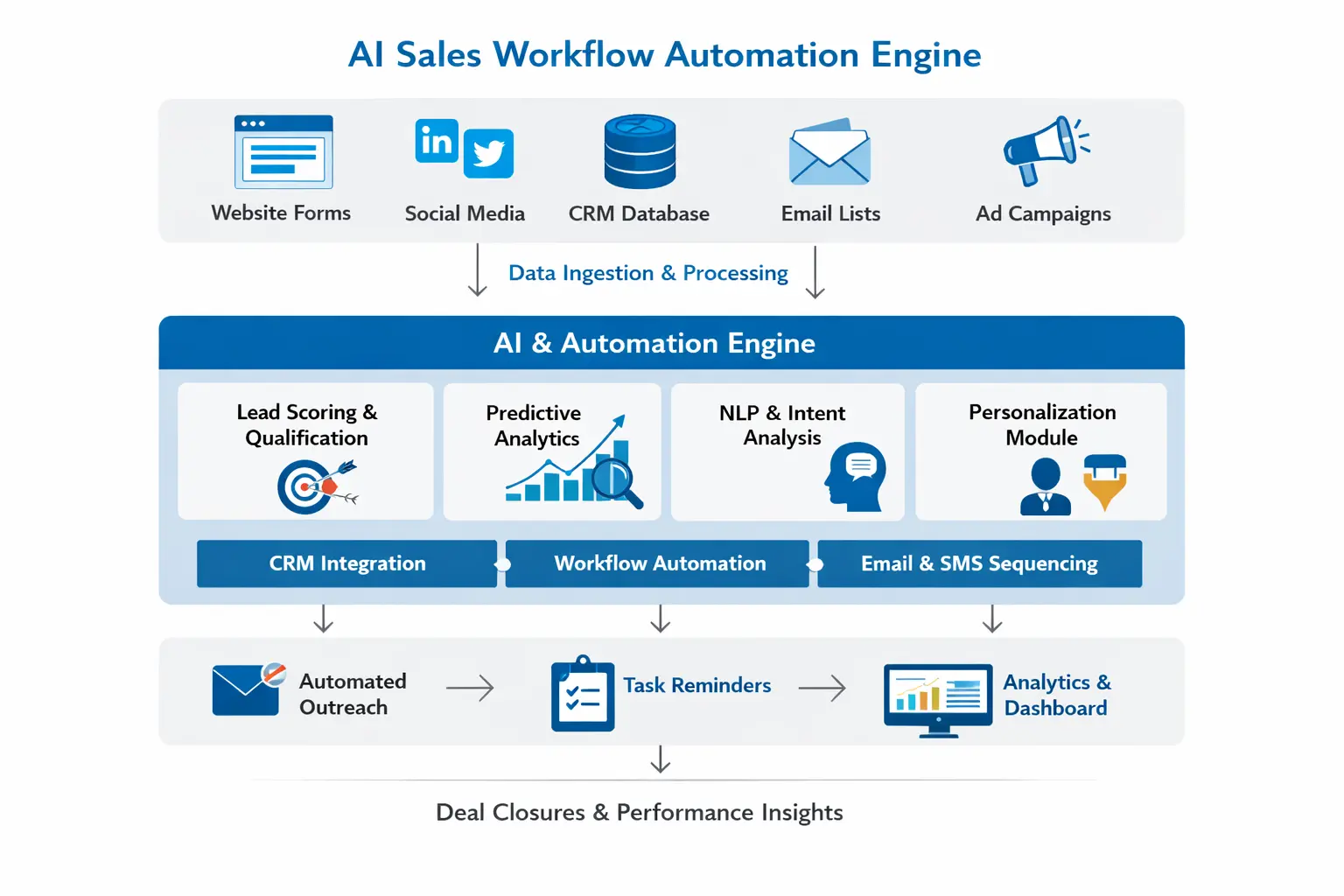
AI-powered workflow automation tools are transforming the sales process. These AI tools help automate repetitive tasks, provide insights into customer behavior, and enable smarter decision-making. AI tools for sales ensure better results, reduced manual effort, and more efficient team performance, allowing sales teams to focus on building relationships and closing deals.
Key Impact Areas
AI-Powered Lead Generation
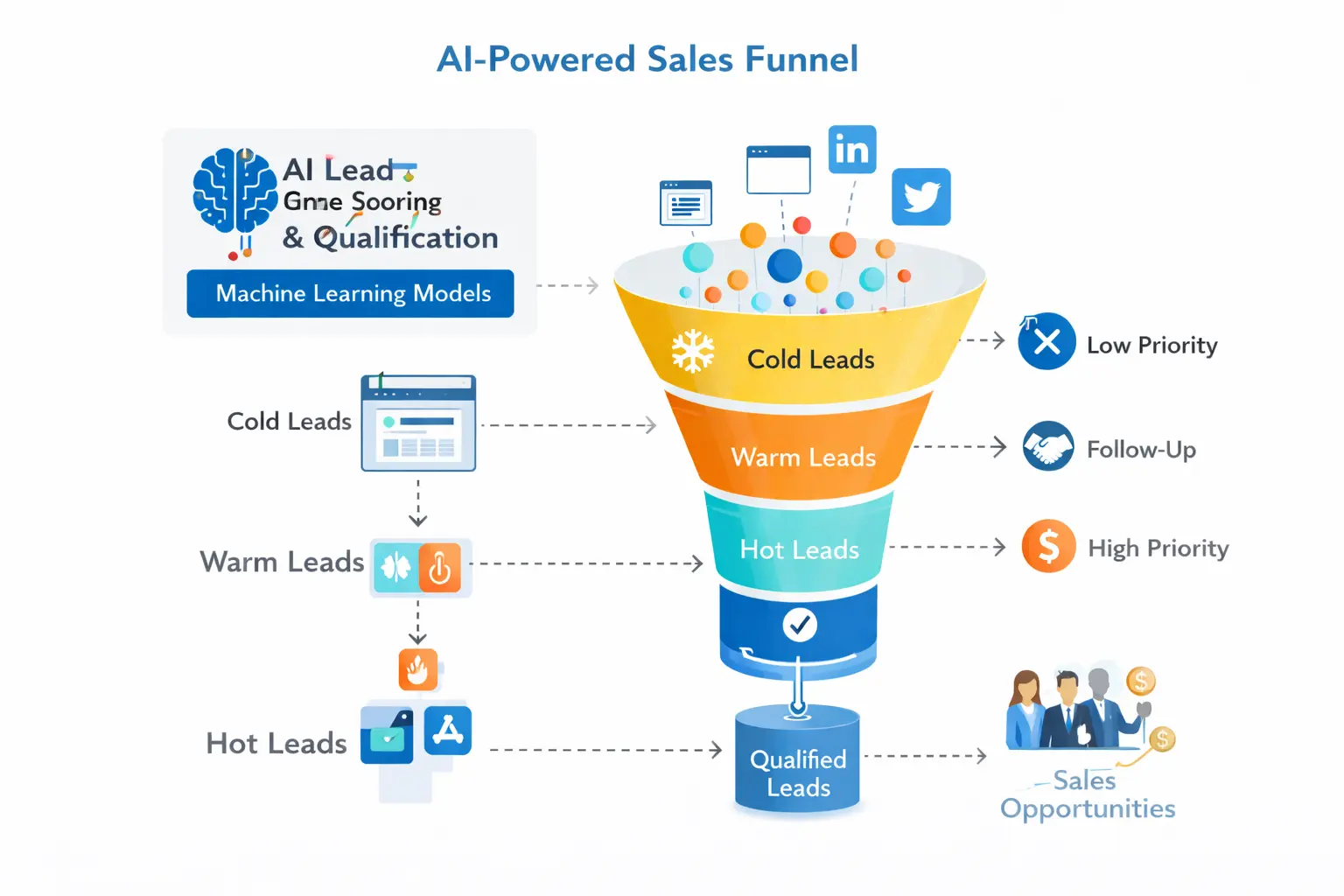
Lead generation is the backbone of any successful sales operation. Traditional lead generation methods are outdated, time-consuming, and often lead to inconsistent results. AI sales automation tools can scan multiple channels, including social media, websites, email lists, and CRMs, to identify high-potential leads. AI can also prioritize leads based on their likelihood to convert, which optimizes the lead funnel and ensures you’re engaging with the most promising prospects.
AI-driven lead generation ensures that sales teams can identify the right customers faster and engage with them proactively, ensuring a seamless and efficient experience for both the sales team and the customer.
Intelligent Sales Outreach
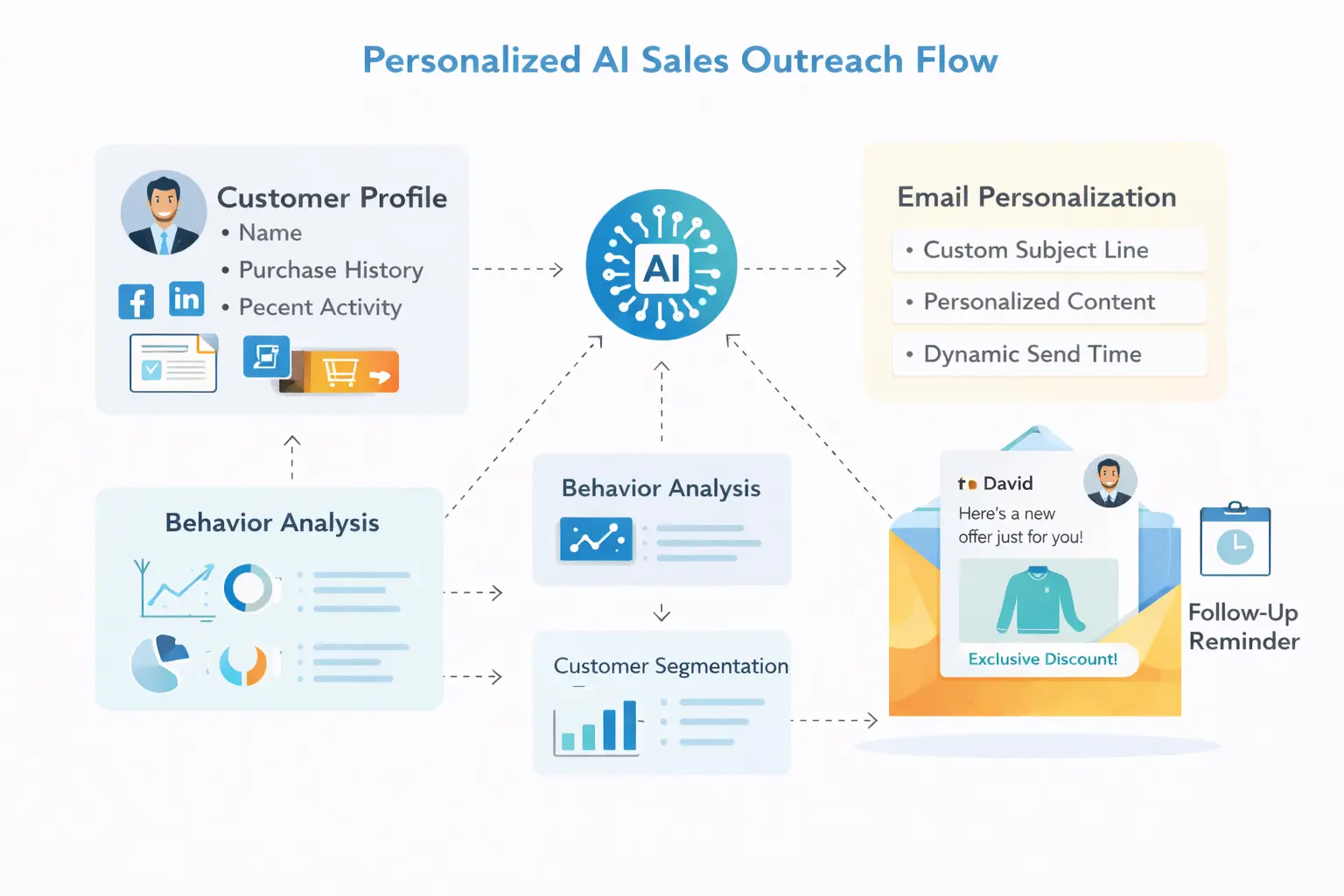
Once a lead is identified, the next challenge is crafting the perfect outreach. Generic emails and cold calls rarely convert, leading to missed opportunities. AI tools for sales automation use historical data, customer profiles, and behavioral analysis to personalize messages at scale. With intelligent outreach, sales teams can send automated yet highly customized emails, follow-ups, and reminders based on each lead’s preferences and actions.
AI engines can also optimize sending times for maximum engagement, increasing the chances of a response and significantly reducing the time spent on outreach.
Automated Sales Pipeline Management
Managing a sales pipeline manually is not only inefficient but also prone to human error. AI-powered sales tools track customer interactions, monitor sales progress, and provide data-driven recommendations for next steps. By integrating with your existing CRM, AI tools help automate pipeline management, categorizing leads, scheduling follow-ups, and ensuring that no opportunities are missed.
This AI-powered sales pipeline automation ensures that teams can focus on high-priority leads while leaving routine tasks to automation.
Personalized Customer Engagement
In today’s market, personalized customer engagement is essential. Modern buyers expect timely, relevant, and tailored communication. AI-powered systems can analyze customer behavior, preferences, and pain points, allowing sales teams to customize their approach. Whether it’s automated chatbots answering customer queries or email sequences based on customer behavior, AI tools enable personalized interactions at scale.
AI can even assess customer sentiment and adjust messaging in real-time, improving the chances of engagement and boosting conversion rates.
Infrastructure Components for an AI Sales Automation Engine
When building an AI sales automation tool, several key infrastructure components need to be considered. These include everything from AI-powered lead generation to CRM integrations and personalization features.
MVP Version
The MVP (Minimum Viable Product) version of your AI sales engine should focus on core functionality like lead generation, basic outreach automation, and CRM integration. A simple MVP might involve:
Lead Scanning
Simple AI algorithms to scan websites, social media, or email lists for leads.
Basic Email Automation
Automating email outreach based on predefined templates and lead behavior.
CRM Integration
Syncing AI tools with your CRM for basic pipeline management.
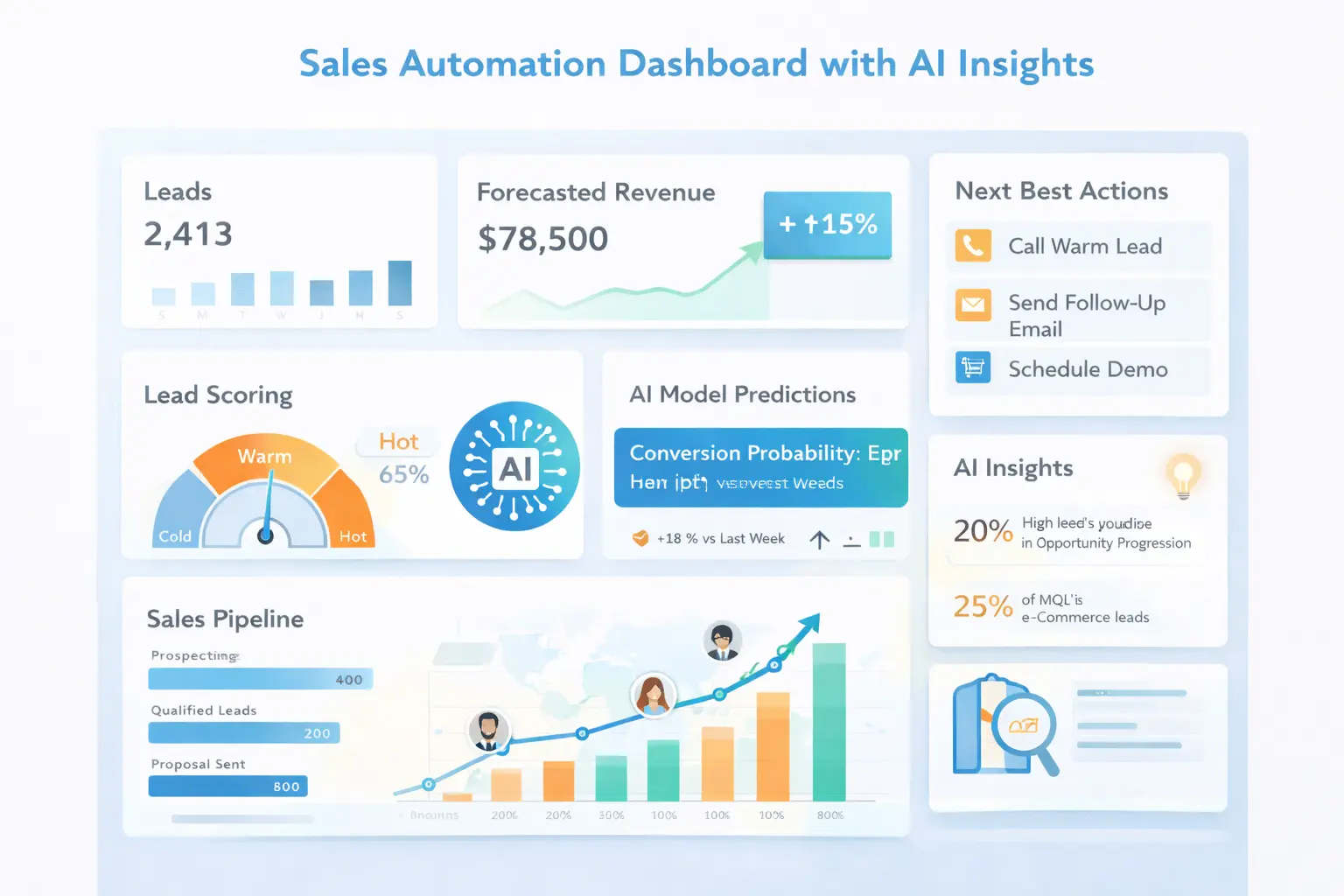
The MVP is cost-effective and quick to deploy, typically costing between $10,000 to $15,000.
Here's a breakdown:
| Component | Estimated Cost (USD) |
|---|---|
| Lead Scanning and Filtering | $2,000 |
| Basic Email Automation | $3,000 |
| CRM Integration | $4,000 |
| Simple Reporting and Dashboard | $2,000 |
| Hosting and APIs | $2,000 |
| QA and Testing | $2,000 |
Advanced Version
The advanced version of your AI-powered sales automation tool will integrate full-scale automation, enhanced AI algorithms, and deeper integration with sales platforms. This version includes features like:
AI-Powered Lead Scoring
Ranking leads based on their likelihood to convert.
Advanced Personalization
Customizing outreach and content in real-time.
Predictive Analytics
Analyzing sales data to predict outcomes and provide actionable insights.
The advanced version typically costs $30,000 to $75,000, depending on the sophistication of the features.
Here’s a typical cost breakdown:
| Component | Estimated Cost (USD) |
|---|---|
| Lead Scoring & Classification | $5,000 |
| Personalization & Dynamic Outreach | $7,000 |
| Predictive Analytics Integration | $10,000 |
| Full CRM & ERP Integration | $8,000 |
| Advanced Reporting & Dashboard | $5,000 |
| Hosting, APIs, & Cloud Infrastructure | $5,000 |
| QA & Testing | $5,000 |
| Project Management | $5,000 |
Cost Breakdown: From Prototype to Production
Feature Breakdown by Cost
| Component | Estimated MVP Cost | Estimated Advanced Cost |
|---|---|---|
| AI-Powered Lead Generation | $2,000 | $10,000 |
| Sales Outreach Automation | $3,000 | $8,000 |
| Predictive Analytics | $0 | $10,000 |
| CRM & ERP Integrations | $4,000 | $8,000 |
| Personalization & Dynamic Content | $0 | $7,000 |
| Advanced Reporting & Analytics | $2,000 | $5,000 |
| Hosting, APIs, & Cloud Infrastructure | $2,000 | $5,000 |
| QA & Testing | $2,000 | $5,000 |
| Total | $15,000 | $60,000 |
Planning to build an AI sales automation engine?
OUR SUCCESS STORIES
Real-World Use Cases

SaaS Company Streamlines Lead Generation
A SaaS company with over 2,000 leads per week faced a major challenge with manual data entry and follow-ups. By adopting an AI sales automation engine, they automated the lead generation process, qualifying and segmenting leads based on predictive scoring. The result? A 50% reduction in lead response time and a 30% increase in conversion rates.
E-Commerce Brand Enhances Sales Conversion with AI
An e-commerce brand implemented an AI sales automation engine to personalize their customer outreach. By creating AI-driven email campaigns based on customer behavior and past purchases, they saw a 40% increase in sales conversions.

Cost-Saving Tips for Building an AI Sales Automation Engine
Start with an MVP
Begin with automating lead qualification and outreach before adding advanced features like predictive analytics and personalization.
Leverage Open-Source Tools
Use libraries like TensorFlow, spaCy, or HuggingFace to reduce development costs.
Outsource Non-Core Functions
Use freelance developers for tasks like UI design and QA testing.
Reuse Pre-Trained Models
Avoid the costs of training from scratch by using pre-trained models.
Negotiate API and Hosting Costs
Leverage startup credits or negotiate long-term deals with AWS, GCP, or Azure.
Automate in Phases
Start with the basics and add more advanced features like predictive analytics and dynamic content in later stages.
Not sure where to start with AI sales automation?
We help teams validate use cases, prioritize workflows, and design scalable AI sales systems without overbuilding.
Frequently Asked Questions
Wondering About Something? Let’s Clear Things Up!
We’ve gathered all the important info right here. Explore our FAQs and find the answers you need.
No, AI is designed to augment sales reps by automating repetitive tasks like lead generation and follow-ups, allowing reps to focus on building relationships and closing deals.
AI systems can reinforce bias if they are trained on biased data. However, proper data handling and regular audits can minimize bias and ensure fairness.
AI integration can be challenging but manageable with proper planning and a good technology stack. Starting with an MVP version will allow you to test the system before scaling it.