Introduction
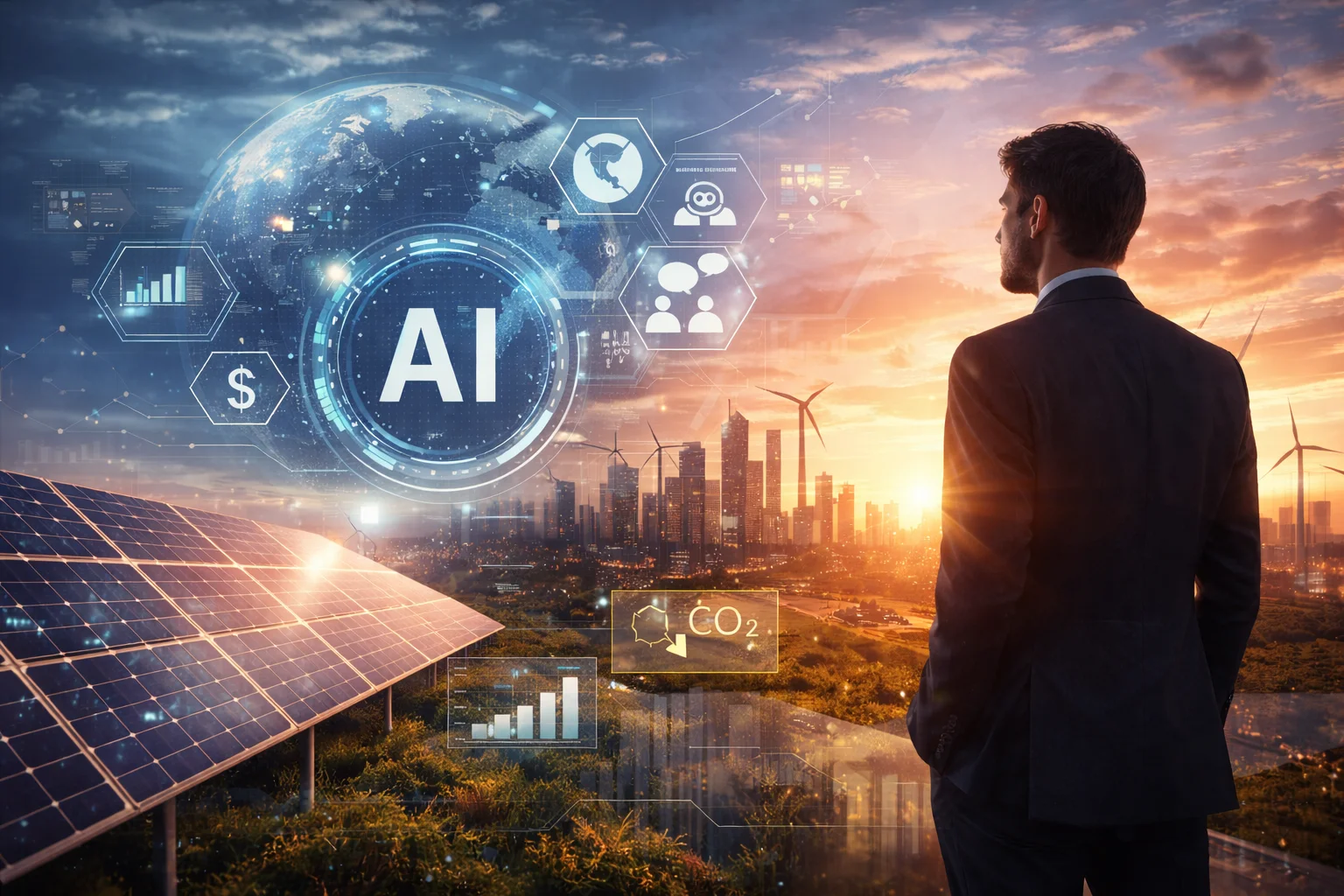
Sustainability is something every business is being pushed to take seriously. Customers are paying attention. Investors are asking tougher questions. Regulators are setting stricter rules. And inside the company, leadership teams are trying to figure out how to reduce their carbon footprint without slowing growth or blowing up budgets. That is the real challenge. How do you become more sustainable without increasing costs? This is where Artificial Intelligence starts to make sense.
AI for sustainability is not some distant future idea. It is already helping businesses cut energy waste, improve supply chain efficiency, automate ESG reporting, and reduce overall emissions in practical ways. Instead of guessing, companies can use data and smart systems to make better decisions. And that is how sustainability becomes something real and measurable, not just a promise in an annual report.
Why Nyx Wolves
Most companies know AI can improve sustainability. Few know how to implement it in a way that delivers measurable impact. Nyx Wolves helps businesses move from strategy to execution. We build AI systems that optimize energy, streamline supply chains, automate ESG reporting, and reduce carbon footprint while protecting margins.
This is not a theory. It is an operational transformation. If you are ready to turn sustainability into a competitive advantage, let us show you how.
1. AI for Energy Optimization in Business Operations
Energy inefficiency is one of the biggest hidden costs in modern businesses. It often goes unnoticed because it is built into daily operations. Offices overcool empty rooms. Warehouses keep equipment running even when not in active use. Manufacturing plants consume large amounts of power without precise load control or intelligent scheduling.
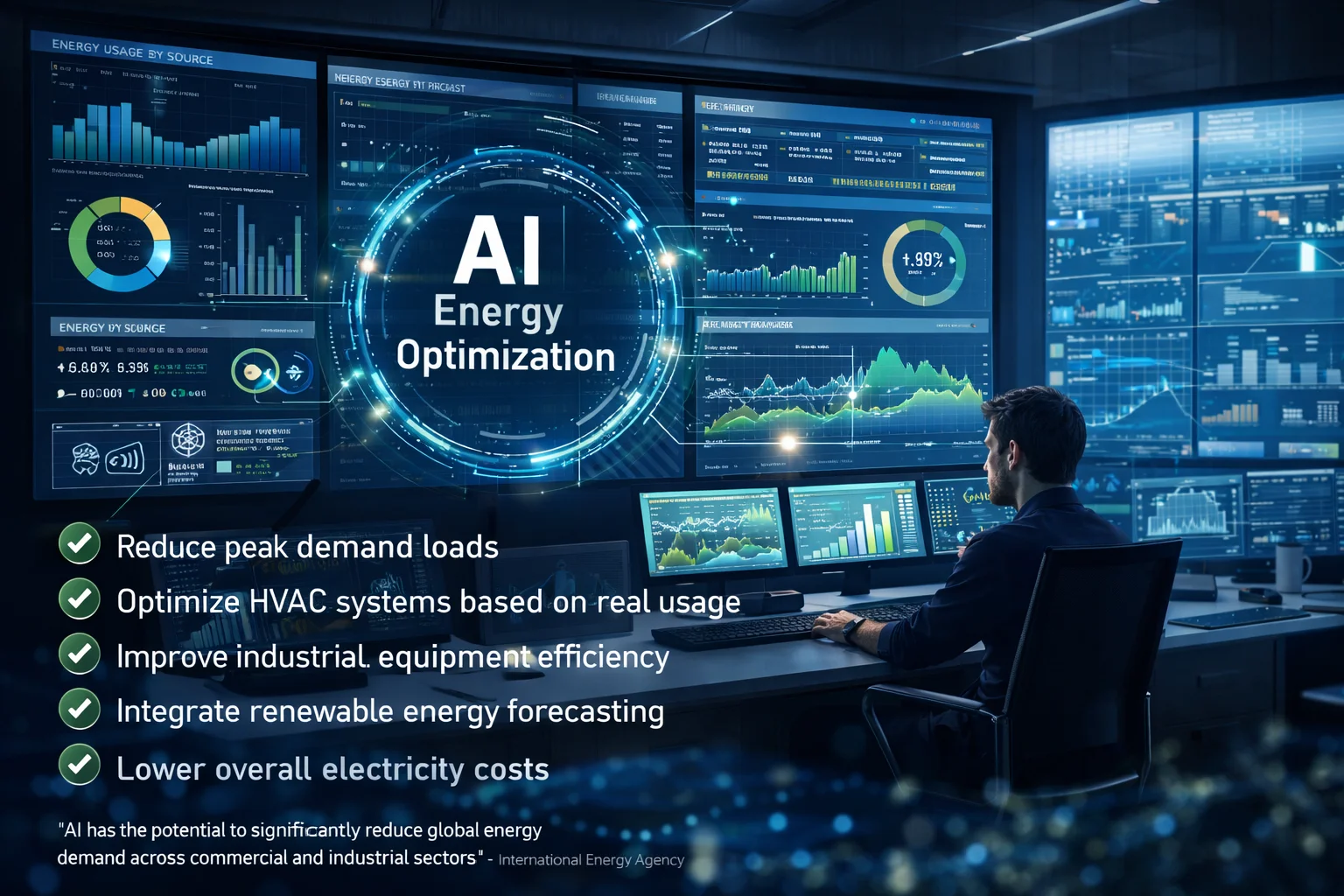
This is where AI powered energy optimization makes a real difference. Instead of relying on static schedules or manual adjustments, AI systems analyze real time energy consumption data and automatically adapt usage patterns. These systems learn behavioral trends such as occupancy levels, production cycles, and seasonal demand, then respond dynamically to reduce waste without affecting performance.
According to the International Energy Agency (IEA), digital technologies including AI have the potential to significantly reduce global energy demand across commercial and industrial sectors.
When businesses implement AI based energy optimization, they do not just improve sustainability metrics. They achieve two outcomes at the same time: lower carbon emissions and lower operational expenses. That dual impact is exactly what makes AI for sustainable business growth so powerful.
Ready to turn sustainability into measurable business impact?
Explore how our AI powered sustainability solutions for enterprises can reduce carbon footprint, optimize energy usage, and improve operational efficiency.
2. AI Powered Predictive Maintenance Reduces Waste
Traditional maintenance methods often create more waste than they prevent. AI powered predictive maintenance replaces guesswork with data driven precision.
Traditional Maintenance vs AI Predictive Maintenance
| Area | Traditional Maintenance | AI Powered Predictive Maintenance |
|---|---|---|
| Approach | Reactive or time based | Data driven and predictive |
| Equipment Monitoring | Periodic manual checks | Continuous real time monitoring |
| Part Replacement | Fixed schedules or after failure | Only when data indicates risk |
| Material Usage | High due to unnecessary replacements | Reduced due to optimized timing |
| Downtime | Unexpected and costly | Minimized through early detection |
| Energy Efficiency | Often inefficient during degradation | Optimized by detecting performance drops |
| Inventory | Excess spare parts stored “just in case” | Lean inventory based on predictive insights |
| Sustainability Impact | Higher resource waste | Lower resource consumption and longer asset lifespan |
| Financial Impact | Higher maintenance costs | Improved reliability and stronger margins |
AI powered predictive maintenance uses machine learning models and IoT sensor data to detect early warning signals in vibration, temperature, pressure, and performance patterns. The result is simple but powerful. less material waste, fewer emergency breakdowns, lower energy inefficiencies and extended equipment lifespan. From a sustainability standpoint, it reduces resource consumption and manufacturing waste.
From a financial standpoint, it protects profitability while increasing operational reliability.
3. AI and Supply Chain Sustainability
Supply chains are often the biggest contributor to a company’s carbon footprint. Transportation emissions, overproduction, poor forecasting, and excess warehousing all add up quickly. AI driven supply chain sustainability tools use predictive analytics and advanced modeling to optimize operations end to end. AI improves demand forecasting, route optimization, inventory planning, vendor carbon visibility, and production scheduling.
Research from McKinsey on sustainable supply chains shows that data driven transformation reduces emissions while improving efficiency.
- Better forecasts reduce overproduction.
- Smarter logistics lower fuel consumption.
- Greater visibility enables responsible sourcing.
AI for sustainable supply chains is no longer optional. It is a competitive necessity.
4. AI for ESG Reporting and Carbon Tracking
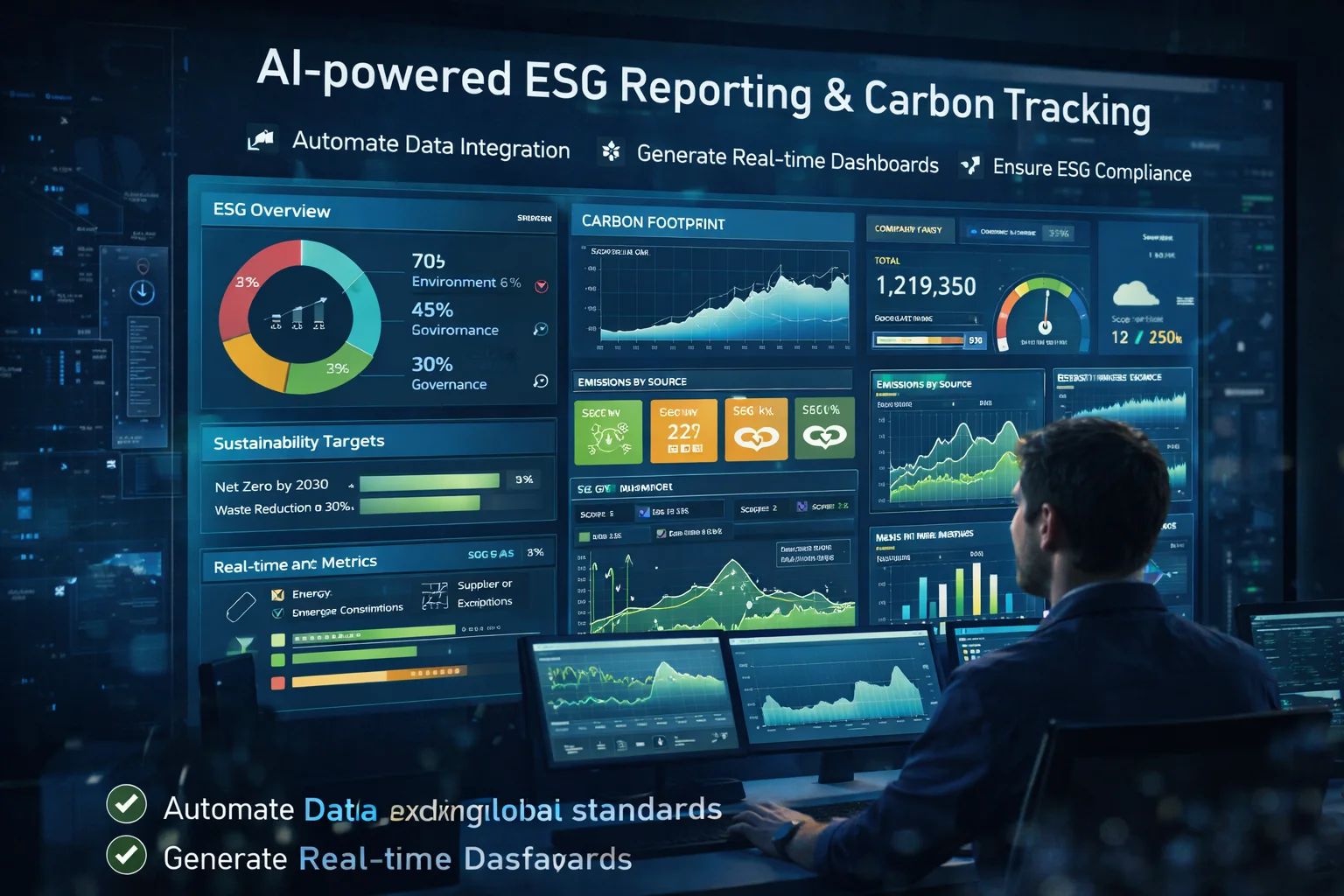
Measuring sustainability is often the hardest part of going green. Carbon tracking pulls data from energy use, transportation, vendors, procurement, and waste systems, making manual reporting complex and error prone. AI powered ESG platforms integrate this data automatically and generate real time dashboards, replacing spreadsheets with accurate sustainability insights.
For companies aligning with global standards like the United Nations Sustainable Development Goals, AI simplifies compliance, reduces reporting delays, lowers risk, and eliminates data silos. In short, AI makes environmental accountability scalable and manageable.
5. AI in Sustainable Manufacturing
Manufacturing waste affects both profitability and environmental impact. AI powered computer vision systems detect defects early in the production process, preventing large batch rejections and unnecessary material loss. At the same time, process optimization algorithms improve yield efficiency and reduce raw material waste. By lowering scrap rates, improving material usage, cutting production emissions, and optimizing energy intensive operations, AI in sustainable manufacturing becomes one of the most direct and practical ways to reduce a company’s carbon footprint.
Here is a clean visual format that makes it more engaging and scannable:
6. AI and Renewable Energy Integration
Renewable energy is growing fast, but it comes with one big challenge: variability. Solar and wind output change based on weather and environmental conditions. AI helps solve that.
By analyzing weather patterns and historical performance data, AI models forecast renewable energy output more accurately. This allows businesses to plan, store, and distribute energy more intelligently.
How AI Strengthens Renewable Integration
Forecasting
Predicts solar and wind generation in advance
Storage Optimization
Improves battery charging and discharge cycles
Grid Balancing
Stabilizes supply and demand in real time
Reduced Fossil Backup
Minimizes reliance on traditional energy sources
The result is clear: Businesses can accelerate sustainable energy adoption without sacrificing operational reliability. AI makes the energy transition smarter, more stable, and more efficient.
7. AI Driven Sustainable Product Design
AI is reshaping how products are imagined, tested, and built. Instead of relying on a handful of design iterations, generative design tools simulate thousands of lightweight and material efficient alternatives in minutes.
Here is how the workflow typically looks:
- Design Requirements Defined
- AI Generates Multiple Design Variations
- Simulation and Stress Testing
- Material Optimization and Weight Reduction
- Selection of Most Efficient Design
- Lower Raw Material Usage
- Reduced Production Emissions
- Lower Transportation Weight
- Reduced Lifecycle Environmental Footprint
Industries such as automotive and aerospace already use this AI driven workflow to reduce material intensity while maintaining strength and safety standards. The result is smarter design, lower environmental impact, and more sustainable products from the very beginning.
8. AI Enables Circular Economy Models
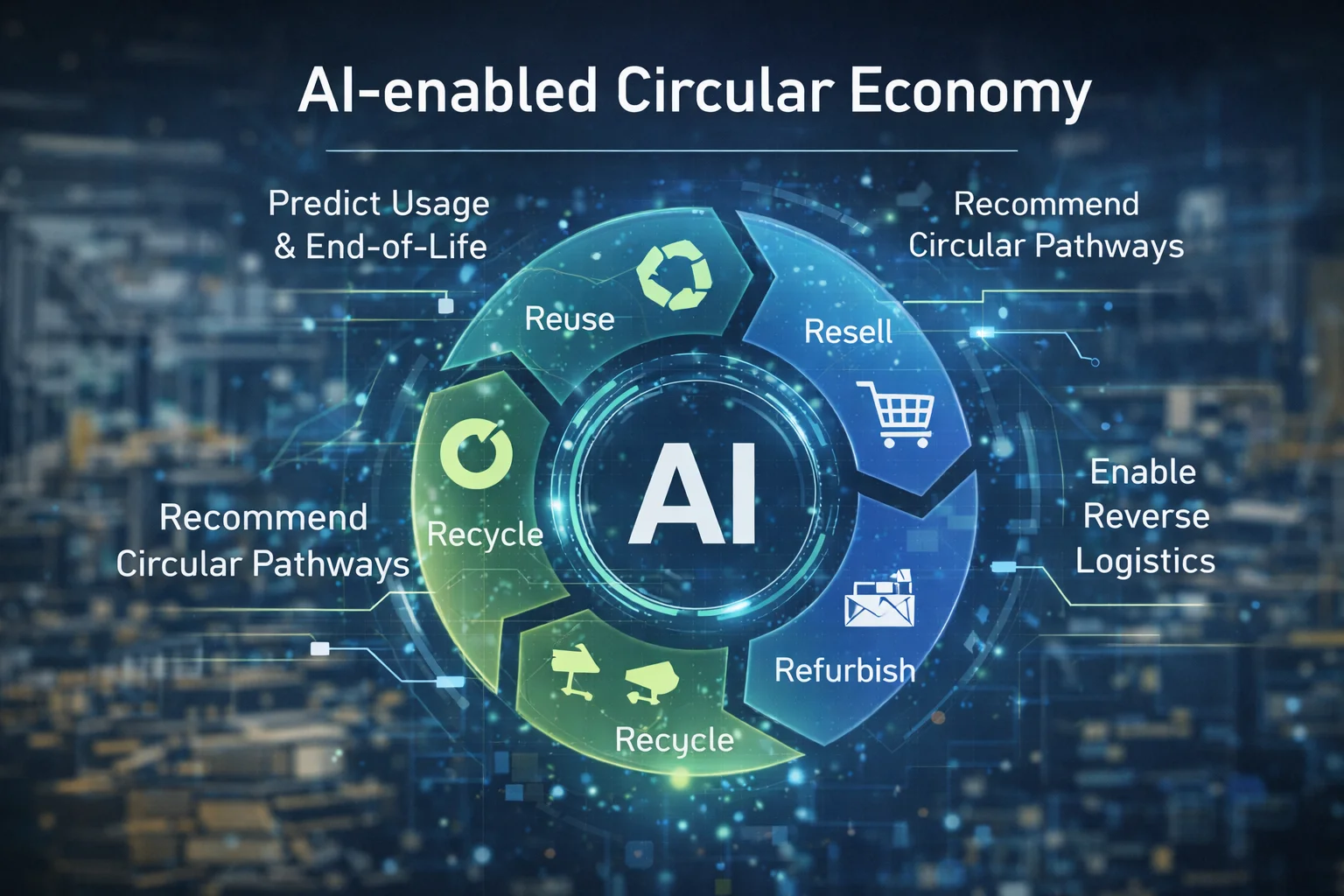
Circular economy strategies depend on understanding and managing the entire product lifecycle, from creation to reuse or recycling. Without intelligent tracking, these initiatives often remain fragmented and difficult to scale. AI changes that by bringing data visibility and predictive intelligence into every stage of the lifecycle. It can monitor product usage patterns, predict end of life timelines, recommend optimal recycling or refurbishment pathways, and streamline reverse logistics operations.
By enabling smarter reuse, resell, refurbish, and recycle decisions, AI reduces waste and lowers the need for new raw material extraction. In short, AI transforms circular sustainability from a concept into a structured, scalable business model.
Why AI Is Critical for Sustainable Business Strategy
Manual sustainability efforts do not scale. Energy systems are complex, supply chains are global, and carbon tracking requires integration across multiple data sources. AI brings automation, predictive intelligence, real time visibility, and operational precision to this challenge. Businesses that embed AI into their sustainability strategy gain efficiency, resilience, and stronger credibility.
Organizations exploring AI driven sustainability transformation can review implementation frameworks at Nyx Wolves to align digital growth with measurable environmental impact.
Frequently Asked Questions
About AI and Sustainability
AI helps businesses become more sustainable by optimizing energy consumption, reducing waste, improving supply chain efficiency, automating ESG reporting, and enabling accurate carbon footprint tracking. AI uses predictive analytics and machine learning to reduce inefficiencies that increase emissions and resource usage.
Yes. AI can reduce a company’s carbon footprint by improving energy efficiency, optimizing transportation routes, preventing overproduction, and enabling renewable energy forecasting. AI driven carbon tracking systems also help companies identify high emission areas and take corrective action.
Industries that benefit most include manufacturing, logistics, retail, energy, real estate, and large enterprise operations. These sectors have high energy consumption and complex supply chains where AI driven sustainability optimization can generate measurable impact.
AI implementation costs vary, but many sustainability focused AI solutions generate strong return on investment by reducing operational costs. Energy optimization, predictive maintenance, and supply chain efficiency improvements often pay for themselves over time.
AI supports ESG reporting by automating data collection, classification, and emissions analysis across multiple enterprise systems. This reduces reporting errors and ensures compliance with global sustainability frameworks.
Final Thoughts
AI for sustainable business growth is not about optics or public relations. It is about smarter operations. When companies use AI to optimize energy, streamline supply chains, reduce waste, and accurately track carbon footprint, sustainability moves from a vague ambition to a measurable and strategic advantage. It becomes practical, data driven, and ultimately profitable. The future will belong to businesses that are not just digitally advanced, but environmentally intelligent.