

RAG Development Services
At Nyx Wolves, we specialize in delivering scalable, industry-leading AI solutions designed
to empower late-stage startups and large enterprises.
We build systems that answer questions from your actual data documents, databases, pipelines instead of guessing from whatever the model learned during training.


The Problem RAG Actually Solves
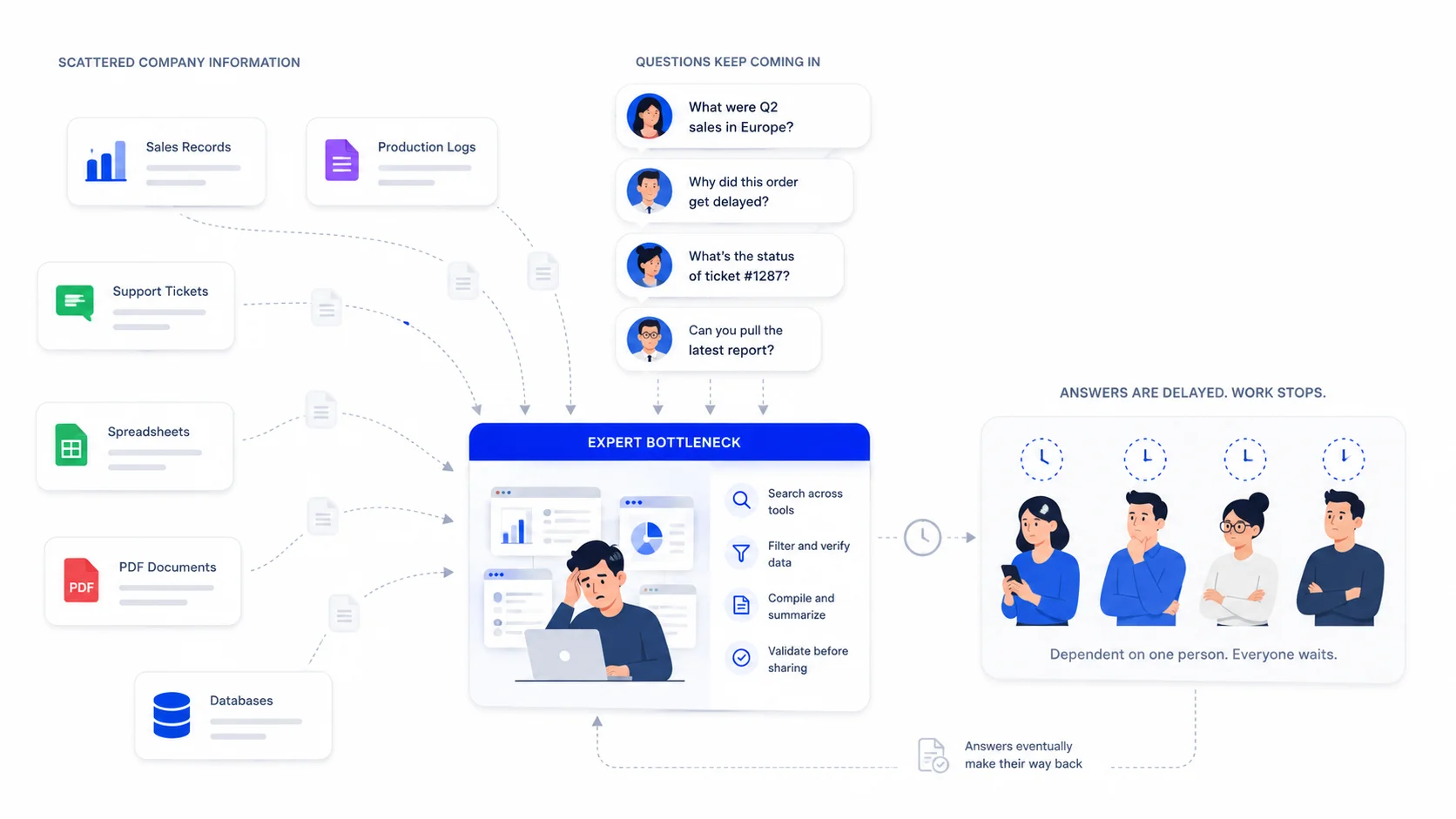
Somebody at your company already knows the answer to almost any question you’d ask about your own data. Finding them, then waiting on the query, is the actual bottleneck.
Sales records, production logs, support tickets. Years of history sitting in a database two or three people know how to touch. Everyone else asks one of them, waits, and hopes the answer lands before it’s needed.
A raw LLM doesn’t fix that. Ask ChatGPT about your Q3 numbers and it’ll admit it doesn’t know, or guess with total confidence. RAG works because it’s actually looking at your data while it answers: documents, a SQL database, or both. Ask in plain language, get back something sourced from your own systems.
Nyx Wolves builds these for companies running on real operational data, not demo datasets. We’re workflow-first: we design around how your team actually works, then move fast, usually shipping a working pilot inside 90 days.
What We Build

RAG Strategy & Consulting
We audit what data you have, score your use cases by how often the question comes up and how costly a wrong answer is, then hand you a roadmap: what to index first, which retrieval approach fits, and a build sequence. No vague "digital transformation" deck.
RAG Pipeline Development
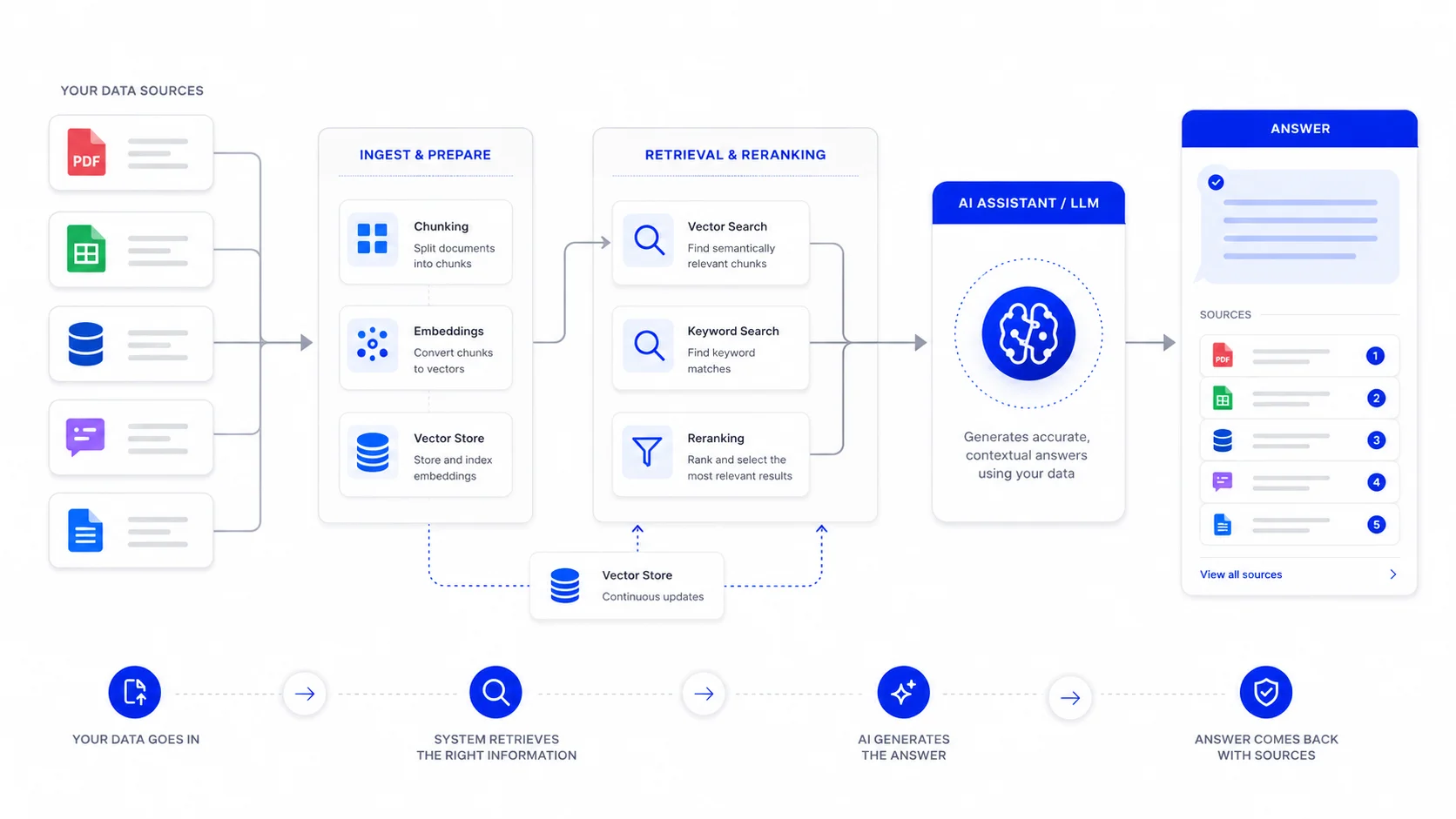
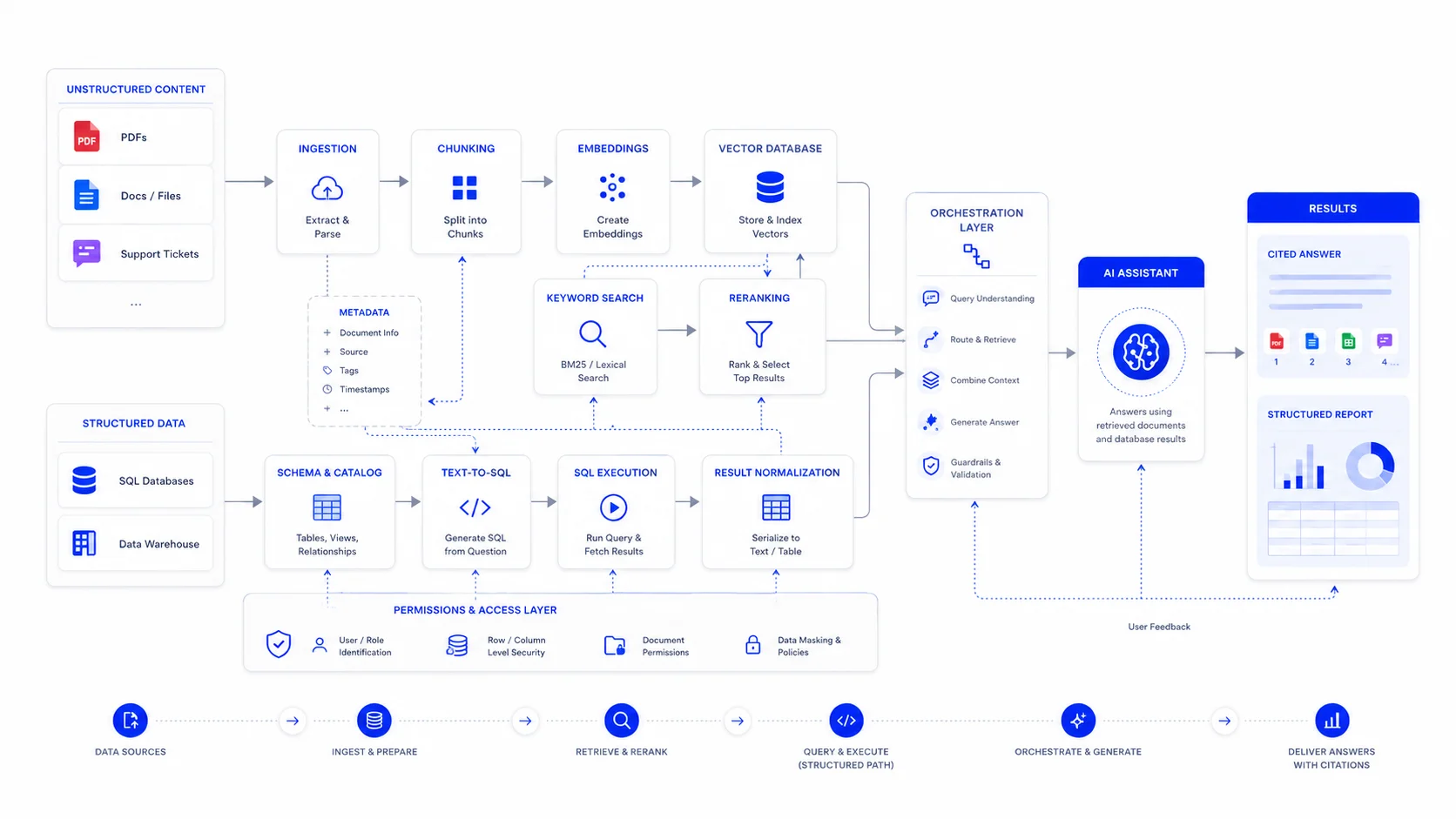
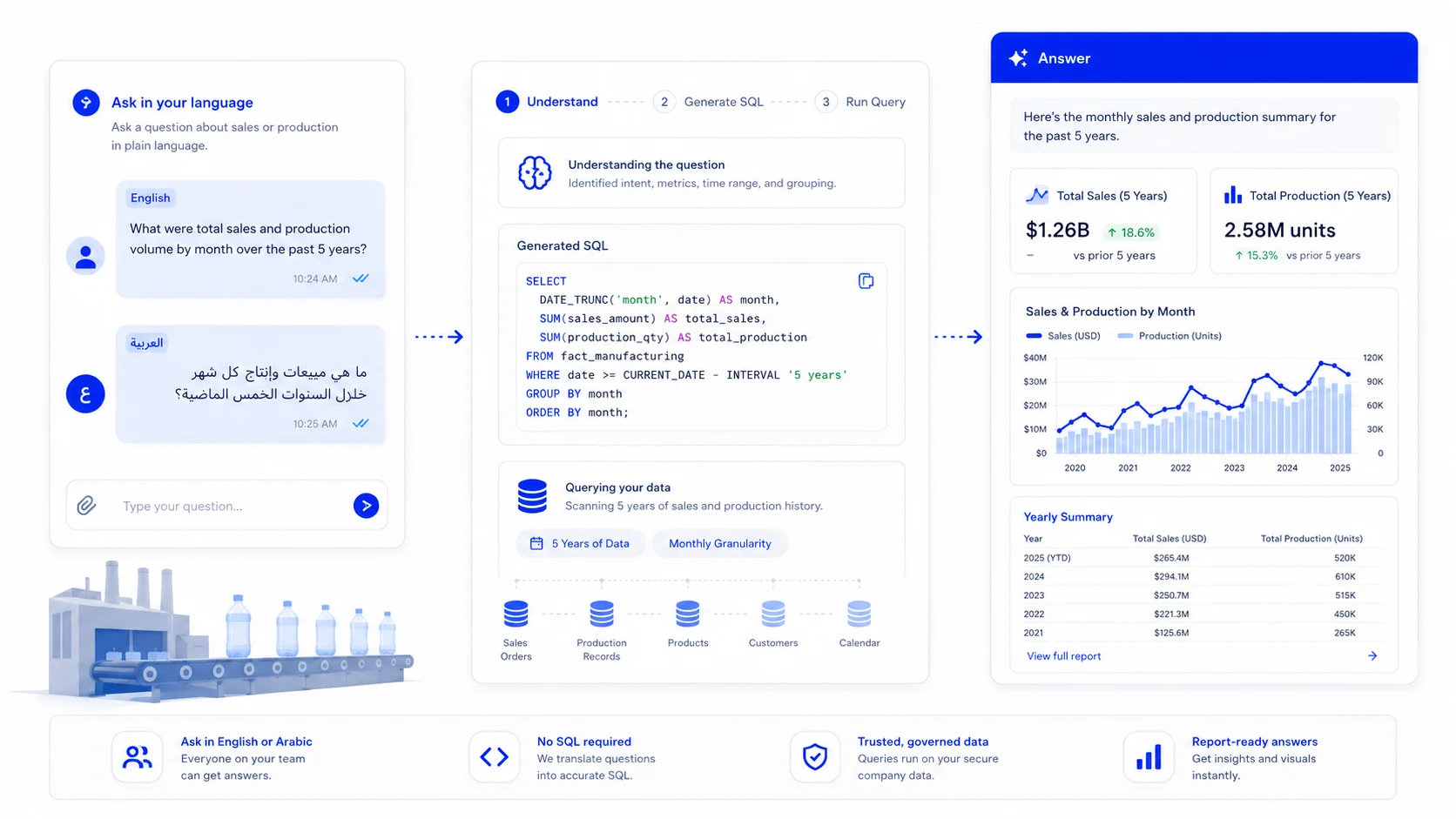
We decide the real architecture: chunking strategy, embedding model, and whether you need vector search, keyword search, or both with reranking. For structured data, this includes turning a plain-language question into a real SQL query, the same approach we used for a Bahrain manufacturer's five years of sales data.

RAG Audits & Evaluation
We test precision, groundedness, and latency under real load, plus adversarial questions to see how often the system fabricates instead of saying it doesn't know. You get a report of exactly where it's failing and why.
System Integration
Connecting to your CRM or internal tools is the easy part. The hard part is making sure retrieval respects who's allowed to see what, so a support rep and a finance lead asking the same question don't get the same access to underlying records.

RAG-Powered App Development
Every answer shows its source, so people can verify it instead of trusting it blindly. Follow-up questions work without re-explaining context, and responses stream instead of spinning.
Model & Retrieval Tuning
Once real usage data comes in, we adjust chunk sizes, retrieval ranking, and prompts based on where it's actually getting things wrong. We track the fallback rate over time: fewer "I don't know" answers without more wrong ones is the real sign of progress.
| Service | Outcome |
|---|---|
| RAG Strategy & Consulting | A roadmap: what to index first, which retrieval approach fits, and a build sequence |
| RAG Pipeline Development | A working retrieval system connected to your real data, structured or unstructured |
| RAG Audits & Evaluation | A report showing exactly where an existing system fails, and why |
| System Integration | Retrieval connected to your existing tools, respecting who’s allowed to see what |
| RAG-Powered App Development | A live interface people use daily, with every answer traceable to its source |
| Model & Retrieval Tuning | Measurably fewer wrong answers, based on real usage, not guesswork |
A Bahrain Water Manufacturer Turned Five Years of Sales Data Into One-Prompt Reports
Client: Water manufacturer, Bahrain
Data type: Structured (SQL, ETL pipelines)
Challenge: Getting a straight answer from sales and production data meant someone manually writing SQL or pulling reports by hand, creating delays and a dependency on whoever knew the database best.
What we built: A RAG system that translates natural-language questions, in Arabic or English, into SQL queries, runs them against the backend, and turns the raw results into a written report. Five years of sales history is fully indexed.
Result: A report that used to take a manual pull now takes one prompt. Staff with no SQL knowledge can query five years of history directly, in either language.
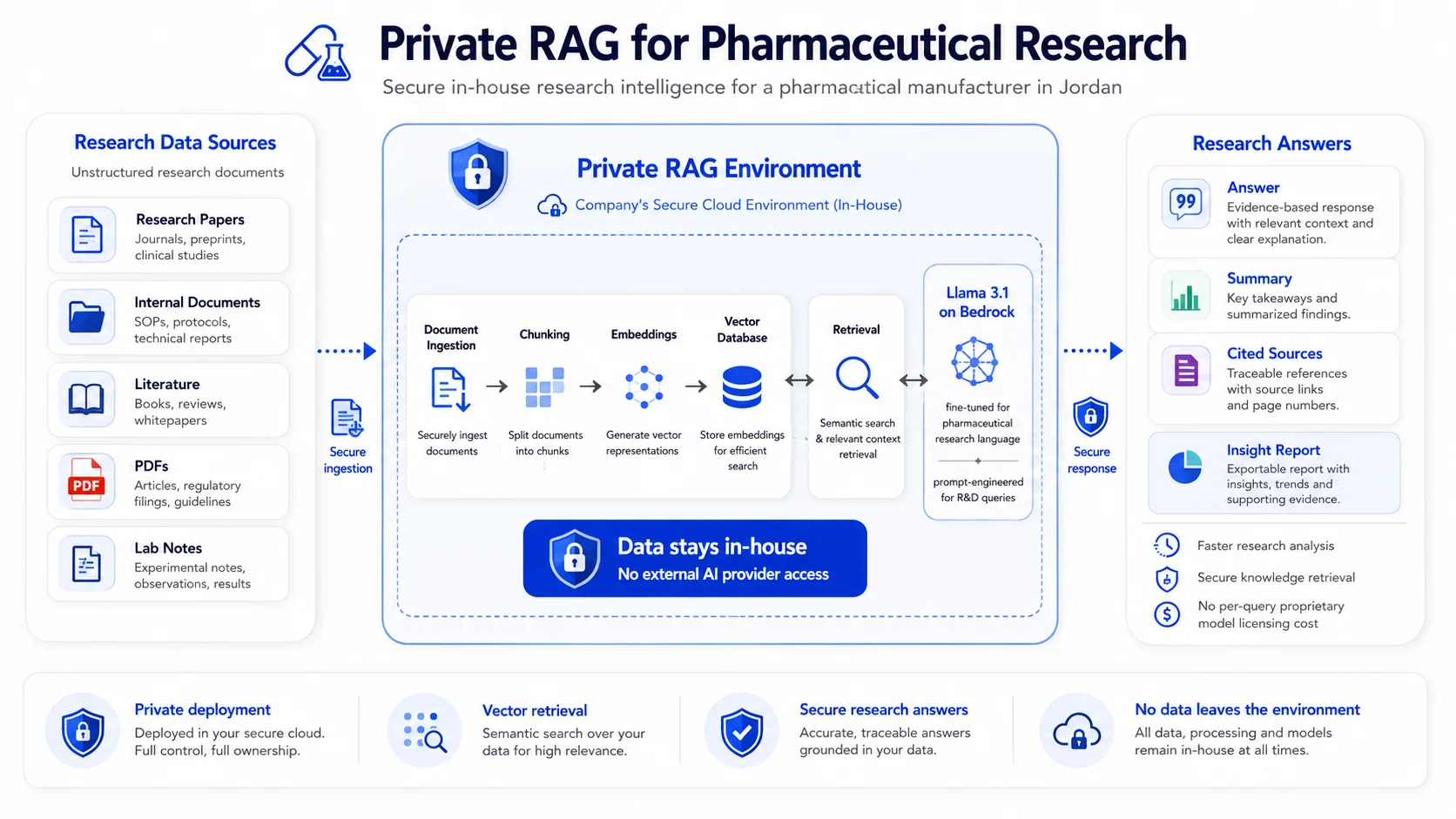
A Pharma Manufacturer in Jordan Kept Its Research Data In-House While Speeding Up R&D
Client: Pharmaceutical manufacturer, Jordan (regulated environment)
Data type: Unstructured (40+ proprietary research studies, thousands of compound records, years of lab documentation)Â
Challenge: Researchers were spending 60% of their working time on manual literature search and cross-referencing instead of actual research. Every available AI solution required sending data to external APIs, which conflicted with their regulatory requirements and the competitive sensitivity of their compound research.Â
What we built: A fully on-premises RAG system on AWS Bedrock, running Llama 3.1B, with no data ever leaving the client’s own infrastructure. Documents were chunked, embedded, and indexed into a FAISS + Amazon OpenSearch vector store, with a DynamoDB metadata layer for filtering by document type, compound, date range, or therapeutic area. AWS Lambda orchestrates retrieval and summarization. A scientist asks a question in plain language, the system retrieves the relevant document sections, synthesizes them, and returns a structured answer with source citations, entirely inside the client’s own AWS boundary.Â
Measured outcomes:
60% faster research analysis: Average query-to-insight time dropped from days to hours
70% improvement in knowledge retrieval accuracy: RAG + vector search vs. keyword search baseline
50% cost reduction: Eliminated all third-party AI model licensing fees by running on-premises
80% stronger data security: All AI/data processing contained within client AWS infrastructure
100% proprietary data control: Zero exposure to external AI providers, maintained throughout
Tech stack: RAG, Llama 3.1B on AWS Bedrock, FAISS, Amazon OpenSearch, Vector Database, AWS Lambda, DynamoDB
This is a live, shipped production system deployed in a regulated manufacturing environment with a full audit trail, not a proof of concept.
INDUSTRIES
We Work With
Structured data (databases, ETL pipelines)
Manufacturing, Finance, Retail, Logistics
Unstructured data (documents, research, records)
Pharmaceuticals, Healthcare, Legal
Built for regulated environments
We design retrieval and access-control architecture around your compliance requirements, including GDPR, HIPAA, and data-residency constraints, so sensitive data stays inside your controlled environment by design, not as an afterthought. Our Jordan pharma deployment is a direct example: full AWS-boundary isolation with zero third-party data exposure.
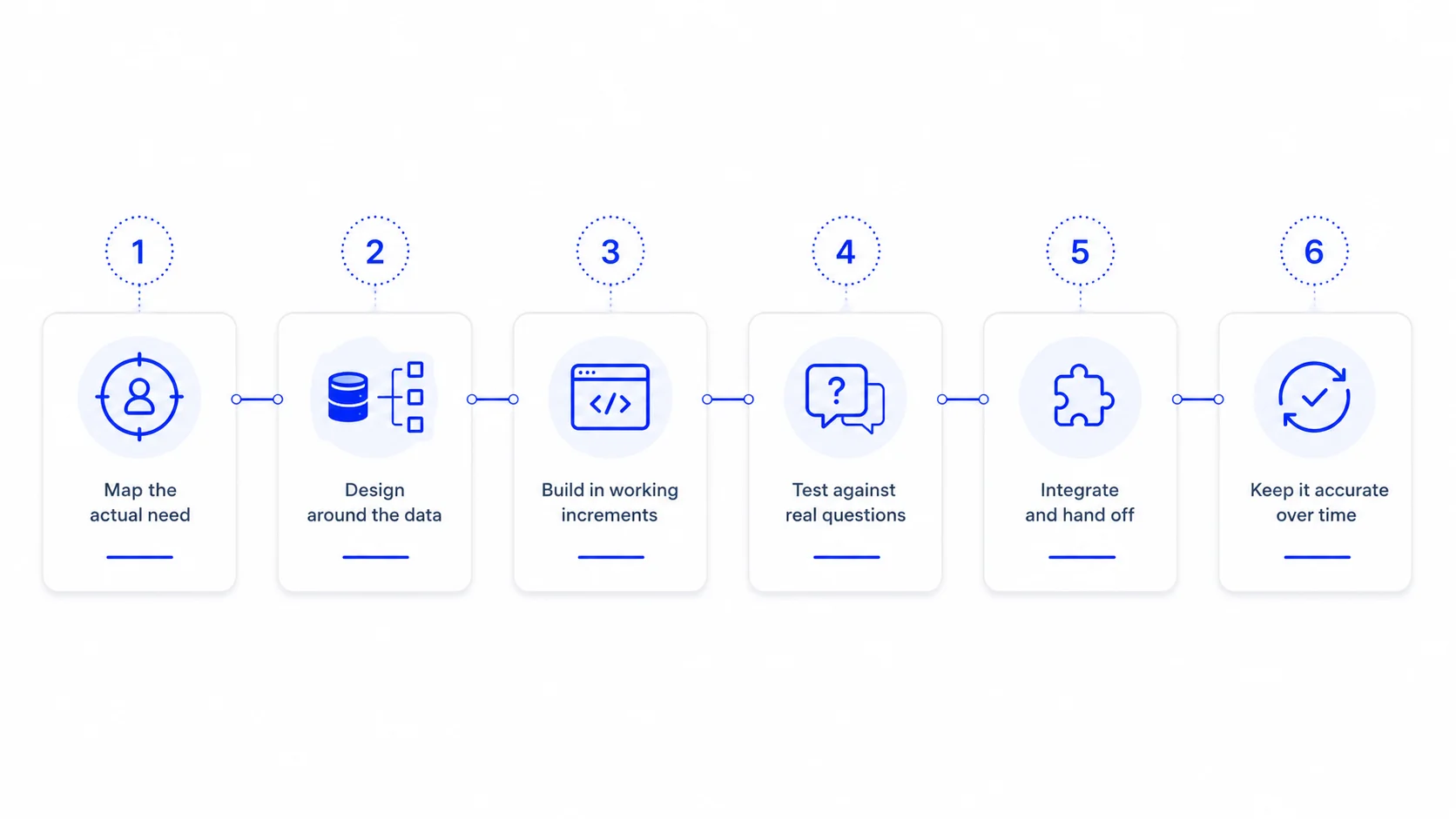
1. Discovery
We figure out what questions your team is asking and where the current process breaks down. Not every use case needs RAG, and we’ll say so if that’s the case.
2. Architecture & Design
Documents and structured databases need different retrieval approaches. We architect the pipeline around what you actually have, not a one-size-fits-all template.
3. Iterative Development
Retrieval logic, indexing, and generation get built and tested in stages, not shipped all at once and hoped for. You see working pieces early.
4. Testing & Validation
We run the system against the actual questions your team asks, not a synthetic benchmark, and tune it until the answers hold up.
5. Integration & Handoff
The system gets connected to your existing tools, secured, and handed over with documentation your team can actually use without us in the room.
6. Monitoring & Optimization
Data changes. We monitor performance and keep the retrieval pipeline tuned as your content and usage grow.
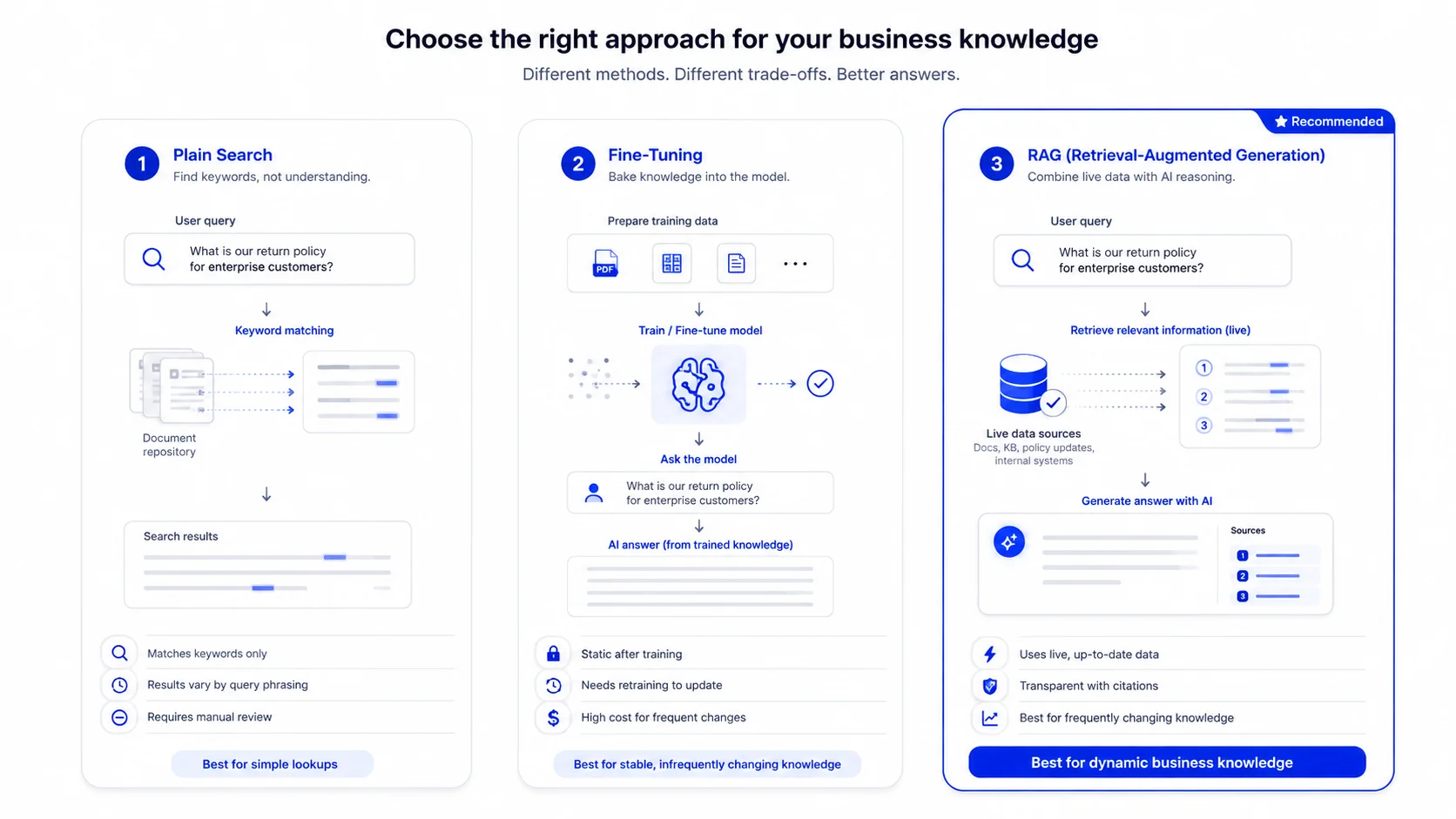
When to use Search, Fine-Tuning, or RAG
| Comparison | Plain Search | Fine-Tuning | RAG |
|---|---|---|---|
| How it works | Matches keywords or terms against indexed content | Adjusts the model’s weights using additional training data | Retrieves relevant information from your data at query time, then uses it to generate an answer |
| Understands the question | Limited; mainly depends on matching terms | Yes | Yes |
| Handles frequently changing data | Yes, once the search index is updated | Poor fit; new knowledge typically requires another training cycle | Yes; update or re-index the data without retraining the model |
| Can cite its source | Partially; returns the matching document or page | Not inherently | Yes; answers can include citations to retrieved sources |
| Cost to update | Low | Higher; may require retraining and evaluation | Low to moderate; usually requires updating or re-indexing the data |
| Best fit for | Simple document and keyword lookups | Teaching a model a specific style, format, behavior, or specialized task | Business knowledge that changes regularly, such as sales data, policies, support content, research documents, and operational records |
The Stack Behind It
We use a production-grade stack built specifically for retrieval accuracy and secure deployment, not a default toolkit reached for every project. Every layer, from data ingestion to monitoring, gets chosen based on what your data actually requires.
Data Ingestion & Processing
- Apache Airflow
- Apache NiFi
- Pandas
- spaCy
- LangChain
Vector Databases
- Pinecone
- FAISS
- Weaviate
- Qdrant
- Milvus
Embedding Models
- OpenAI
- Hugging Face
- Cohere
Language Models
- GPT
- Claude
- Llama
Retrieval & Orchestration
- LangChain
- LlamaIndex
- Custom Middleware
Backend & APIs
- Python
- FastAPI
- Node.js
- AWS (including Bedrock)
- Google Cloud
- Azure
- Docker
- Kubernetes
Security & Access Control
- OAuth 2.0
- Encryption at rest and in transit
- Role-based access control
Monitoring
- What does a RAG project actually cost?
- Fallback-rate monitoring
- Retrieval accuracy logging
Frequently Asked Questions
Wondering About Something? Let’s Clear Things Up!
We’ve gathered all the important info right here. Explore our FAQs and find the answers you need.
It depends on your data volume, integration needs, and whether you’re starting with a pilot or a full build. Rather than give you a range that doesn’t apply to your situation, send us your specifics and we’ll come back with a real number, usually within a day or two.
We build in stages and get a working pilot in front of you early rather than disappearing until launch day. Tell us what you’re working with and we’ll give you an actual timeline, not a guess.
When your knowledge base changes often, or it’s too large to fit into a fine-tuned model economically. Support docs, policies, sales data, anything that shifts regularly is a better fit for RAG, since you update the data instead of retraining the whole model.
Yes. This is a big part of what we build. A question gets translated into a real query against your database, the results get pulled, and the system turns that into a plain-language answer or report. Our Bahrain water manufacturer project is a direct example of this.
PDFs, spreadsheets, internal wikis, CRM records, SQL and NoSQL databases, support tickets, technical manuals. Most structured or semi-structured content can be indexed and made queryable.
We test retrieval precision (is it finding the right source), output relevance (is the answer actually useful), and response latency. We also track how often the system falls back to “I don’t know” versus guessing, since a system that guesses confidently is more dangerous than one that admits it doesn’t have an answer.
Retrieval that returns the wrong or outdated information with total confidence. A poorly indexed system will hand someone a wrong answer just as fluently as a right one. Most of the engineering work is making sure that doesn’t happen.
RAG Development Cost, Industry Benchmarks (2026)
| Tier | Scope | Cost range | Typical timeline |
|---|---|---|---|
| Basic / Pilot | Single data source, basic retrieval, no access control | $10K–$40K | 4–8 weeks |
| Production | Multiple sources, hybrid retrieval (vector + keyword + reranking), role-based access, integrations | $25K–$120K | 8–14 weeks |
| Enterprise | Multi-source, on-premises or compliance-driven, custom architecture, monitoring, fine-tuning | $60K–$300K+ | 14–22+ weeks |
Get Started
Tell us what data you’re working with and what questions your team keeps needing answers to. We’ll tell you honestly whether RAG is the right fit, and what building it would actually look like.
Partner with Nyx Wolves
As an experienced provider of AI and IoT software solutions, Nyx Wolves is committed to driving your digital transformation journey.Â
Your benefits:
- Client-oriented
- Independent
- Competent
- Results-driven
- Problem-solving
- Transparent
What happens next?
We Schedule a call at your convenienceÂ
We do a discovery and consulting meetingÂ
We prepare a proposalÂ