Introduction
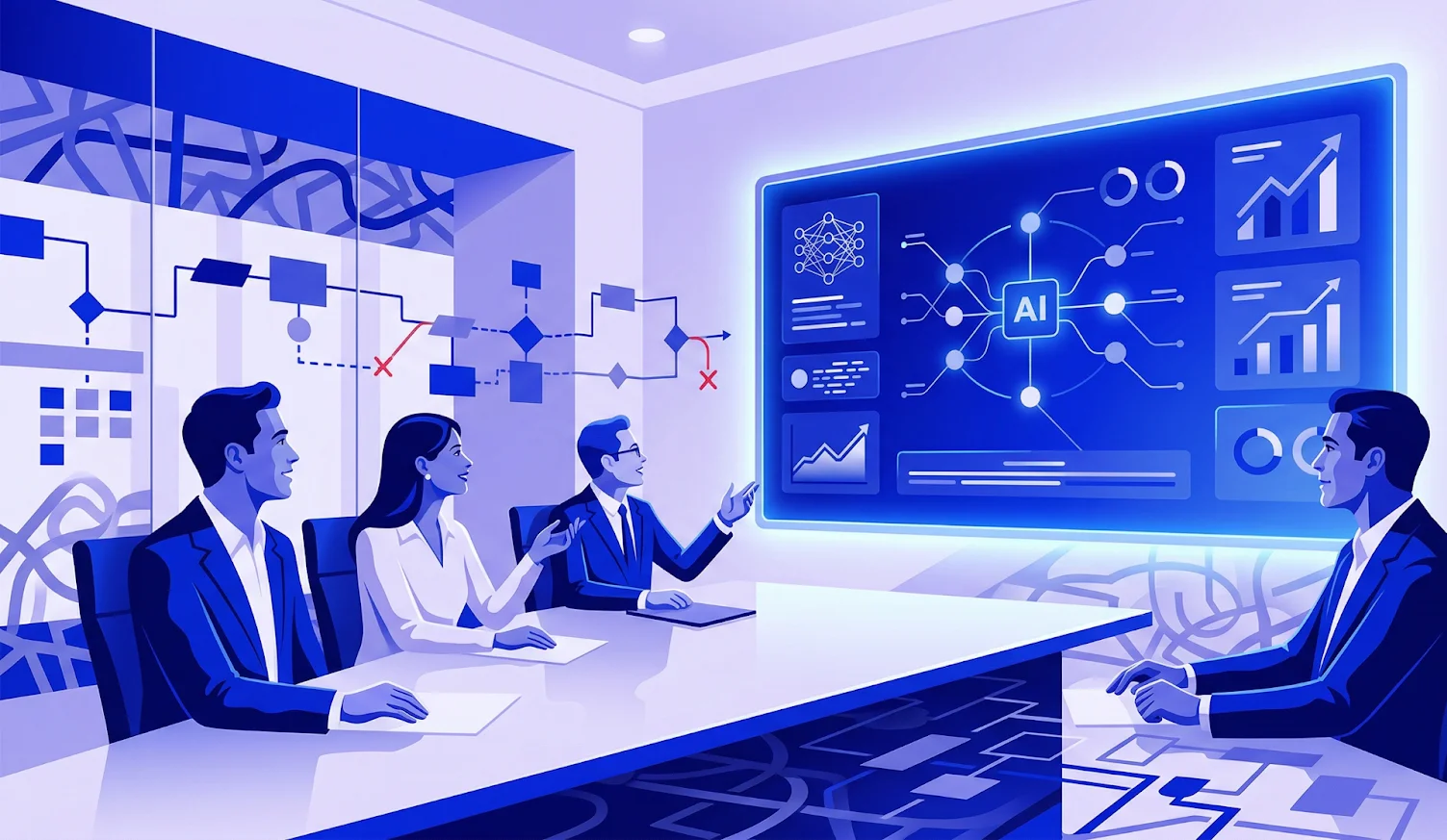
The demo went well.
The room was impressed.
The AI looked fast.
The responses felt sharp.
The use case sounded convincing.
Leadership saw potential.
Teams felt excited.
The business felt like it was moving forward.
But a few weeks later, the energy dropped.
The workflow did not change.
The teams went back to old habits.
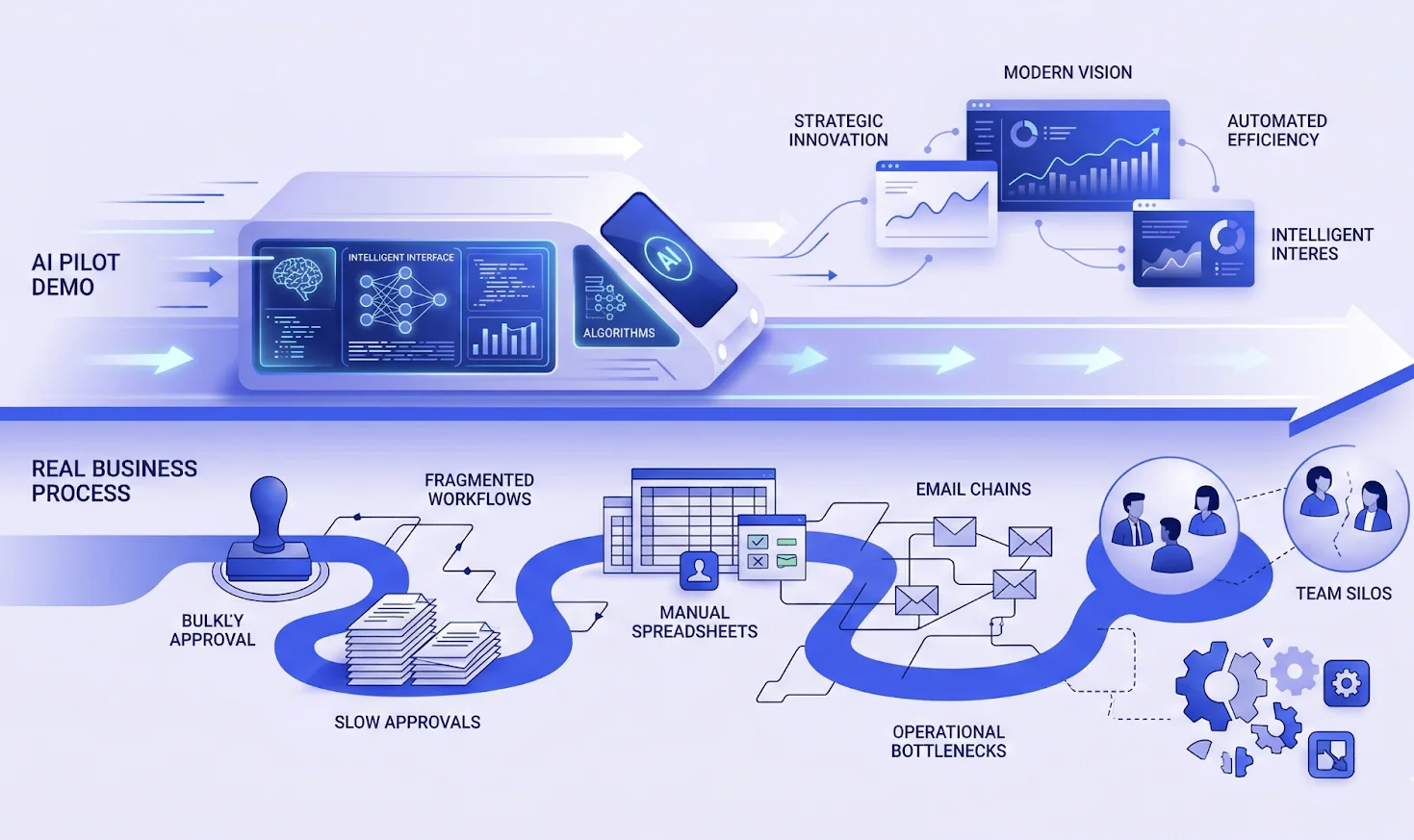
The AI stayed outside the real process.
The systems were still disconnected.
The handoffs were still slow.
The approvals were still manual.
The outcomes were still uneven.
The demo created confidence.
But the company was not ready for what needed to happen after it.
That is where the real gap was.
Many businesses are not behind on AI.
They are behind on execution after the AI demo.
Most companies do not struggle to understand that AI matters.
They struggle to operationalize it after interest is created.
This is where the difference begins.
In this blog, we explore why many businesses are not actually late to AI, but late to workflow integration, ownership, adoption, and execution after the demo phase.
What Actually Happens After The Demo
The problem is usually not awareness.
It is translation.
The journey often looks like this
Leadership sees AI demo
Teams discuss possible use cases
A tool or pilot is introduced
A few people try it
No workflow is redesigned
No system ownership is assigned
No adoption structure is built
No measurable execution layer is created
On paper, progress.
In reality, stagnation.
The company believes it has started its AI journey.
But the business itself has not changed enough to absorb the capability.
That is why so many AI initiatives look promising early and disappointing later.
Why The Real Delay Starts After Interest
The delay is not in curiosity.
It is in conversion.
Businesses today are already exposed to AI.
They have seen the demos.
They understand the possibilities.
They know competitors are moving.
They have likely tested something already.
But what slows them down is everything that comes next.
No clear workflow placement
No team level accountability
No operational redesign
No system integration
No trust framework
No business metric tied to usage
That is the real delay.
It is not that the company is late to AI.
It is late to the operational decisions required to make AI useful.
Why AI Momentum Disappears After The Demo
Interest begins at the top.
But execution often gets lost between strategy and operations.
Nobody owns the real business outcome.
The AI sits outside the daily flow of work.
It becomes something to try, not something the business runs through.
Access is given.
But habits do not change.
So usage stays shallow and inconsistent.
The AI may work well in isolation.
But the business runs through CRM, ERP, support systems, approvals, documents, and legacy processes.
If the AI is not connected, it stays cosmetic.
The company talks about innovation.
But it does not measure execution impact.
That is how momentum fades.
AI Systems For Post Demo Business Readiness
Before scaling AI, businesses need to understand
Where the real friction sits
Which workflow is worth changing
What decisions happen inside that workflow
Who owns those decisions
Where delays or manual effort are concentrated
This is the work that should begin immediately after the demo.
Because the demo shows what is possible.
But readiness defines what is practical.
Not every AI opportunity should move first.
Smart businesses prioritize use cases such as
Lead qualification delays
Document heavy operations
Slow support handoffs
Repetitive internal approvals
Manual data classification
Operational routing and triage
These are easier to operationalize and easier to measure.
That is what builds early execution confidence.
AI Systems For Workflow Embedded Adoption
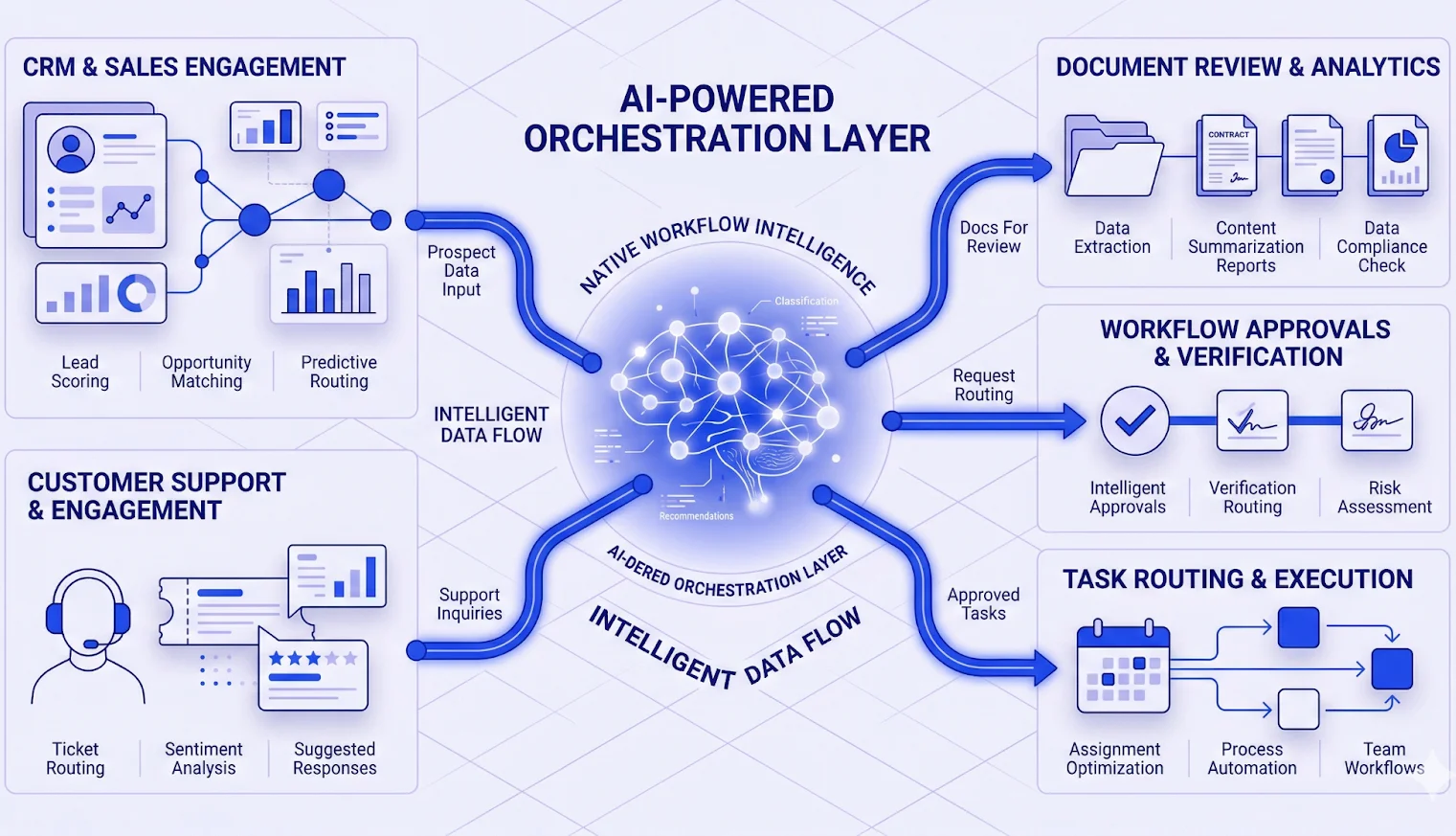
AI must sit where work is already happening
Inside CRM flows
Within document processing
At the support escalation point
During sales follow up
Inside internal approval chains
Across service coordination workflows
This makes AI a functional part of operations.
Not a separate layer.
Not a side experiment.
Not a tool people remember only when prompted.
AI must have a role that is clear
Classifying
Summarizing
Routing
Recommending
Drafting
Flagging
Triggering
Escalating
When the role is defined, adoption becomes easier.
People understand where it fits and what it is supposed to do.
AI Systems For Ownership And Accountability
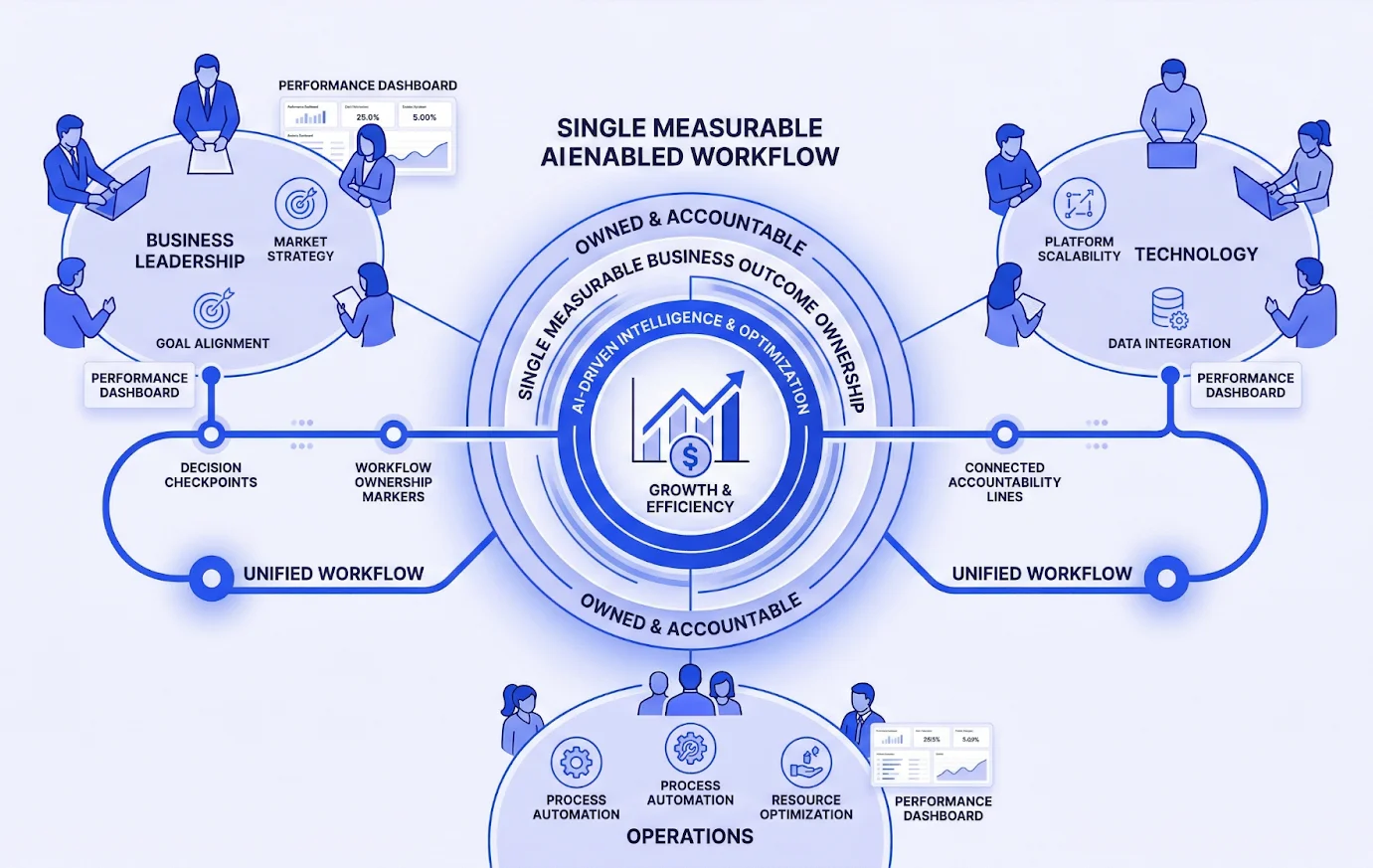
Someone must own the business result tied to the AI layer.
Not just the software.
Not just the pilot.
Not just the vendor relationship.
The business outcome.
That may include
Reducing response time
Improving follow up rates
Lowering manual workload
Increasing process accuracy
Improving lead conversion
Reducing cycle time
Without ownership, AI stays interesting but inactive.
AI adoption usually fails when every team assumes someone else is handling it.
Operations must be involved.
Technology must be involved.
Business leadership must be involved.
Process owners must be involved.
Execution happens when alignment becomes operational, not just strategic.
AI Systems For Integration And Continuity
AI cannot create continuity if the business itself is fragmented.
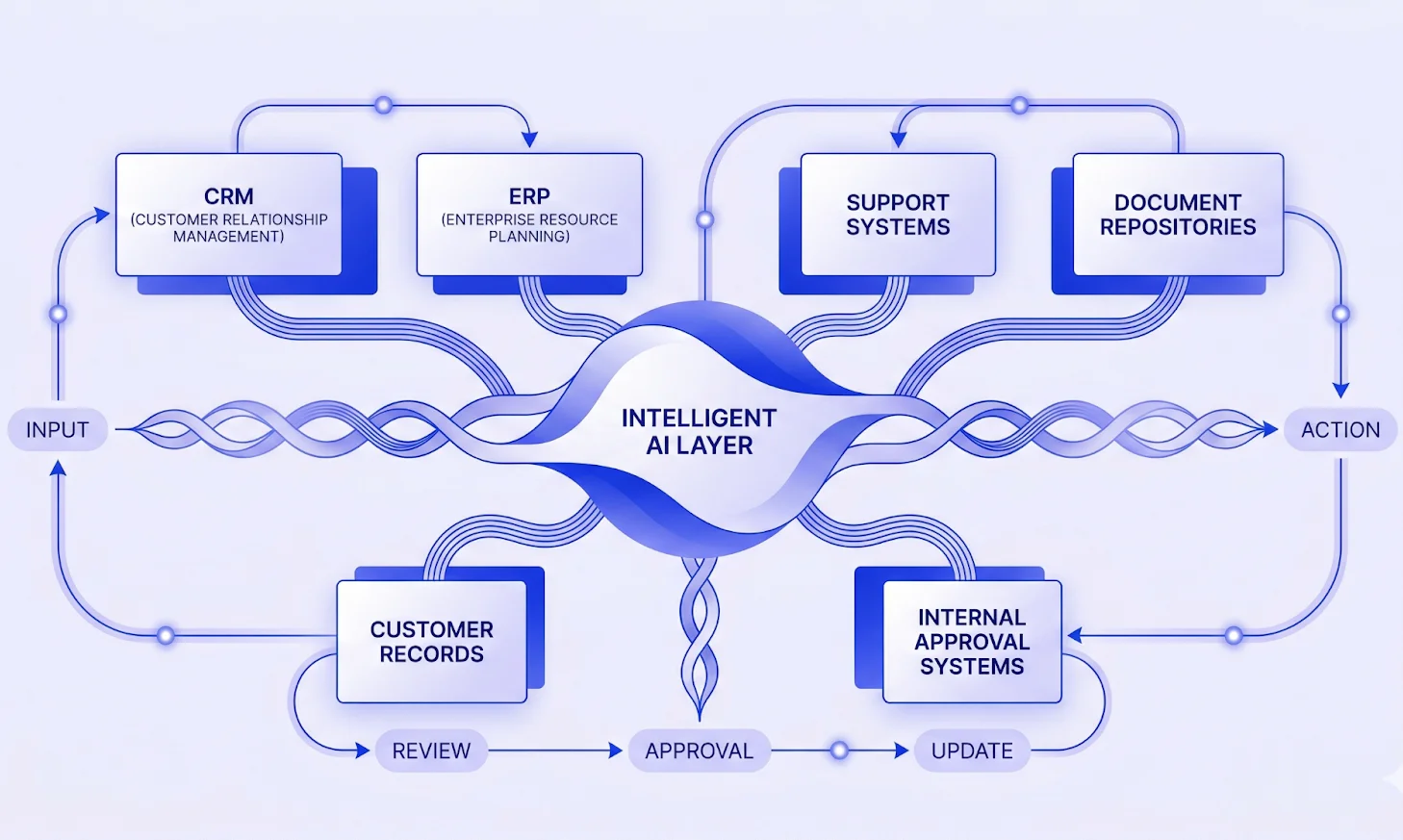
For AI to support real execution, it often needs access to
CRM data
Support history
Document repositories
Internal status updates
Approval logic
Customer records
Workflow triggers
Without this, the AI may sound intelligent but remain operationally blind.
Businesses do not run on isolated prompts.
They run on sequences.
A lead enters
A document is requested
A team reviews it
A decision is made
A customer is updated
A task is triggered
A status moves forward
AI becomes valuable when it supports continuity across these steps.
That is what moves it beyond the demo.
AI Systems For Measurement After Deployment
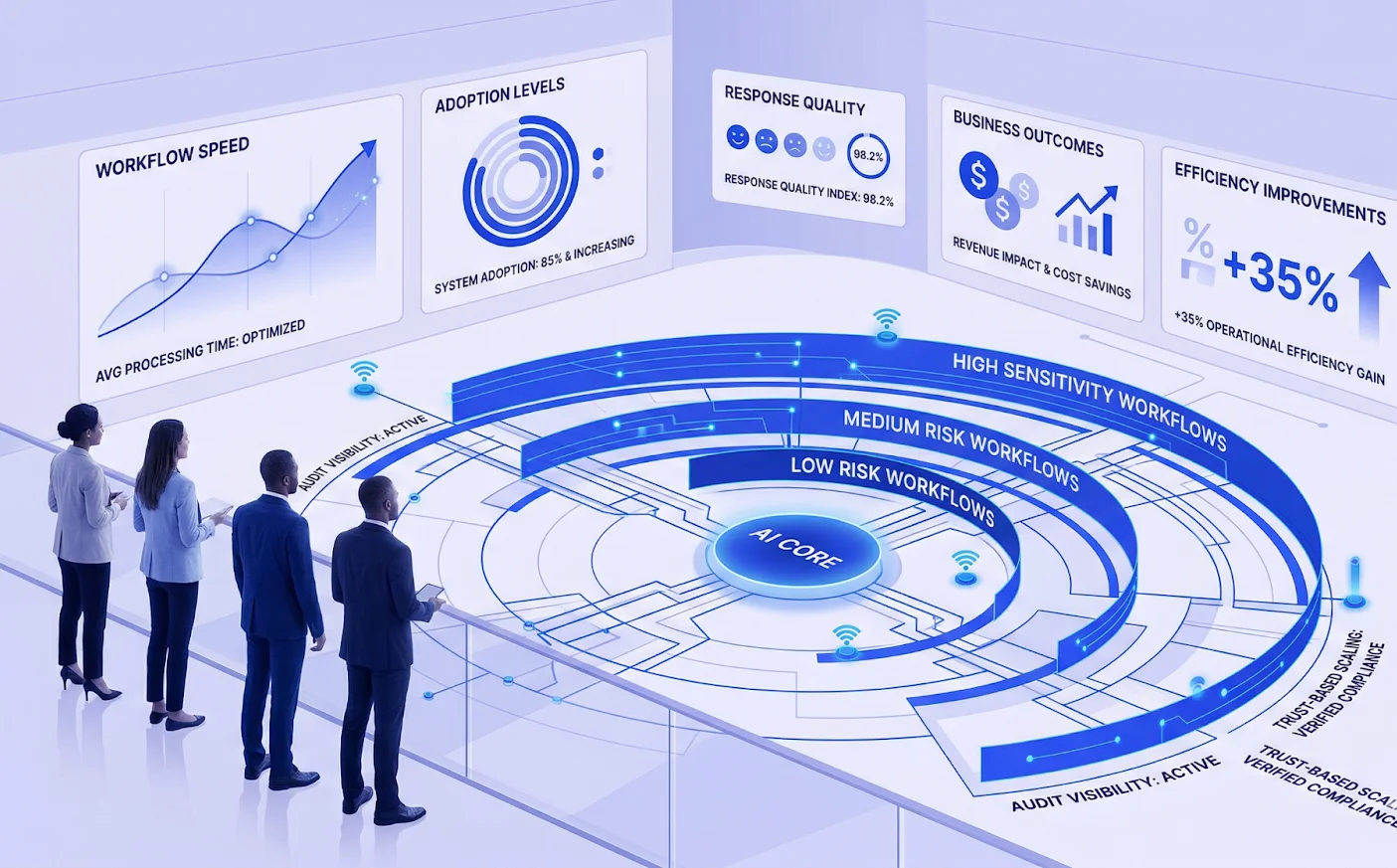
After deployment, companies need visibility into
Usage quality
Workflow completion speed
Reduction in manual effort
Response consistency
Conversion improvement
Error reduction
Handoff efficiency
This reveals whether AI is improving how the company runs.
The most important question is simple
What changed after AI entered the workflow
If a company cannot answer that, then the demo created attention but not leverage.
Measurement turns AI into a business system.
Without it, AI remains a presentation layer.
AI Systems For Trust And Controlled Scale
AI should scale in stages based on business sensitivity
Low risk internal tasks
Medium risk team workflows
High sensitivity customer or compliance linked processes
This allows the company to expand with confidence.
Businesses need control mechanisms such as
Human review where needed
Access controls
Approval thresholds
Audit trails
Decision visibility
Secure data boundaries
Defined escalation logic
These controls do not slow progress.
They make adoption sustainable.
Because the moment AI touches real work, trust becomes part of performance.
Seen the AI demos but still not sure what should happen next
Key Technologies Behind Post Demo Execution
Machine Learning Models
Help classify, predict, detect patterns, and support decision quality
Workflow Automation Systems
Move work forward without waiting for manual coordination
Integration Layers
Connect AI with CRM, ERP, support, and internal operating systems
Operational Analytics
Show where delays, inefficiencies, and adoption issues exist
Real Time Data Processing
Allow AI to react within live workflows instead of after the fact
Orchestration Systems
Coordinate steps, triggers, approvals, and cross system actions
These are the layers that turn AI from a moment of interest into a system of execution.
Compliance Privacy And Responsible Deployment
AI should not move into operations without clear control.
That includes
- Secure handling of internal and customer data
- Access boundaries based on role
- Human oversight in sensitive workflows
- Traceable system actions
- Compliance aligned deployment
- Clear governance around decisions and automation
This becomes even more important when AI touches documents, customer records, approvals, or regulated processes.
Responsible execution protects trust and enables scale.
What Improves When Companies Fix The Post Demo Gap
Organizations begin to see real movement
Higher team adoption
Better workflow consistency
Faster process completion
Reduced manual load
Stronger system visibility
Improved service speed
More reliable execution
Clearer business impact
In many cases, these gains do not come from better demos.
They come from better follow through after the demo.
From AI Interest To AI Execution
Before
Businesses focused on seeing what AI could do
After
Smart businesses focus on what must change after they see it
This shift changes how AI is approached
From curiosity driven pilots
To workflow driven execution systems
That is the real difference between companies exploring AI and companies actually operationalizing it.
The Future Of Business AI Execution
Businesses will stop confusing successful demos with successful implementation
AI will become part of real execution instead of staying outside it
Business leaders will assign clear accountability for outcomes, not just experimentation
AI will work across systems, not inside isolated interfaces
Companies will scale AI with trust, visibility, and structured control
The future will not belong to the companies that saw the best demos.
It will belong to the companies that knew what to fix after them.
Want to move from AI interest to operational impact
Speak with our experts to design AI systems that fit inside your workflows, connect with your business systems, and create measurable outcomes. Schedule a free consultation.
Conclusion
Your company may not be behind on AI.
It may already understand the opportunity.
It may already have seen the right use cases.
It may already have the interest and intent.
But if workflows have not changed,
if ownership is unclear,
if systems are disconnected,
if adoption is shallow,
and if outcomes are not being measured,
then the real delay begins after the demo.
That is where smart businesses are focusing now.
They are identifying where AI fits inside real work.
They are redesigning workflows around execution.
They are connecting systems.
They are assigning ownership.
They are measuring business impact.
And they are scaling with control.
Because in business
AI is not valuable when it creates excitement in a room.
It is valuable when it improves what happens after people leave it.